

Making home-visit dental care work early (KOR)
Published: 30 Apr. 2026, 10:08
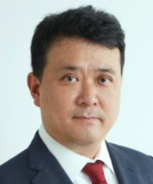
Myoung Hoon
The author is the head of clinical services and public care center, Seoul National University Dental Hospital.
An older adult colleague in the Korean Academy of Geriatric Dentistry often visits his mother in a long-term care facility, sharing meals and conversation. Drawing on his dental training, he carefully cleans her mouth using a toothbrush, toothpaste, several types of interdental brushes, floss and a tongue cleaner. For families caring for parents with limited mobility, this is a scene that is both admirable and difficult to replicate.
![A patient room at a nursing hospital in Suji District, Yongin, Gyeonggi Province [Nam Soo-hyoun]](https://koreaseafood.online/data/photo/2026/04/30/15ea4128-1689-4fd9-a633-b883f10afb58.jpg)
A patient room at a nursing hospital in Suji District, Yongin, Gyeonggi Province [Nam Soo-hyoun]
Since March 27, home-visit medical care has been formally enabled under the Integrated Care Support Act. Previously, while the Medical Service Act did not explicitly prohibit house calls, they were largely treated as one-time visits similar to emergency calls. The new framework provides a clearer legal basis for ongoing care delivered outside hospitals, including in private homes and long-term care facilities, marking a shift toward more continuous and accessible services.
As people age, many experience conditions that make daily life difficult without assistance. Some receive care at home while attending short-term care centers, while others reside in nursing facilities. Diseases such as cerebrovascular disorders or Parkinson’s disease can impair hand movement, and cognitive decline, including dementia, can make basic oral hygiene tasks such as toothbrushing difficult. In these situations, family members or caregivers often step in, but without professional training, there are clear limitations. Regular visits by dental professionals are therefore essential not only for hygiene management but also for timely treatment.
Oral health also has a direct connection to quality of life in later years. Few individuals wish to live in complete dependence on others. The ability to walk, eat and use the bathroom independently is closely tied to maintaining dignity. As life expectancy increases, reducing the duration of frailty and dependency has become a shared objective. Within this process, oral health occupies a central position.
When appetite declines and oral function deteriorates, adequate nutrition becomes difficult. This leads to a decrease in muscle mass, which in turn reduces physical activity and further suppresses appetite. If falls or fractures occur, the cycle can accelerate, resulting in rapid physical decline. Many studies identify impaired oral function as a key gateway in this progression. For this reason, professional intervention is necessary to sustain a longer period of independent and non-frail living.
Comprehensive oral care involves strengthening the muscles of the lips and tongue, improving swallowing function to reduce choking and managing dryness in the mouth. These measures play a decisive role in maintaining overall health among older adults. However, for home-visit dental care to become established, institutional preparation is essential. It is also necessary to acknowledge that such care cannot achieve the same level of completeness as treatment delivered in fully equipped clinical settings.
In practice, dentists cannot transport all necessary equipment, and diagnostic tools such as radiographic imaging are often unavailable. In addition, sufficient support staff may not be present. Under these constraints, the goal inevitably shifts from achieving perfection to providing the best possible care within limitations. Understanding these realities is crucial for both providers and patients.
![Visitors examine dental chairs and other advanced equipment at the “Busan Dental Exhibition 2026,” held on March 22 at Exhibition Hall 2 of BEXCO in Haeundae District, Busan. The event showcases the latest dental technologies and supports companies in expanding market opportunities. [JOONGANG ILBO]](https://koreaseafood.online/data/photo/2026/04/30/be635373-430a-4e49-bf6a-c3613c9bab2e.jpg)
Visitors examine dental chairs and other advanced equipment at the “Busan Dental Exhibition 2026,” held on March 22 at Exhibition Hall 2 of BEXCO in Haeundae District, Busan. The event showcases the latest dental technologies and supports companies in expanding market opportunities. [JOONGANG ILBO]
From the perspective of patients and caregivers, it is important to approach home-visit dental care with realistic expectations. Rather than seeking complete treatment, the priority may be to relieve symptoms and improve daily comfort. Because care is delivered outside conventional medical institutions, there is also potential exposure to legal risks. To encourage greater participation by dentists, appropriate compensation must be accompanied by institutional safeguards that provide legal protection.
Anyone who has accompanied an older adult with limited mobility to a dental clinic will recognize the urgency of home-visit services. Transferring a patient to a wheelchair or dental chair often requires the assistance of at least two adults. While procedures such as smoothing a sharp tooth may cost only a small amount under national insurance coverage, transportation by ambulance can cost around 200,000 won ($135), creating a significant burden.
For elderly individuals without financial resources or family support, dental discomfort is often endured rather than treated. Some continue to suffer from tooth pain because they cannot visit a clinic, while others experience repeated colds or even pneumonia due to poor oral hygiene. Caregivers, too, face considerable challenges in managing these situations.
All of these individuals should be able to access necessary dental care in their homes or care facilities. Oral health is fundamental to overall well-being. Establishing a stable system of home-visit dental care at an early stage is therefore not simply desirable but necessary.
방문 치과진료 조기에 정착하려면
명훈 대한노년치과의학회 재활위원장·서울대치과병원 진료처장
대한노년치과의학회에서 함께 활동하는 선배 의사는 요양시설에 입소한 어머니를 찾아가 함께 식사하고 대화하며 시간을 보내고 온다. 특히 치과 전공을 살려 칫솔 치약, 네 종류의 치간칫솔, 치실, 혀클리너까지 사용해 입안을 깨끗이 닦아드린다. 거동이 불편한 부모라면 부러워할 장면이다.
돌봄통합지원법이 발효되면서 3월 27일부터 방문 진료가 가능해졌다. 지금까지 의료법이 방문 진료를 금지하지는 않았지만, 일회성인 왕진에 가까웠다. 하지만 통합돌봄지원법이 시행되면서 이제는 집이나 요양시설 등 병원 아닌 곳에서도 방문진료를 받을 수 있는 법적 기반이 생겼다.
고령이 되면 다른 사람의 도움을 받아야 일상생활이 가능해지는 상황이 많이 생긴다. 집에서 돌봄을 받으며 단기요양센터에 가는 경우도 있고, 요양원에 기거하는 경우도 있다. 뇌혈관질환이나 파킨슨병 등으로 손 움직임이 둔해지거나, 치매 등의 인지 기능 저하로 칫솔질을 제대로 못 하는 경우 가족이나 요양보호사의 도움을 받는데, 치과 전문 인력이 아니라면 한계가 분명하다. 따라서 요양시설이나 주거시설에 치과의사·치과위생사가 방문해 위생을 관리하고, 치료하는 일은 어르신 건강에 매우 중요하다.
노년의 삶의 질에 구강 건강이 중요한 또 다른 측면이 있다. 거동이 불편한 상태로 주변 사람들에게 의존하는 삶을 원하는 사람은 없을 것이다. 자력으로 보행하고 식사하고 화장실을 오가는 것은 마지막까지 존엄한 삶을 살고 싶어하는 인간의 본성에 가깝다. 따라서 노쇠 단계를 지나 의존적인 상태를 거쳐 죽음에 이르는 노령의 사이클에서 노쇠 상태와 의존적인 상태에 빠지는 기간을 최대한 줄이는 것은 평균수명이 길어진 현대인의 숙원이다.
여기에 구강 건강이 중요한 위치를 차지한다. 식욕이 떨어지고 구강 기능이 악화해 영양 섭취가 원활하지 않으면 근육량이 감소하고, 이는 운동 부족으로 이어져 식욕이 더 떨어진다. 게다가 낙상이나 골절 등으로 이어지면 급속한 노화와 기능 저하로 연결된다. 이런 과정에서 가장 중요한 관문이 구강 기능 저하라고 주장하는 논문이 많다. 노쇠하거나 의존적이지 않은 상태의 삶을 길게 영위하기 위해 전문가의 도움이 꼭 필요하다. 이것이 노년의 삶에서 구강 건강이 갖는 또 다른 측면이다.
구강이 노쇠하지 않도록 입술과 혀 근육을 강화하고, 삼키는 근육을 강화해 사레가 덜 들게 하며, 구강이 덜 건조하게 관리하는 등 종합적인 구강 기능 관리는 노년의 건강을 지키는 데 결정적 역할을 한다. 그런데 아직은 낯설고 생소한 방문치과진료가 잘 안착하려면 제도적인 준비가 필요하다. 이와 함께 첫술에 배부르기 어렵다는 사실을 인정해야 한다. 방문치과진료는 장비를 충분히 가져갈 수 없고 방사선 사진 등 진단 설비의 도움도 받기 어렵다. 보조 인력의 충분한 도움도 기대하기 어려운 상황이라 완벽함보다는 최선을 지향할 수밖에 없다.
환자나 보호자의 입장에서도 완벽한 치료보다는 증상 완화나 불편 개선을 우선으로 한다는 마음으로 방문치과진료를 바라볼 필요가 있다. 의료기관이 아닌 외부에서 진료를 진행한다는 특성상 법적 리스크에 노출될 가능성도 있다. 이 때문에 치과의사에게 적절한 보상과 보람을 주면서 치과의사들의 방문 진료 참여율을 높이려면 법적 보호 장치도 꼭 갖춰야 할 것이다.
거동이 불편한 어르신을 모시고 치과에 가본 경험이 있다면 누구나 방문치과진료가 절실하다는 주장에 공감할 것이다. 휠체어에 옮겨 타거나 진료 의자에 옮겨 앉을 때 성인 2인 이상의 도움이 필요하다. 그런데 건강보험을 적용받아 뾰족한 치아를 갈고 다듬는데 드는 비용이 몇천 원이라면 앰뷸런스로 이동하는 비용만 20만원가량이 든다. 경제적 여유도 도움 줄 가족도 없는 어르신들은 매일 불편한 치아를 감내하며 지낸다.
치통에 시달리면서도 병원에 가지 못해 고통을 감수하는 어르신도, 구강 위생 관리가 어려워 자꾸 감기에 걸리고 폐렴에 걸리는 어르신도, 난감한 보호자도, 모두 필요한 치과 의료 혜택을 집이나 요양시설에서 누릴 수 있어야 한다. 치아 건강은 오복의 으뜸이다. 방문치과진료 제도가 조기에 정착되기를 바라는 마음이다.
This article was originally written in Korean and translated by a bilingual reporter with the help of generative AI tools. It was then edited by a native English-speaking editor. All AI-assisted translations are reviewed and refined by our newsroom.


with the Korea JoongAng Daily
To write comments, please log in to one of the accounts.
Standards Board Policy (0/250자)