

Long-term holding tax break reform, right direction but difficult path (KOR)
Published: 28 Apr. 2026, 10:47
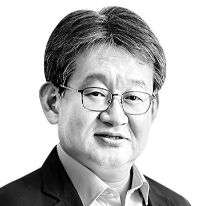
Suh Kyoung-ho
The author is an editorial writer at the JoongAng Ilbo.
President Lee Jae Myung’s repeated remarks about scaling back the tax break for real estate capital gains have sent ripples through both politics and the housing market. The policy, commonly referred to as the long-term holding deduction, allows sellers of land, buildings and homes held for three years or longer to deduct between 6 and 30 percent of the applied tax.
![An employee at a real estate agency in Seocho District, southern Seoul, watches a broadcast of President Lee Jae Myung’s New Year press conference on Jan. 21. [YONHAP]](https://koreaseafood.online/data/photo/2026/04/28/f4b0c9b0-b1a0-45ba-9379-648c63d518f2.jpg)
An employee at a real estate agency in Seocho District, southern Seoul, watches a broadcast of President Lee Jae Myung’s New Year press conference on Jan. 21. [YONHAP]
For households that own a single residence, the benefit is more generous. Depending on the holding period, 12 to 40 percent can be deducted, with an additional 8 to 40 percent reduction tied to years of actual residence. The president has taken aim at the holding-period portion of this benefit, questioning why substantial tax relief should be granted simply for owning a property over time when it is not used as a primary residence.
His concern is not without empirical support. As of 2024, Korea’s homeownership rate stood at 61.4 percent, while the owner-occupancy rate was slightly lower at 58.4 percent. In the capital region, the figures were 55.6 percent and 52.7 percent, respectively, indicating a persistent gap between ownership and residence. In other words, a portion of households own homes in which they do not live, treating them as investment assets rather than dwellings. This distinction has long been a defining feature of Korea’s housing market, where real estate often functions as both shelter and a key vehicle for wealth accumulation.
International comparisons further highlight the issue. In many member states of the Organisation for Economic Cooperation and Development, tax benefits or financial support are closely tied to actual occupancy. In Britain, capital gains tax relief increases in proportion to the duration of residence. In the United States, sellers must have lived in the property for at least two of the five years preceding the sale to qualify for tax exemptions. Canada, France and Norway similarly restrict such benefits to primary residences. Compared to these cases, Korea’s system has been relatively lenient toward ownership without residency.
Domestically, policies that have tightened regulations on owners of multiple homes while continuing to support single-home owners have contributed to what is often described as the “one premium home” phenomenon. Rather than holding multiple properties, investors concentrate their resources in a single high-value unit, typically in Seoul or other parts of the capital region. Because the long-term holding deduction increases with the size of capital gains, high-priced properties benefit disproportionately. According to recent estimates, out of roughly 627.1 billion won ($426 million) in total tax benefits granted through the deduction in 2024, about 85.5 percent accrued for homeowners in Seoul.
This structure has raised concerns that even single-home ownership can serve as a vehicle for speculative behavior under current conditions. While it is natural for buyers to anticipate price appreciation when purchasing a home, there is little justification for public policy to support demand driven primarily by investment motives. Strengthening residency requirements could therefore help realign incentives, encouraging housing to function more as a place to live rather than as a financial asset. Such measures could also serve as a tool to curb speculative purchases by foreign buyers, who in some cases face fewer regulatory barriers and can effectively “shop” for housing without intending to reside in it.
Despite the policy’s emergence as a major political issue, with candidates in the Seoul mayoral race engaging in heated debate, the government has yet to present a clear and detailed plan. This hesitation reflects the inherent complexity of the issue. While reducing benefits for nonresident ownership appears directionally sound, distinguishing between genuine residential use and investment intent is far from straightforward. Many households may temporarily live apart from their owned homes due to work assignments, education or family circumstances. Determining how broadly to recognize such exceptions presents a difficult policy challenge.
Any attempt to draw a firm line is likely to produce so-called threshold effects, in which individuals just outside the criteria feel unfairly excluded. These borderline cases can generate significant political backlash. Moreover, incorporating detailed criteria and exceptions risks further complicating an already intricate tax system. It is not uncommon to hear even experienced tax professionals remark on the difficulty of calculating capital gains tax under current rules. Greater complexity increases administrative costs and compliance burdens, while potentially reducing transparency and trust in the system.
There are also broader market implications to consider. Tightening the long-term holding deduction could place additional pressure on the already volatile rental market, which has been affected by previous regulations targeting multiple homeowners. If property owners face higher tax burdens upon sale, they may delay transactions or shift costs to tenants, exacerbating instability in the jeonse (lump sum deposit) and monthly rental markets. Ensuring that housing supply policies are implemented as planned will therefore be essential to maintaining market confidence.
![Rep. Song Eon-seog, floor leader of the People Power Party, left, speaks during a policy coordination meeting at the National Assembly in Yeouido, western Seoul, on April 21. [NEWS1]](https://koreaseafood.online/data/photo/2026/04/28/235fd853-d96a-4f08-8ea1-9b209ca19606.jpg)
Rep. Song Eon-seog, floor leader of the People Power Party, left, speaks during a policy coordination meeting at the National Assembly in Yeouido, western Seoul, on April 21. [NEWS1]
In this regard, the government may also need to take a more active role in the public rental sector. Expanding public housing supply and strengthening institutional participation in the rental market could help stabilize prices and provide alternatives for households unable to purchase homes.
Policymakers must balance fairness, efficiency and market stability, while preserving the underlying objective of discouraging speculative demand. Achieving this balance will depend not only on the design of the policy but also on the government’s ability to implement it credibly and consistently.
장특공제 축소, 방향은 맞지만
서경호 논설위원
이재명 대통령이 ‘장기보유특별공제(장특공제) 축소’를 거듭 거론하면서 정치권과 시장에 파장이 컸다. 장특공제는 3~15년 이상 보유한 토지·건물·주택을 팔 때 양도소득세의 6~30%를 깎아주는 제도다. 특히 1세대 1주택은 보유기간별로 12~40%, 거주기간에 따라 8~40%를 양도소득세에서 빼준다. 대통령이 타깃으로 삼은 건 1주택자의 보유기간 공제 혜택이다. “거주할 것도 아니면서 돈 벌기 위해 사둔 주택값이 올라 번 돈”인데 “오래 소유했다는 이유로 왜 대폭 깎아주나”라는 것이다.
대통령의 문제 인식 자체는 근거가 있다. 우리나라의 2024년 기준 자가보유율은 61.4%인데 자기가 소유한 집에서 거주하는 자가점유율은 58.4%다. 수도권의 자가보유율(55.6%)과 자가점유율(52.7%)도 비슷한 차이가 난다. 거주하는 집과 소유하는 집이 다른 이들이다. 경제협력개발기구(OECD) 주요국들은 자가 거주자(owner-occupier)에게 장기 대출 기회를 주거나 세제 혜택을 준다. 주로 집주인이 실제로 거주하는 경우에만 정책 지원을 한다. 거주 요건이 우리보다 엄격한 셈이다. 영국은 거주기간에 비례해 양도세 감면을 해주고 미국도 매도 직전 5년 중 2년 이상은 거주해야 자격이 된다. 캐나다·프랑스·노르웨이도 본인이 거주하던 주택을 매도한 경우에만 양도세 혜택을 준다(원승연·박성욱 등, 『내란예방경제학』).
다주택자를 규제하면서 1주택자를 무조건 지원해 온 그동안의 정부 정책이 ‘똘똘한 한 채’ 현상을 가속화했다. 장특공제 축소는 실거래가 12억원 이상의 서울과 수도권 일부가 주로 영향을 받는다. 양도차익이 클수록 혜택이 커지는 구조라서 고가주택이 더 유리하다. 전국 고가주택이 받은 장특공제 혜택은 2024년 6271억원이었는데 대부분인 5362억원(85.5%)을 서울 집주인들이 가져갔다고 한겨레가 최근 보도했다. 박성욱 한국금융연구원 선임연구위원은 “현행 규제 여건에서는 다주택자만이 아니라 1주택자도 투기 거래의 주요 주체가 될 위험이 있다”며 “집을 살 때 가격 상승을 기대하는 것은 당연하지만, 그렇다고 정부가 나서서 당장 살지도 않을 주택의 구매를 지원해 가수요를 일으킬 이유는 없다”고 책에 썼다. 실거주 요건 강화는 대출 규제 없이 자유롭게 주택을 ‘쇼핑하는’ 외국인의 투기 목적 주택 소유를 억제하는 수단이 될 수도 있다.
서울시장 여야 후보가 공방을 벌일 정도로 장특공제는 핫이슈가 됐다. 하지만 정부 당국이 속 시원한 설명을 못 하고 있다. 그럴 수밖에 없는 것이, 비거주 보유에 대한 장특공제 축소는 맞는 방향이지만 구체적인 정책을 내놓기가 쉽지 않아서다. 거주 목적과 투자 목적의 1주택 소유를 어떻게 쾌도난마처럼 가를 것이며 직장·학교 등의 불가피한 사유로 인한 자가 비거주는 얼마나 예외로 인정할 것인지 등 하나같이 쉽지 않은 문제다. 어떻게 자르든 간에 문턱 효과로 인해 혜택에서 누락된 억울한 사연이 나올 것이다. 디테일 곳곳에 도사리고 있을 악마를 정부가 얼마나 솜씨 좋게 요리할지가 관건이다.
거주와 투자를 구분하는 잣대와 예외를 법령에 집어넣는 과정에서 안 그래도 누더기처럼 어지러운 세제의 복잡도를 더 높이지는 말아야 한다. 지금도 양도세 계산을 포기한 세무사라는 말이 나올 지경이다. 세제가 단순할수록 행정 비용과 납세자 비용은 줄어든다. 나라 재정의 파이프라인에서 누수가 줄어드는 만큼 세율 인상 없이도 세수가 늘어나는 효과가 있다.
장특공제 축소는 다주택자 규제로 인해 흔들리는 전월세 시장을 더 불안하게 만들 수 있다. 주택 공급 정책이 정부 발표대로 진행되고 있음을 보여줘 시장이 신뢰할 수 있으면 좋겠다. 정부가 더 책임 있게 공공임대 시장에 참여하는 방안도 검토하길 바란다. 임대시장에서 공공의 영향력이 지금보다 커져야 한다. 대통령의 SNS보다 국토교통부 관료가 더 바쁘게 뛰어야 정상이다.
This article was originally written in Korean and translated by a bilingual reporter with the help of generative AI tools. It was then edited by a native English-speaking editor. All AI-assisted translations are reviewed and refined by our newsroom.


with the Korea JoongAng Daily
To write comments, please log in to one of the accounts.
Standards Board Policy (0/250자)