

New science minister faces urgent tasks in AI, research and talent retention
Published: 25 Jul. 2025, 00:01
Audio report: written by reporters, read by AI
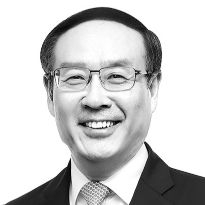
Oh Se-jung
The author is a professor emeritus of physics and astronomy and a former president of Seoul National University.
Bae Kyung-hoon was officially appointed Minister of Science and ICT on July 17, becoming the first Cabinet member confirmed under President Lee Jae Myung. His appointment came swiftly after the National Assembly adopted his confirmation report without significant opposition.
Concerns have been raised in the scientific community regarding the concentration of expertise in artificial intelligence (AI) within the new administration. Both Bae and the new presidential secretary for AI strategy come from AI backgrounds, prompting questions about whether other areas of science and technology may be neglected. Some also question whether Bae, who comes from the private sector, will fully grasp the complexities of government and public institutions.
![Minister of Science and ICT Bae Kyung-hoon delivers his inaugural address at the ministry’s main auditorium in the Sejong government complex on July 17. [YONHAP]](https://koreaseafood.online/data/photo/2025/07/25/d1ad63ff-d296-4e53-ba5d-8c38cd579a68.jpg)
Minister of Science and ICT Bae Kyung-hoon delivers his inaugural address at the ministry’s main auditorium in the Sejong government complex on July 17. [YONHAP]
Yet, the global importance of AI development justifies a temporary policy focus in that direction. Korea’s persistent struggle with inefficient public research and development (R&D) spending also suggests that applying private sector experience to government policy may yield benefits.
Bae’s most pressing challenge is to advance Korea’s standing as a global AI powerhouse. This goal is a flagship initiative of the Lee administration and reflects the belief that AI will transform not only industries and the economy, but also society and daily life. However, Korea’s current AI competitiveness remains modest. According to the 2024 AI Index published by Tortoise Media, Korea scored 27.3, trailing far behind the United States (100) and China (53.9), and ranking sixth globally. Given the winner-takes-all nature of digital industries, even climbing to third place will be difficult. A smarter strategy may involve leveraging Korea’s strong manufacturing base to focus on “physical AI” applications that blend software with real-world hardware.
Beyond AI, Bae must address a series of inherited problems in the science and technology sector. Chief among them is the damage caused by abrupt research funding cuts under the previous administration. A significant reduction in basic research budgets for universities in 2024, justified as an effort to dismantle an “R&D cartel,” deeply unsettled the research community. Some graduate students in science and engineering even changed career paths, doubting the stability of research professions in Korea.
Recognizing the fallout, the Yoon Suk Yeol administration eventually created a new position for a science adviser in the presidential office and pledged to restore overall R&D funding in the 2025 budget. However, the cuts to grassroots, life-cycle-based basic research funding remain unresolved. Encouragingly, Bae pledged in his inaugural speech to restore these programs and expand safety nets for researchers. Yet, because budget decisions also depend on the Ministry of Economy and Finance, he must craft a convincing case for reform.
Another key task is improving the efficiency of Korea’s R&D system. Despite Korea’s high level of investment in science and technology, critics argue that the returns have been underwhelming. While the U.S. Defense Advanced Research Projects Agency has spearheaded transformative innovations such as the internet, GPS, drones and autonomous vehicles, Korean government-led R&D projects have produced fewer breakthroughs.
This is largely due to Korea’s entrenched “fast follower” approach, in which research tends to replicate or slightly improve upon technology already developed elsewhere. Combined with a bureaucratic culture that penalizes failure, this mindset has led to a cycle in which only “safe” projects are pursued and funded. As Korea nears the threshold of being a technological front-runner, it must now take on riskier, first-of-their-kind projects. Whether the new minister can motivate risk-averse public servants — who are wary of audits and legislative scrutiny — to embrace a “first mover” support system remains to be seen. His corporate background may prove helpful.
![Bae Kyung-hoon, formerly head of LG AI Research and now Minister of Science and ICT, speaks at “LG AI Talk Concert 2023” at LG Science Park in Magok, Gangseo District, western Seoul, on July 19, 2023. At the event, LG unveiled Exaone 2.0, an advanced version of its large-scale AI model. [LG]](https://koreaseafood.online/data/photo/2025/07/25/1f811cc8-4a60-4490-9fb3-e6d7f98404d2.jpg)
Bae Kyung-hoon, formerly head of LG AI Research and now Minister of Science and ICT, speaks at “LG AI Talk Concert 2023” at LG Science Park in Magok, Gangseo District, western Seoul, on July 19, 2023. At the event, LG unveiled Exaone 2.0, an advanced version of its large-scale AI model. [LG]
A third major challenge is restoring morale among Korea’s scientists and engineers. Since the 1997 Asian financial crisis, fewer young people have chosen STEM careers, and the recent surge in medical school applications has further drained top talent from science and engineering fields. More troubling is the outflow of researchers who were educated or employed in Korea but are now leaving the country.
This brain drain undermines Korea’s long-term competitiveness. While economic factors like job security and lifetime earnings matter, the weak social status of scientists in Korea may also play a role. The government could consider bold policies — such as removing mandatory retirement for top researchers or creating national recognition programs similar to China’s “scientific heroes.” Though the state cannot solve all problems, it can at least initiate change.
The new minister’s success will depend not only on his vision but on his ability to reshape outdated systems and reenergize the research community. His experience in the private sector may be the asset that makes the difference.
Translated from the JoongAng Ilbo using generative AI and edited by Korea JoongAng Daily staff.


with the Korea JoongAng Daily
To write comments, please log in to one of the accounts.
Standards Board Policy (0/250자)