

Kospi 5000 must connect to the real economy
Published: 01 Apr. 2026, 00:01
Audio report: written by reporters, read by AI
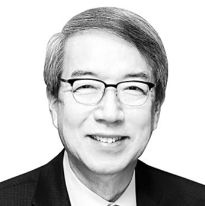
The author, a former president of Seoul National University, is the chairman of the Korea Institute for Shared Growth.
Despite increased volatility, the stock market has posted a sharp rise compared to last year. The Kospi broke through the 5,000 mark, escaping a longstanding trading range and raising expectations for asset gains among investors. Rising stock prices also help companies raise funds, making the development welcome. Yet Kospi 5,000 is not only a cause for celebration. It also calls for caution.
![Electronic display boards show Korea's financial market at Hana Bank's dealing room in central Seoul on March 31. The Kospi retreated 4.26 percent to 5,052.46 while the tech-heavy Kosdaq slipped 4.94 percent to 1,052.39. Despite weakness following U.S. strikes on Iran, the Kospi held above the 5,000 level. [NEWS1]](https://koreaseafood.online/data/photo/2026/04/01/e47437c6-9c4d-4051-aa44-5b5087987b5e.jpg)
Electronic display boards show Korea's financial market at Hana Bank's dealing room in central Seoul on March 31. The Kospi retreated 4.26 percent to 5,052.46 while the tech-heavy Kosdaq slipped 4.94 percent to 1,052.39. Despite weakness following U.S. strikes on Iran, the Kospi held above the 5,000 level. [NEWS1]
Korea’s stock market began in 1956 with the launch of the Korea Stock Exchange. At the time, only 12 companies were listed, with a total market capitalization of 15 billion won ($9.8 million). Today, more than 2,600 firms are listed, and market capitalization exceeds 2,500 trillion won. Although simple comparisons are difficult, market capitalization has grown far faster than nominal GDP over the past 70 years. Even so, many have long argued that Korean equities remain undervalued and that the market should expand further.
Why has the Kospi reached 5,000 now? Some point to strong presidential interest and increased purchases by public funds such as pension funds. Yet two structural factors appear more decisive. The first is the expansion of AI investment. As global technology companies pour resources into AI infrastructure, demand for high-performance semiconductors and memory has risen sharply. The competitiveness of Samsung Electronics and SK hynix in this market has drawn attention and helped lead the rally. The second factor is the expectation of improved corporate governance. Revisions to commercial law and capital market regulations have raised hopes of resolving the longstanding “Korea discount,” boosting investor sentiment.
For years, Korean companies have been undervalued due to low dividends, a management focus on internal reserves and decision-making structures centered on controlling shareholders. Treasury shares, intended as a tool to enhance shareholder value, have often been used to defend management control. To address this, amendments to the Commercial Act in July and August 2025 expanded directors’ fiduciary duties to include all shareholders, mandated cumulative voting for large listed firms and broadened the separate election of audit committee members.
A third amendment in February introduced a rule requiring companies, in principle, to retire treasury shares they acquire. The aim is to curb their use as a control device and to improve shareholder value and capital efficiency. These reforms mark a significant institutional shift toward greater transparency and trust in the capital market.
There are, however, notable risks. Given the cyclical nature of the semiconductor industry, the overall market remains unstable. External shocks, including geopolitical tensions such as U.S. military action involving Iran, could also unsettle markets.
More fundamentally, even as the stock market heats up, the real economy continues to struggle with low growth and widening inequality. Since 2023, annual growth has remained below 2 percent. The gap in business sentiment between large corporations and small- and medium-sized enterprises, as measured by the business survey index, has continued to widen.
When finance grows excessively relative to the real economy, “financialization” occurs, transforming industrial capitalism into financial capitalism. Rising credit trading and leveraged investment in recent markets suggest that asset price increases may be feeding speculative behavior. As economist James Tobin warned, financial markets can take on a “casino-like” character. The late economist Cho Soon similarly cautioned that such trends could lead to an economy driven by speculative gains.
![According to the “February 2026 Employment Trends” report released by the Ministry of Data and Statistics (formerly Statistics Korea) on March 18, the youth unemployment rate reached its highest level in five years. Job seekers wait to file unemployment recognition applications at the Seoul Western Employment Welfare Plus Center in Mapo District, Seoul, on the same day. [YONHAP]](https://koreaseafood.online/data/photo/2026/04/01/efddcf47-dd63-4331-b52a-a4bdbe9fd47d.jpg)
According to the “February 2026 Employment Trends” report released by the Ministry of Data and Statistics (formerly Statistics Korea) on March 18, the youth unemployment rate reached its highest level in five years. Job seekers wait to file unemployment recognition applications at the Seoul Western Employment Welfare Plus Center in Mapo District, Seoul, on the same day. [YONHAP]
The consequences begin at the individual level and spread into structural problems. When financial returns exceed those from industrial investment, capital shifts toward speculation rather than production. This resembles a farmer neglecting crops in favor of gambling. As short-term profit-seeking spreads, values such as diligence and long-term accumulation weaken, and talented individuals gravitate toward finance rather than industry.
Speculative capital flows push asset prices away from economic fundamentals, and the bursting of bubbles can trigger broader crises. Gains from rising asset prices tend to concentrate in certain groups, tilting the economy toward a “one percent” structure. This is the essence of plutocracy.
Policy tasks in the era of Kospi 5,000 are clear. The capital market must function not as a venue for speculation but as a platform linking innovation and production. A market structure centered on long-term investment should be built, and small and venture firms should be able to secure growth capital through the market.
The stock market is often described as the flower of capitalism, and stock prices as the economy’s thermometer. A higher temperature does not necessarily mean a healthier patient. For Kospi 5,000 to have real meaning, its warmth must reach sites of innovation and production and extend to the broader economy. Only then can Korea’s economy promise a new leap forward.
This article was originally written in Korean and translated by a bilingual reporter with the help of generative AI tools. It was then edited by a native English-speaking editor. All AI-assisted translations are reviewed and refined by our newsroom.


with the Korea JoongAng Daily
To write comments, please log in to one of the accounts.
Standards Board Policy (0/250자)