

Defense diplomacy in an age of missile threats
Published: 13 Mar. 2026, 00:04
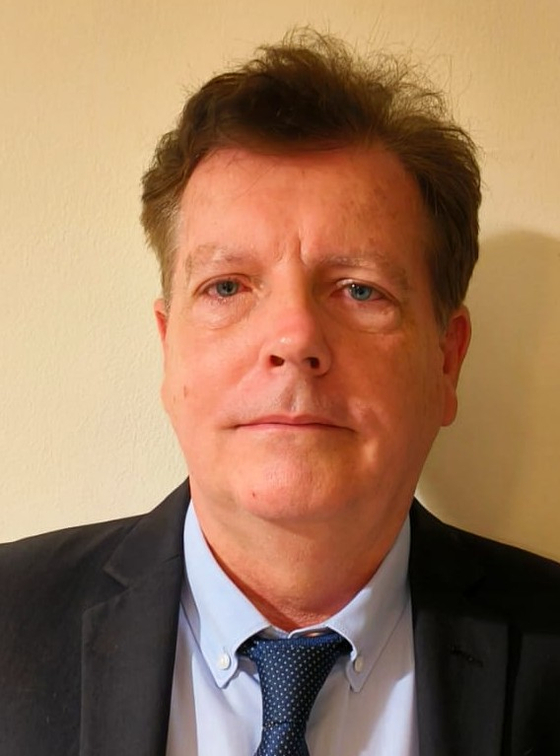
Dr. Kristian Alexander
The author is a Senior Fellow and Lead Researcher at the Rabdan Security & Defense Institute, in Abu Dhabi, United Arab Emirates.
As missile and drone threats intensify across the Middle East, attention has increasingly turned to the United Arab Emirates' (UAE) expanding use of South Korea’s Cheongung-II (KM-SAM) air defense system. The spotlight on South Korean interceptors reflects a broader strategic shift: Abu Dhabi’s efforts to diversify its defense partnerships and deepen cooperation with one of Asia’s most capable emerging defense suppliers.
![A live-fire exercise involving the Cheongung-II air defense system is seen during a Joint Chiefs of Staff drill at a location naer the West Sea on Nov. 6, 2024. [NEWS1]](https://koreaseafood.online/data/photo/2026/03/13/8df52f94-8795-4aeb-ad6f-f52120873f60.jpg)
A live-fire exercise involving the Cheongung-II air defense system is seen during a Joint Chiefs of Staff drill at a location naer the West Sea on Nov. 6, 2024. [NEWS1]
The relationship between South Korea and the UAE has quietly grown into one of the most dynamic security partnerships linking Asia and the Middle East. While the UAE continues to rely heavily on American and European defense equipment, Seoul has emerged as an important pillar in Abu Dhabi’s strategy of diversifying suppliers, strengthening air defenses and building a technologically advanced military.
Part of the reason for this alignment lies in the security environments both countries face. South Korea lives under the persistent threat of North Korea’s expanding missile and nuclear arsenal. The UAE, meanwhile, has experienced repeated missile and drone attacks launched by regional actors and their proxies. In both cases, defending critical infrastructure and urban centers from airborne threats has become a strategic priority.
These parallel security challenges have created a natural convergence of interests. Both countries place heavy emphasis on layered air and missile defense systems, rapid technological innovation and diversified security partnerships. Cooperation between Seoul and Abu Dhabi therefore reflects more than commercial arms sales. It represents a shared approach to resilience in an era of proliferating missile and drone threats.
The UAE’s purchase of the Cheongung-II air defense system, valued at roughly $3.5 billion, marked a major milestone in South Korea’s emergence as a global defense exporter. Developed by companies such as LIG Nex1 and Hanwha Systems, the interceptor is designed to target aircraft, cruise missiles and short-range ballistic threats. Within the UAE’s layered defense architecture, the system fills a mid-tier role, complementing higher- and lower-altitude interceptors already in service.
Recent indications that the UAE has sought to accelerate deliveries highlight the operational importance of the system as missile and drone threats across the region intensify. In such circumstances, the reliability of suppliers becomes nearly as important as the performance of the technology itself. South Korea’s reputation for rapid production timelines, dependable delivery schedules and fewer export restrictions has made its defense industry attractive to countries seeking responsive partners.
Beyond missile defense, South Korean defense companies have been steadily expanding their presence in the UAE through strategic partnerships and joint ventures. Agreements between South Korean firms such as LIG Nex1 and Emirati companies like EDGE and Calidus, supported by the UAE’s Tawazun Council, are exploring cooperation in guided weapons, advanced sensors and other next-generation defense technologies.
These partnerships reflect the UAE’s ambition of developing a domestic defense industry capable of designing and producing sophisticated systems. South Korean companies have proven appealing collaborators because they are often more willing than western counterparts to engage in joint development and technology transfer. For Seoul, these collaborations provide a valuable foothold in the Gulf’s expanding defense market and allow South Korean systems an opportunity to prove themselves in demanding operational environments.
The UAE’s growing reliance on South Korean defense systems is part of a wider strategy to diversify its procurement sources. Historically dependent on western suppliers, Abu Dhabi has increasingly sought partnerships across Asia to reduce vulnerability to political constraints, export controls and supply disruptions.
![A suspected Cheongung-II interceptor system component is loaded onto a UAE Air Force C-17 transport aircraft at Daegu K2 Air Base on the afternoon of March 9. [NEWS1]](https://koreaseafood.online/data/photo/2026/03/13/57a70148-2047-4c3e-b31e-b94fc9091252.jpg)
A suspected Cheongung-II interceptor system component is loaded onto a UAE Air Force C-17 transport aircraft at Daegu K2 Air Base on the afternoon of March 9. [NEWS1]
South Korea fits neatly into this strategy. Its defense industry combines advanced technological capabilities with relatively flexible export policies and competitive pricing. Just as importantly, South Korean firms have demonstrated the ability to deliver complex systems on time, an attribute that has become increasingly valuable as global supply chains face growing strain.
The current wave of missile and drone threats in the Middle East underscores the strategic importance of such diversification. Air defense today depends not only on sophisticated interceptors but also on dependable supply chains and trusted international partners capable of delivering upgrades, spare parts and additional systems at speed.
In this context, the UAE’s decision to turn to South Korea for accelerated deliveries reflects growing confidence in South Korean defense technology and industrial reliability. What began as a modest defense relationship has evolved into a strategic partnership rooted in mutual benefit and shared security concerns.
For South Korea, the UAE provides a gateway to Middle Eastern defense markets and strengthens its standing as a major global defense supplier. In return, the UAE's cooperation with South Korea enhances strategic autonomy while expanding access to advanced defense technologies.
As missile and drone threats reshape modern warfare, partnerships like the one between Seoul and Abu Dhabi will only grow more important. This evolving defense diplomacy offers a clear example of how middle powers can work together to build security, resilience and technological innovation in an increasingly uncertain world.


with the Korea JoongAng Daily
To write comments, please log in to one of the accounts.
Standards Board Policy (0/250자)