

A tower that took its place for centuries, Cheomseongdae [Photo Essay Contest - Gold Prize Winner]
Published: 13 Mar. 2026, 17:46
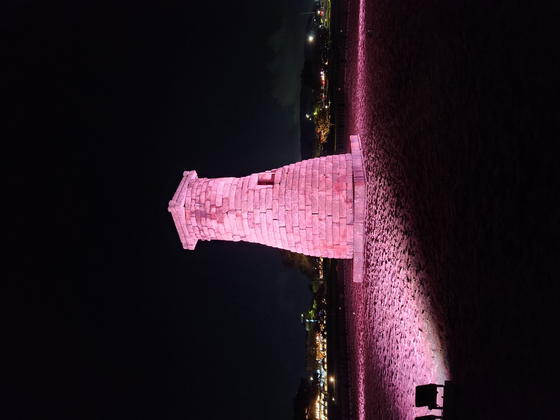
by Kim Joowan, Bumgye Middle School
What comes to your mind when you hear the name “Gyeongju”? In my opinion, I think of Cheomseongdae, a tower that has stood there for many centuries. Today, I am going to describe the most beautiful observatory tower I have ever seen.
To begin with, let’s talk about its history. Cheomseongdae was constructed between 632 and 647 during the reign of Queen Seondeok of Silla, a kingdom that lasted from 57 B.C. to 935 A.D. It is said to have been built by Abiji, a construction specialist. However, some historical records suggest different dates, so not all details are completely certain.
Next, let’s look at its function. There are three main theories about its purpose. First, some believe it was used to measure the four seasons. Second, others argue that it was an altar used to predict the future of Silla. Third, some say it symbolized Queen Seondeok’s wisdom and leadership. Today, most historians believe it was used to observe constellations and monitor the movement of the sky. However, this theory is sometimes questioned because, unlike many observatories built on mountains or high ground, Cheomseongdae is located on flat land near the palace. Whatever its exact purpose was, it clearly holds important historical meaning.
You may wonder what makes it so valuable. In ancient times, observing the sky was extremely important. Since agriculture was the foundation of the economy, predicting seasonal changes and weather conditions was essential for farmers. It was the leader’s responsibility to determine the proper time for planting and harvesting crops. The fact that the royal family was in charge of astronomical observations shows how important this role was.
The meaning of Cheomseongdae can also be seen in its structure. The tower is made of 365 stones, which symbolize the 365 days of a year. The 28 layers of stones represent the 28 constellations in traditional East Asian astronomy. In addition, the structure has 12 layers below the window and 12 layers above it, making a total of 24 layers. These numbers symbolize the 12 months and the 24 seasonal divisions of the year. Taken together, the entire structure represents the universe. Cheomseongdae truly contains many hidden meanings.
There is also a surprising fact: even though it has stood for more than 1,300 years, it has never collapsed. This is partly because of special structural stones such as Jeongjaseok (pillar stones) and Binyeodol (crossbeam stones), which help protect the tower from earthquakes and external impact.
Cheomseongdae’s charm is immense, and it deserves our admiration. Let us appreciate its historical and scientific value by visiting it in person. I hope this writing helps you understand more deeply about Cheomseongdae, the oldest existing observatory in East Asia.


with the Korea JoongAng Daily
To write comments, please log in to one of the accounts.
Standards Board Policy (0/250자)