

Korea must strengthen economic security as China–Japan tensions deepen
Published: 11 Dec. 2025, 00:04
Audio report: written by reporters, read by AI
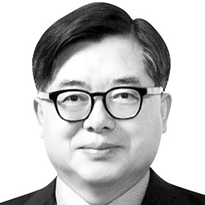
The author is Director of the East Asia Center, Institute for 21C Security Strategies Research-Korea.
Since Chinese President Xi Jinping announced a comprehensive Taiwan policy in January 2019, the possibility of a contingency in the Taiwan Strait has become a key security issue for East Asian states. For Korea, the implications are stark: about 40 percent of its trade volume passes through the Taiwan Strait, meaning any military confrontation would have direct economic consequences. The central question is how the United States and Japan would respond.
![Chinese President Xi Jinping, right, shakes hands with Japanese Prime Minister Sanae Takaichi ahead of their meeting in Gyeongju, Friday, Oct. 31. [KYODO/YONHAP]](https://koreaseafood.online/data/photo/2025/12/11/7af2be57-d97d-45be-a84b-fa0684faadcd.jpg)
Chinese President Xi Jinping, right, shakes hands with Japanese Prime Minister Sanae Takaichi ahead of their meeting in Gyeongju, Friday, Oct. 31. [KYODO/YONHAP]
In November, Japanese Prime Minister Sanae Takaichi told the Diet’s Budget Committee that a Chinese attack on Taiwan would constitute an “existential crisis” for Japan, implying Tokyo would intervene. Her words sparked outrage in China. Xue Jian, China’s consul general in Osaka, posted an inflammatory message on social media saying he would “have no choice but to sever the dirty neck lunging toward us,” prompting a diplomatic uproar.
Only weeks earlier, Xi and Takaichi had met for the first time on the sidelines of the Asia-Pacific Economic Cooperation summit in Gyeongju, yet the atmosphere was cold. After Takaichi’s remarks, relations deteriorated sharply, extending into military signaling and casting a shadow over diplomatic, economic and cultural exchanges.
Japan has been preparing for a Taiwan contingency since the Shinzo Abe administration, studying possible scenarios and updating its security laws to respond to a shifting strategic environment. Tokyo envisions three stages.
The first stage is a Chinese invasion of Taiwan. The United States would face a decision on deploying forces. Japan would designate the situation as a “significant impact event,” allowing U.S. forces to set up temporary bases across southwestern islands, with the Self-Defense Forces providing rear-area support.
The second stage begins once fighting breaks out between U.S. and Chinese forces. At this point, Japan would declare an “existential crisis,” enabling the Self-Defense Forces to exercise collective self-defense and engage in military action at U.S. request.
The third stage arises if China attacks U.S. bases or Japanese Self-Defense Force facilities in Japan. Tokyo would then invoke individual self-defense and the Self-Defense Forces would respond directly to the Chinese military. This would lead to a full-scale war involving the United States, Japan and Taiwan against China. Takaichi’s remarks were interpreted as referencing this second stage.
These Japanese positions stem from the transformation during Abe’s second term, when Japan reoriented itself toward becoming a state capable of wartime operations.
Current tensions between China and Japan trace back to their 1972 normalization of relations. Both sides endorsed a “one China” framework but interpreted it differently. China has consistently claimed that Taiwan is part of its territory. Japan, while not contesting China’s position, maintained strategic ambiguity, insisting that a peaceful resolution was a prerequisite. If Beijing were to pursue unification through force, the joint communiqué that underpins bilateral ties would be effectively void.
For Korea, the escalation offers several lessons.
First, Seoul must consider how to respond when China seeks to pressure neighboring governments to retract statements and asserts power to shape foreign political discourse. Korea experienced similar pressure during the THAAD dispute. Preventing a repeat will require pragmatic diplomacy and mutual respect in Korea-China relations.
![Masaaki Kanai, Director-General of the Japanese Foreign Ministry's Asian and Oceanian Affairs Bureau, stands next to Liu Jinsong, Director-General of the Chinese Foreign Ministry's Department of Asian Affairs, on the day of their meeting in Beijing, China November 18, [REUTERS/YONHAP]](https://koreaseafood.online/data/photo/2025/12/11/fc1bf94b-ecef-41e5-9601-3383cd0dc478.jpg)
Masaaki Kanai, Director-General of the Japanese Foreign Ministry's Asian and Oceanian Affairs Bureau, stands next to Liu Jinsong, Director-General of the Chinese Foreign Ministry's Department of Asian Affairs, on the day of their meeting in Beijing, China November 18, [REUTERS/YONHAP]
Second, Korea must ensure that a Taiwan contingency does not automatically become a Korea contingency or a crisis for the Korea–U.S. alliance. Avoiding the worst outcome means advance consultations with Washington so the alliance functions effectively in an emergency. A U.S. think tank’s Taiwan-strategy simulation found that without Japanese cooperation, the U.S. military would lose to China, underscoring the importance of U.S. Forces Korea. Preparing for multiple scenarios is essential.
Third, Korea must strengthen economic security as China-Japan tensions persist. Korea needs to reinforce its technology base, services and supply chains to reduce vulnerabilities. With semiconductors, rare earths and other strategic materials increasingly used as instruments of national power, Seoul must prepare for potential disruptions. If China accelerates its efforts toward unification and the U.S.-Japan alliance pushes back, destabilizing the regional balance, a Taiwan crisis could quickly evolve into a direct security threat to the Korean Peninsula. This is the central question raised by the deepening China-Japan conflict.
This article was originally written in Korean and translated by a bilingual reporter with the help of generative AI tools. It was then edited by a native English-speaking editor. All AI-assisted translations are reviewed and refined by our newsroom.


with the Korea JoongAng Daily
To write comments, please log in to one of the accounts.
Standards Board Policy (0/250자)