

Tax incentives for bequests can help strengthen Korea’s culture of giving
Published: 25 Nov. 2025, 00:04
Audio report: written by reporters, read by AI
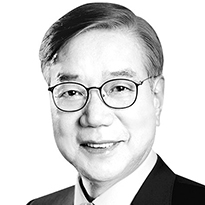
The author is chairman of Green Umbrella (ChildFund Korea) , a child welfare agency.
Philanthropy is no longer the domain of a few benevolent individuals. In an era defined by low growth and rapid aging, charitable giving can function as a long-term strategy for national sustainability. Advanced economies already use giving as a policy tool to energize key areas such as the economy, welfare and the environment. Tax benefits and other public incentives serve as mechanisms to expand social resources.
![The thermometer-shaped fundraising tower installed at Gwanghwamun Square in Jongno District, central Seoul, shows a donation temperature of 101.1 degrees on Jan. 14. The Community Chest of Korea said that as of midnight, nationwide donations had reached 454.7 billion won, surpassing its target of 449.7 billion won earlier than expected. [YONHAP]](https://koreaseafood.online/data/photo/2025/11/25/aa371995-5d02-438a-a5db-5a7c0fa18759.jpg)
The thermometer-shaped fundraising tower installed at Gwanghwamun Square in Jongno District, central Seoul, shows a donation temperature of 101.1 degrees on Jan. 14. The Community Chest of Korea said that as of midnight, nationwide donations had reached 454.7 billion won, surpassing its target of 449.7 billion won earlier than expected. [YONHAP]
Korea’s giving culture has also grown in scale. Donations surpassed 16 trillion won in 2023, and the range of beneficiaries has broadened across welfare, education, scholarship programs, the arts, medicine and environmental causes. Individuals now account for more than 11 trillion won, or over 70 percent of all contributions. This shows that philanthropy is no longer limited to a select few.
Yet policy has not kept pace with this shift. As Korea ages, interest in bequest giving — the donation of assets accumulated over a lifetime — has steadily increased. It offers advantages in estate planning and in reducing inheritance tax burdens, making it an attractive option for those holding unlisted shares or illiquid real estate. In addition, through trust structures, individuals can leave bequests without a formal will, making it an efficient tool to pursue both tax planning and social value.
But many donors still hesitate. Korea’s tax burden remains a major obstacle, and bequest giving accounts for less than 1 percent of total donations. Many donors express frustration with the double burden of inheritance and gift taxes.
Countries with strong giving cultures have adopted robust incentives to encourage bequest philanthropy. One example is Britain’s “Legacy 10,” which reduces inheritance tax rates by 10 percent for estates that donate at least 10 percent of their assets. The impact has been significant. Britain’s bequest-giving market reached about 4.5 billion pounds (8.66 trillion won) in 2024, accounting for roughly 30 percent of donations raised by major charities. Legacy 10 is considered a key factor behind this growth.
Against this backdrop, the inheritance and gift tax amendment recently introduced in the National Assembly is timely. Korea has reached a point where a “Korean-style Legacy 10” should be seriously considered. The proposal centers on granting tax credits for donating a certain percentage of an estate.
Civil society organizations also argue that tax reductions should apply not only to bequests but to lifetime donations. This is more than a technical adjustment. It could accelerate the immediate circulation of charitable contributions into society, and in that sense goes further than the British model.
Expanding lifetime giving would generate positive spillover effects. A recent Korea-focused study published in Oxford Economic Papers examined data following changes to Korea’s donation tax credit system in 2014. It found that when the “price of giving” — the donor’s effective cost — rises by 1 percent, total donations fall by 3.5 percent. This is much larger than the roughly 1 percent decline observed in the United States. In other words, Korean donors respond sharply to tax policy changes. The result suggests that the fiscal cost of lowering gift taxes may be outweighed by the broader reduction in social costs achieved through expanded giving.
![Green umbrellas hang over Cheonggyecheon in Jongno District, Seoul, on Sept. 20, 2017. As part of a campaign to support children facing financial hardship, ChildFund Korea (Green Umbrella) hung the umbrellas bearing donors' names. [YONHAP]](https://koreaseafood.online/data/photo/2025/11/25/cd4b9441-4c06-43db-8051-b7778658d9f9.jpg)
Green umbrellas hang over Cheonggyecheon in Jongno District, Seoul, on Sept. 20, 2017. As part of a campaign to support children facing financial hardship, ChildFund Korea (Green Umbrella) hung the umbrellas bearing donors' names. [YONHAP]
Legacy 10 alone, however, is not sufficient. Donation assets today include cryptocurrency, stocks, insurance products, and real estate. Policy must be redesigned to accommodate this diversity. Some U.S. foundations already operate digital asset donation platforms, and Japan encourages a wide spectrum of gifts through its securities-based donation system. Korea, too, must build mechanisms that allow non-cash assets to circulate smoothly for public benefit.
Giving returns private assets to society, narrows generational gaps, and rebuilds trust in the community. It is also an essential form of social investment that supports children today and sustains society tomorrow. As the year draws to a close, even a single act of giving could help strengthen the foundation of our shared future.
This article was originally written in Korean and translated by a bilingual reporter with the help of generative AI tools. It was then edited by a native English-speaking editor. All AI-assisted translations are reviewed and refined by our newsroom.


with the Korea JoongAng Daily
To write comments, please log in to one of the accounts.
Standards Board Policy (0/250자)