

Good education is built by parents and teachers together
Published: 11 Sep. 2025, 00:04
Audio report: written by reporters, read by AI
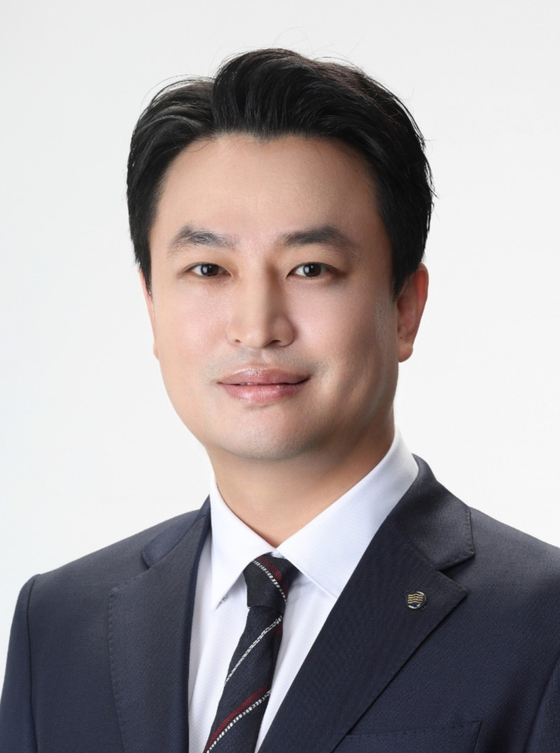
The author is president of the Korean Federation of Teachers’ Associations
A shocking incident occurred recently at a middle school in Gyeonggi. A student, dissatisfied with the way a class was being conducted struck a teacher with a baseball bat, breaking his ribs. At an elementary school in Busan, another student pulled a teacher’s hair when she tried to break up a fight between classmates.
In such cases, punishing the student is not enough. Education at home must complement discipline in the classroom. It is insufficient to require the parents of offending students to attend special education programs. Families must take real responsibility in teaching their children respect and self-control.
As a father of two sons, I have felt the weight of parenthood. A single word or glance can shape a child's self-esteem and growth. Teachers encounter the complexity of children's emotions every day, but those emotions are heavily influenced by the words and behavior of parents at home. Parents' attitudes are reflected in classroom behavior, peer relationships and how students treat their teachers. Too often we forget this connection.
![Bereaved families of teachers who committed suicide and members of the Korean Teachers and Education Workers Union hold a news conference and call for another investigation into the death of a teacher in front of the Seocho Police Station in southern Seoul on July 18, 2024. [NEWS1]](https://koreaseafood.online/data/photo/2025/09/11/b83ccdcc-9806-4d5c-b409-cc968b79a8c1.jpg)
Bereaved families of teachers who committed suicide and members of the Korean Teachers and Education Workers Union hold a news conference and call for another investigation into the death of a teacher in front of the Seocho Police Station in southern Seoul on July 18, 2024. [NEWS1]
A good parent does not simply shield a child from consequences. True guidance may cause temporary pain, but it helps children rise again. Good parents support teachers even when they disagree with them, recognizing educators as partners in raising children.
A child’s attitude in the classroom begins at home. Some students listen attentively to teachers while others turn away. Behind those reactions is the image of teachers instilled by parents. A comment like, “Your teacher must be working so hard” fosters respect and trust. By contrast, saying, “What does your teacher know?” nurtures suspicion and closes the door to learning.
The consequences can be severe. At one elementary school, a teacher tried to discipline a student after a fight. The child’s parent protested, insisting, “My kid would never do such a thing,” and even filed a child abuse report. After months of investigation, the teacher felt so drained she considered leaving the profession. But the other child’s parent sent a short text: “Teacher, you must be having a hard time. Thanks to you, my child has grown a lot.” That one message gave the teacher the strength to carry on.
Imagine a society where teachers tell students about the love and dedication of their parents, and parents speak at home about the effort and care of teachers. Such a culture of mutual respect empowers children. Good parents do not raise children into the people they wish them to be, but into the people they need to become. They encourage rather than overprotect, allowing children to try on their own and take responsibility for the results. Education is complete only when it begins in the family and continues in the classroom with parents and teachers working hand in hand.
The U.S. investigative journalist Abigail Shrier, in her book "Irreversible Damage" (2020), warns that “the hands of adults trying to protect children often end up breaking them.” Overprotection and excessive interference weaken independence and resilience. This lesson carries particular weight in Korean society. Children develop autonomy and perseverance when they resolve conflicts themselves. If adults always intervene, they never learn accountability or how to endure failure. For this reason, parental trust in teachers is essential.
Classrooms are spaces where children make mistakes, quarrel, and stumble, but also learn to stand again. Parents who want their children to grow properly must understand that positive words and attitudes toward teachers are ultimately for their own children's benefit. A single word of trust can be a child's permission to learn. Education is completed only when parents and teachers join hands.
![Participants hold up placards reading “Truth-finding is remembrance” and chant slogans during a memorial event for a middle school teacher in Jeju on the front lawn of the Jeju Provincial Office of Education on May 30. [YONHAP]](https://koreaseafood.online/data/photo/2025/09/11/3a1a9764-1443-4648-a829-d6913bc5cd03.jpg)
Participants hold up placards reading “Truth-finding is remembrance” and chant slogans during a memorial event for a middle school teacher in Jeju on the front lawn of the Jeju Provincial Office of Education on May 30. [YONHAP]
Yet today’s reality tells another story. “My child first” and “lawsuit-first” attitudes dominate. Too many parents respond to conflicts with complaints or legal action. As a result, teachers focus on defending themselves rather than teaching, and students fail to learn respect and responsibility.
Escaping this cycle requires building a culture of trust between teachers and parents. Good parents are not only protectors of their own children, but also partners in their learning and growth. With the fall semester underway in Korea, only by fostering a society where teachers and parents trust and respect one another can children grow as they should.
This article was originally written in Korean and translated by a bilingual reporter with the help of generative AI tools. It was then edited by a native English-speaking editor. All AI-assisted translations are reviewed and refined by our newsroom.


with the Korea JoongAng Daily
To write comments, please log in to one of the accounts.
Standards Board Policy (0/250자)