

Can Lee Jae Myung’s expansionary fiscal policy truly revive the economy?
Published: 17 Jul. 2025, 00:02
Jang Deok-jin
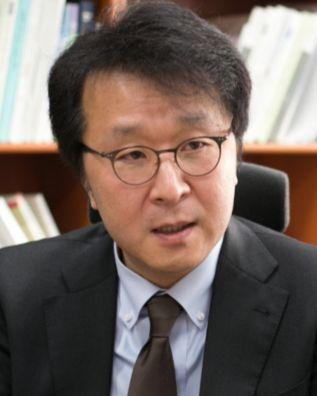
The author is a professor of sociology at Seoul National University.
Korea is entering another era of expansionary fiscal policy, following the Moon Jae-in administration. This time, under President Lee Jae Myung, the spending may be even more aggressive. The question is whether this bold approach will serve as a catalyst for economic recovery or devolve into populist handouts. Several key issues are worth watching.
The first is whether a fiscal rule law will be passed. Spending is sometimes necessary, but not without limits. Fiscal rules set legal boundaries — for instance, prohibiting year-on-year spending increases beyond a certain percentage. Among OECD countries, only Korea and Turkey lack such a system. Although multiple legislative attempts have been made, each has failed due to opposition from the Democratic Party.
If the goal of increased spending is truly economic revitalization — not vote-buying — then a fiscal rule must be established to prevent waste of taxpayer money. Without sealing the backdoor leaks in public spending, the administration’s intentions may not be seen as genuine.
![Lawmakers enter the main chamber of the National Assembly in Yeouido, western Seoul, on July 4. A 31.8 trillion won second supplementary budget bill passed the National Assembly plenary session on the same day. Presiding over the 29th Cabinet meeting on July 5, President Lee Jae Myung urged swift execution of the budget, stating, “As the first supplementary budget of the new administration was urgently drafted in light of the severe economic challenges facing the public, I ask that it be implemented without delay to serve as a primer for improving people’s lives.”[NEWS1]](https://koreaseafood.online/data/photo/2025/07/17/da61fbe7-d575-4e63-a45e-111eb46fccf4.jpg)
Lawmakers enter the main chamber of the National Assembly in Yeouido, western Seoul, on July 4. A 31.8 trillion won second supplementary budget bill passed the National Assembly plenary session on the same day. Presiding over the 29th Cabinet meeting on July 5, President Lee Jae Myung urged swift execution of the budget, stating, “As the first supplementary budget of the new administration was urgently drafted in light of the severe economic challenges facing the public, I ask that it be implemented without delay to serve as a primer for improving people’s lives.”[NEWS1]
The second issue is tax reform based on the principle that all citizens, regardless of income, should contribute. Korea’s tax structure remains skewed. Compared to OECD averages, corporate and property taxes are high, while income and value-added taxes are unusually low. This is the outcome of successive administrations treating tax policy as a political tool — imposing high rates on a small group of wealthy individuals while shielding lower-income groups.
This approach has created a narrative in which the wealthy are portrayed as villains, often referencing the top few percent. Yet, in reality, Korea’s wealthiest citizens pay some of the world’s highest income, property and inheritance taxes — often contributing more than they earn.
Unsurprisingly, many have begun leaving the country. Korea ranked fourth globally in net millionaire outflow last year. When they leave, investment and jobs go with them. Calls to “tax the rich” may win headlines, but they no longer serve the country’s fiscal needs. If tax revenue is lacking, it is because neither the government nor the National Assembly has undertaken needed reforms. Shifting that burden onto a small group only deepens inequality and political dysfunction.
The path forward lies in normalizing the tax structure and adopting broad-based taxation, where all citizens pay according to their civic responsibilities. Notably, universal taxation once received bipartisan support. In 2012, then-Saenuri Party floor leader Yoo Seong-min declared, “Welfare without taxation is a lie,” and the Democratic Party applauded the speech. Since then, both parties have shifted positions depending on political convenience. Yet only with universal taxation can fiscal sustainability be assured in Korea’s rapidly aging society.
Calls for redistribution without a foundation of tax reform lack credibility. Even reform of the inheritance tax, whose outdated deduction standards force surviving spouses to sell their homes to pay taxes, has stalled — underscoring the gravity of the challenge.
The third issue is whether benefits from increased spending are subject to clear criteria. The government often claims that direct cash payments will revive small businesses and neighborhood markets. But Korea’s self-employed sector is among the largest in the OECD. It has grown beyond sustainable levels, with saturated markets where failure rates for small restaurants exceed those of startups. Under these conditions, many are bound to fail.
If stimulus spending is truly urgent, it must be paired with structural reforms in the self-employed sector. This includes downsizing and redirecting labor into more productive industries. Simply injecting money into an unsustainable system is akin to administering painkillers without addressing the underlying illness. It may earn political popularity, but it is fiscally irresponsible.
![A pedestrian walks by shuttered down shops in the Jonggak Underground Shopping Arcade in Jongno District, central Seoul, on May 23. [NEWS1]](https://koreaseafood.online/data/photo/2025/07/17/16ae5245-1b6b-4f40-9bbf-c4806cf2d9ee.jpg)
A pedestrian walks by shuttered down shops in the Jonggak Underground Shopping Arcade in Jongno District, central Seoul, on May 23. [NEWS1]
Recent remarks by President Lee about debt relief for long-term delinquents via a “bad bank” are especially troubling. Using taxpayer money to forgive personal debt raises concerns about moral hazard and fairness toward those who repaid loans diligently. Yet the president dismissed criticism, saying, “Would anyone live seven years as a credit delinquent just hoping for relief?” It was a rhetorical sleight of hand that sidestepped the broader issue.
While such decisions may seem compassionate on an individual level, on a national scale, the incentives are dangerous. Without clear guidelines, expanding benefits quickly turns into vote-buying with public funds.
President Lee’s fiscal agenda has the potential to steer the country toward economic revitalization. But to do so, it must be underpinned by structural tax reform, spending rules and accountability. Without these safeguards, expansionary policy risks becoming little more than expensive politics.
Translated from the JoongAng Ilbo using generative AI and edited by Korea JoongAng Daily staff.


with the Korea JoongAng Daily
To write comments, please log in to one of the accounts.
Standards Board Policy (0/250자)