

Allegations of academic plagiarism expose political double standards
Published: 11 Jul. 2025, 00:04
Joo Jung-wan
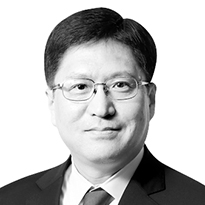
The author is an editorial writer at the JoongAng Ilbo.
As Education Minister nominee Lee Jin-sook faces allegations of academic plagiarism, critics are calling out what they see as a troubling pattern of selective outrage within Korea’s political landscape.
Imagine if these same allegations were leveled not at Lee, but at Kim Keon Hee, the wife of former President Yoon Suk Yeol. The response from the Democratic Party would likely be swift and unrelenting. In the past, Democratic lawmakers have fiercely attacked even minor suspicions surrounding figures tied to conservative politics.
![Education Minister nominee Lee Jin-soo speaks to reporters as she arrives at the Korea Institute of Educational Facility Safety in western Seoul on June 30. [YONHAP]](https://koreaseafood.online/data/photo/2025/07/11/2cb5ae09-c6dd-480b-b766-d91b3adf6278.jpg)
Education Minister nominee Lee Jin-soo speaks to reporters as she arrives at the Korea Institute of Educational Facility Safety in western Seoul on June 30. [YONHAP]
Yet in Lee’s case, the dominant tone among the ruling Democratic Party, which nominated her, has been strikingly quiet. While internal discussions may be ongoing, little has been voiced publicly — an omission that many observers find disappointing.
The ruling party's opponents, particularly the People Power Party (PPP), have also shown inconsistency. Many who defended Kim Keon Hee during similar controversies are now demanding rigorous scrutiny of Lee’s academic record. But plagiarism is not a partisan issue — it is, fundamentally, an ethical one. Misrepresenting someone else's research as one’s own is an act of intellectual theft, and it is particularly shameful when committed by scholars and educators.
In Kim Keon Hee’s case, Sookmyung Women’s University recently concluded that her master’s thesis plagiarized significant portions of Rosemary Lambert’s "20th Century Art." As a result, her degree was revoked. The university’s decision came more than three and a half years after plagiarism allegations first emerged in December 2021, ahead of the 20th presidential election.
Many question why the process took so long, especially given the evident similarities between Kim’s thesis and the source material. The university delayed launching an official review, and its final judgment came only after a change in administration returned the Democratic Party to power. This timeline has fueled speculation about political pressure, leaving some Sookmyung alumnae wondering publicly whether their university failed to uphold academic integrity.
Lee’s case warrants the same standards. A comparison between her thesis and that of one of her students suggests significant overlap — enough to raise questions of outright copying. If Lee used her student’s work without proper attribution, the issue should be addressed promptly and transparently. If not, she must provide a credible explanation.
The National Assembly’s Education Committee is scheduled to hold Lee’s confirmation hearing on July 16. Although the Democratic Party holds a majority in the legislature, the hearing must not become a mere formality. Lawmakers must thoroughly evaluate Lee’s qualifications and integrity. The public expects accountability, not partisan loyalty.
A similar controversy surrounds Chung Eun-kyung, the nominee for Minister of Health and Welfare. Chung’s husband is suspected of violating the Farmland Act. Article 121 of the Constitution states that farmland must be owned and cultivated by those who personally farm it. The law allows limited exceptions, but it remains unclear whether Chung’s husband qualifies.
Chung’s husband works as a physician in Incheon, raising doubts about whether he realistically could have commuted to and farmed land in Pyeongchang, Gangwon. If he did farm the land himself, documentation should be made available to confirm it. Compounding the controversy is the fact that someone else reportedly received direct government subsidies — so-called “basic agricultural payments” — for farming that land. If Chung’s husband was the one farming it, that inconsistency must be explained. If someone else improperly claimed the subsidy, they must be held accountable under the law.
![Chung Eun-kyung, nominee for Minister of Health and Welfare, arrives at her confirmation hearing preparation office in Namdaemun-ro, Jung District, Seoul, on June 30. [YONHAP]](https://koreaseafood.online/data/photo/2025/07/11/ac6c1960-4501-45bc-992a-9d967e575a2b.jpg)
Chung Eun-kyung, nominee for Minister of Health and Welfare, arrives at her confirmation hearing preparation office in Namdaemun-ro, Jung District, Seoul, on June 30. [YONHAP]
This episode recalls the 2021 case of former PPP lawmaker Yoon Hee-sook, whose father was accused of violating the same law. At the time, Democratic lawmakers insisted that even if Yoon had no direct involvement, she still benefited and should be held responsible. Yoon eventually resigned from her post.
The same standard should apply to Chung. Replacing “father” with “husband” is all that is needed to maintain consistency. Anything less would suggest that political loyalty trumps ethics. A double standard in such matters would only reinforce public cynicism toward Korea’s political class.
Translated from the JoongAng Ilbo using generative AI and edited by Korea JoongAng Daily staff.


with the Korea JoongAng Daily
To write comments, please log in to one of the accounts.
Standards Board Policy (0/250자)