

Gyeongju: Ancient Splendor Meets Modern Diplomacy [Photo Essay Contest - Gold Prize Winner]
Published: 28 Jul. 2025, 16:22
Updated: 28 Jul. 2025, 17:25
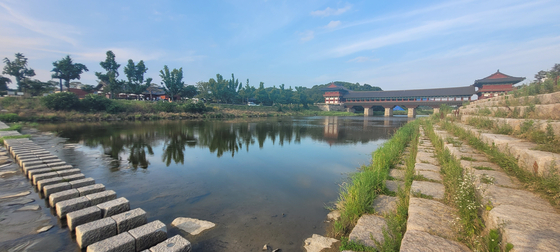
by Korotkova Anna, Seokyeong University
Standing on the historic grounds of Gyeongju, I was struck by the realization that this city is a living link between Korea's glorious past and its vibrant present. As the official host city for APEC 2025, Gyeongju represents the perfect fusion of historical grandeur and global leadership, making it an ideal venue for international diplomacy based on cultural understanding.
Gyeongju's heritage is not just historical artefacts; it reflects the philosophical and religious foundations that shaped Korean identity. The fusion of Buddhism, Confucianism and indigenous Korean beliefs led to a unique cultural blend that continues to influence Korean society in the modern era. This can be seen in the decoration of numerous temples, royal tombs and archaeological sites that are woven into the urban landscape, resembling jewels in a crown. Therefore, Gyeongju's second unofficial name is the open-air museum.
The beautiful Bulguksa Temple is perhaps the best and most notable evidence of the spiritual and architectural splendour of the Silla period. Cheomseongdae is believed to have been built during the reign of Queen Seondeok, the 27th queen of Silla, and is one of the landmarks symbolizing Gyeongju. Daereungwon Tomb Complex is the site of ancient tombs of the Silla period. These burial mounds are distinct tumuli on the flat ground only found in the Silla period. The total area is about 600,423 square meters and it contains 50 tombs of kings, queens and upper classes of the Silla period. The Woljeonggyo Bridge on my picture represents Gyeongju itself – I captured it perfectly, Gyeongju's beautiful nature and, if take a glance you can imagine how ancient Gyochon Villagers running or washing clothes on that stone bridge.
The selection of Gyeongju as the host city for APEC 2025 is no coincidence. As the former capital of the Silla Kingdom and a hub of the historic Silk Road, Gyeongju is a living example of global exchange and successful intercultural interaction. Nowadays the city evolving into a cutting-edge hub for the sciences, focusing on innovative industries like nuclear energy, small modular reactors (SMRs), and future vehicle technologies. Gyeongju is posed for green industry growth, hosting leaders in clean energy like including Korea Hydro & Nuclear Power Co., Ltd. and the Korea Multi-purpose Accelerator Complex.
The ancient capital of Silla remains a source of inspiration and guidance today, reminding us that the most profound solutions to human problems usually come from a source of cultural insight that has been tested and proven over centuries. When world leaders gather in Gyeongju for the APEC 2025 summit, they will remember what human civilization can achieve when guided by the ideals of harmony, compassion and respect for sacred sites.


with the Korea JoongAng Daily
To write comments, please log in to one of the accounts.
Standards Board Policy (0/250자)