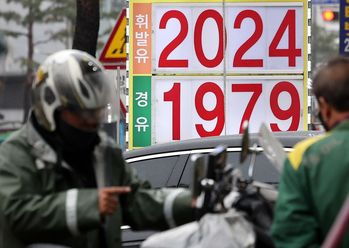
Fuel consumption has decreased since the country implemented a price cap system, an official from the Ministry of Trade Industry and Resources said Thursday, dispelling concerns surrounding supply disruptions caused by the Middle Eastern crisis.
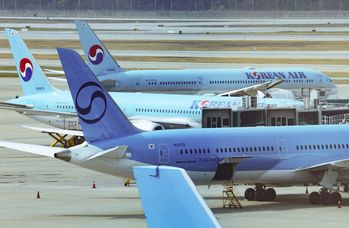
Airfares are poised to skyrocket further next month as Korean carriers have raised fuel surcharges for May to record levels, driven by a surge in oil prices in the wake of the lingering Iran war.
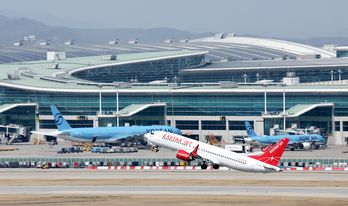
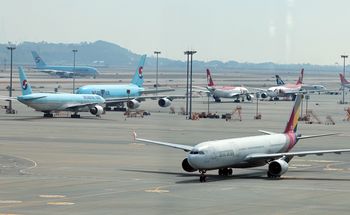
An aircraft takes off from Incheon International Airport on April 13 ahead of the announcement regarding international fuel surcharges.
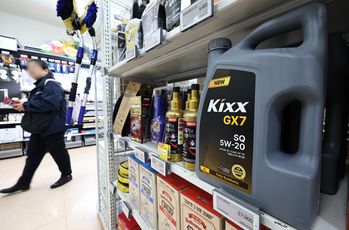
The government will conduct weekly checkups on automotive lubricants and marine fuel markets to rein in rising prices and stabilize supplies of those products, the Ministry of Trade, Industry and Resources said on Wednesday.
Korea has virtually suspended its jet fuel exports amid crude oil shortages, a move set to hit the United States — which relies on Korean fuel for roughly 80 percent of its supply — the hardest.
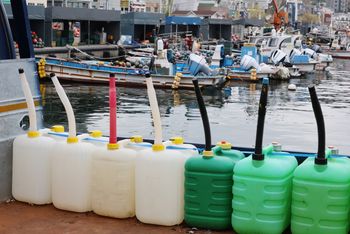
Oil containers are lined up on a fisher’s truck at Daebyeon Port in Gijang County, Busan, a major source of anchovies and seaweed, on April 1, the first day higher tax-free fuel prices took effect.
Airfare is rising sharply as a surge in global oil prices ripples through the aviation industry, raising concerns over further cost increases for travelers.
Fuel surcharges for flights operated by Korean airlines have surged by as much as threefold from the previous month in April due to the spike in global oil prices, industry watchers said Wednesday.
The government is considering tightening vehicle-use restrictions for public-sector workers, with the energy situation linked to the Iran war at risk of worsening.
Korean Air will implement an emergency management system starting in April as rising fuel costs linked to the Iran war increase pressure on the airline.
Korea JoongAng Daily Sitemap