

Indonesian undergraduate GKS student shares journey to SNU
Published: 06 Jan. 2026, 14:44
Updated: 06 Jan. 2026, 17:53
-
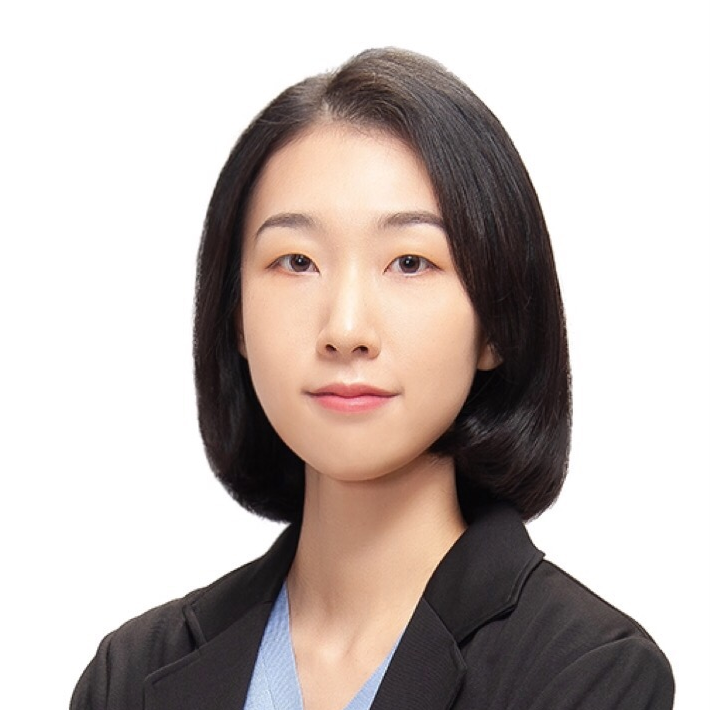
- LEE TAE-HEE
- [email protected]
![Josephine Elysia Linfred poses for a photo in front of Seoul National University's main gate. [JOSEPHINE ELYSIA LINFRED]](https://koreaseafood.online/data/photo/2026/01/06/267a5c09-c70f-4469-a451-459bfdac960f.jpg)
Josephine Elysia Linfred poses for a photo in front of Seoul National University's main gate. [JOSEPHINE ELYSIA LINFRED]
What if you found out about the Global Korea Scholarship (GKS) less than a week before the application deadline?
That scenario may sound stressful to some. But for Josephine Elysia Linfred, who is studying Computer Science Engineering at Seoul National University as an undergraduate GKS scholar, it was possible with some prior preparation and the drive to study in her field.
Korea initially stood out to Josephine as a great place to study technology, and she was preparing to apply to KAIST — although not through the GKS — as she only briefly heard of the scholarship and didn't know much in detail.
But after she was urged to learn more, she learned that applications for the undergraduate GKS program were open and decided to give it a try.
"The day I found the Korean embassy in Indonesia’s webpage about GKS was a Saturday, and the application was due Thursday the following week," said Josephine, an Indonesian student selected for the scholarship in 2023 through the Embassy Track.
"At that time, I had an early draft of a personal statement for my application to KAIST, so I spent Saturday evening through early Tuesday finishing the personal statement based on that. Then I spent late Tuesday into dawn Wednesday writing the study plan."
It was a short amount of time, but she had a clear future aspiration — studying AI and how it can apply to EdTech. She also poured her time into watching YouTube videos from GKS scholars on how to write a personal statement and study plan.
While she did make it happen, Josephine sees the ideal timeline to write the essays to be anywhere between one and three months.
"Some applicants I met had a strong English foundation, story, writing skills, goals and visions, which makes writing essays faster, easier and need less revisions," said Josephine. "Some might take more time than others due to unclear vision and English writing level. For the personal statement, I think the ideal timeline would be one to three months, depending on the level of busyness and writing level, and half a month to a month for the study plan."
GKS is a scholarship offered by the Korean government that provides full tuition, a monthly stipend, language study support, health insurance fees and round-trip airfare. Students can apply for the scholarship via two tracks: the University Track, which allows students to apply to one university, and the Embassy Track, which has a quota for each country and allows students to apply to three universities.
While GKS for undergraduate programs accepts applications in September and October, GKS for graduate programs opens applications in February.
For those interested in graduate GKS applications, K-campus, a platform for international students run by the Korea JoongAng Daily, will be hosting the "GKS 101 with K-campus" webinar on Feb. 9. More details about the event can be found on K-campus.
To discuss the scholarship in detail, Josephine had an email interview with the Korea JoongAng Daily to talk about how she earned the scholarship and what helped her stand out.
![Josephine Elysia Linfred during hackseoul 2025, a hackathon held in Seoul on Nov. 8 and 9, 2025. [JOSEPHINE ELYSIA LINFRED]](https://koreaseafood.online/data/photo/2026/01/06/bb8eb444-dd65-4a75-aa53-a0eb89179bbf.jpg)
Josephine Elysia Linfred during hackseoul 2025, a hackathon held in Seoul on Nov. 8 and 9, 2025. [JOSEPHINE ELYSIA LINFRED]
Q. The GKS selection process considers various factors such as GPA, extracurriculars and awards. What about you made you stand out, and which factor do you think is most important among Indonesian Embassy Track applicants?
I feel like it's the combination of my dream, goal, vision and plan (that made me stand out). I had always been interested in EdTech and creating my own startup in the industry someday. During high school, I had quite a high GPA and won two competitions in user interface and user experience design, as well as business planning, where our team created a plan for an EdTech company. I also had a small business and a high Ielts (International English Language Testing System) score. After high school, I also enrolled in a diploma program in IT.
I guess what’s important differs a lot each year, but I feel like having a clear story, supported by what you did to achieve your goal, why you want to study in Korea and why you want to study your major is really important. However, I think that this has shifted throughout the years, such as how language proficiency certificates now seem to hold more weight compared to before.
Q. Some applicants worry that they don’t have enough experience to include in their personal statement because opportunities can be limited during high school. What activities were you involved in, and what advice would you give to students hoping to build meaningful experiences?
In high school, I was part of the student council and participated in some competitions. I also ran a small business during the Covid-19 pandemic. If you are still a high school student, I would suggest trying to first figure out what you want to achieve during university. After that, I feel like the rest will sort of come naturally as one searches for what they can do to further grow. Experiences can also be in the form of passion projects, which might have fewer boundaries in terms of age and education level compared to internships.
Q. You have to choose three universities when applying to GKS through the Embassy Track. How did you make the decision?
Because of my limited time and information, I did not really understand what the University Track was and how it differed from the Embassy Track in terms of competition rate and other factors. I only knew that the University Track didn't offer the universities I was aiming for. Top universities such as SKY (acronym for Seoul National University, Korea University and Yonsei University) are only offered through the Embassy Track. I also found out about GKS through the embassy website, which led me to apply through the Embassy Track.
I selected Seoul National University, Yonsei University and Kyungpook National University as my three universities. I first filtered universities by looking at their rank in the QS World University Rankings' subject rankings, and then saw whether the curriculum and facilities fit me and my vision.
Q. Was it difficult to tailor your personal statement to fit all three universities?
I wrote my personal statement in a more general way that catered toward my profile as a person and how it led to Korea, rather than specifically mentioning the universities. I actually only first mentioned and wrote why I wanted to go to the universities in my study plan, which was still quite general in my opinion. However, I was asked about how I chose these universities during the interview. I also wrote all the courses I wanted to take at each university throughout my four years, and wrote detailed comments about some courses or activities that are unique to a certain university as well.
Q. In what language was your interview conducted, and how long did it take?
It was conducted in English, as I was unable to speak Korean at that time. I’m not sure about the time, but it felt like it was long, and I would say it took around 10 to 15 minutes. However, I heard from the latest applicants that it now takes no longer than 5 minutes, and things might have changed.
Q. What were some of the interview questions you were asked, and was there a question that particularly surprised you?
I got asked some basic interview questions like my strengths and weaknesses, what I know about Korea, what I learned from my small business experience, how and why I chose the three universities, where I see myself in 15 years and how I will learn Korean. I was also asked about what I think about the ongoing debate on the ethics of AI, as I showed a strong interest in the field.
One question that surprised me was why I chose Korea when there are closer countries to Indonesia, such as Singapore, which also has higher-ranked universities in the field, or other countries such as the United States.
Q. GKS students have a one-year Korean language learning period. How was that experience, and was it enough to get you through Korean classes?
I came from the first batch that went through the Korean language learning period at the university we got admitted to. It was pretty different, and there was only one other GKS scholar in the language school, but it was nice as we helped each other adapt during the early days.
Because I didn't attend the language program with other GKS scholars, the classes I took were more focused on daily Korean, especially up to the level 3 classes, and didn't include additional Topik preparation. Topik classes were only available starting from level 3 and required an additional fee.
I felt that the overall pace was relatively slow and studied independently outside of the language program. By the end of the program, I successfully achieved Topik level 5. I was able to understand approximately 70 to 80 percent of the Korean-taught classes during my first year, but my most significant progress occurred after entering university. My proficiency improved more rapidly and naturally through frequent interactions with native Korean speakers and direct participation in Korean-taught classes.
Q. Are there any tips you want to give to GKS applicants?
Through conversations with applicants over the past few years, I have noticed that many prospective candidates tend to overthink or fixate on their chances of being selected, often comparing themselves to others who may appear to have stronger profiles. I would strongly encourage applicants not to dwell on such comparisons or repeatedly ask about their probability of acceptance. After all, no one truly knows this except the GKS application reviewers themselves. Instead, it is far more productive to stay focused on areas within one’s control, such as refining application essays, obtaining relevant language certifications and gaining meaningful academic or extracurricular experiences.
I have also observed that many applicants immediately reach out to former GKS scholars with questions that are already clearly addressed in the official guidelines or on the program’s website. I would strongly advise applicants to carefully read and rely on the official sources first, as application procedures and requirements can change significantly over time. In some cases, information shared by others, even past GKS scholars, may be outdated or inaccurate, and relying on such sources can create confusion when the correct information is available in official materials. However, if they need extra information, there is a lot of information they can obtain from TikTok, Instagram or YouTube, and even blogs from GKS scholars who shared their insights and experiences.
BY LEE TAE-HEE [[email protected]]


with the Korea JoongAng Daily
To write comments, please log in to one of the accounts.
Standards Board Policy (0/250자)