

Soon-to-be Yonsei graduate from India on what's most important when applying to GKS
Published: 30 Dec. 2025, 11:29
-
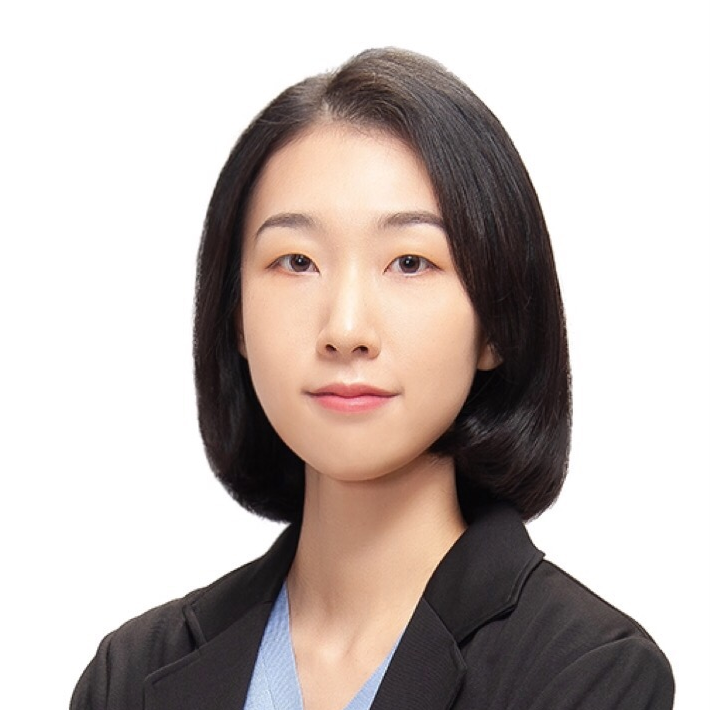
- LEE TAE-HEE
- [email protected]
![Sara Nuruddin Panjawani at Yonsei University in Sinchon, western Seoul [SARA NURUDDIN PANJAWANI]](https://koreajoongangdaily.joins.com/data/photo/2025/12/30/1b009169-2ed8-4308-881b-f402e565414f.jpg)
Sara Nuruddin Panjawani at Yonsei University in Sinchon, western Seoul [SARA NURUDDIN PANJAWANI]
When Yonsei University came to introduce itself to Sara Nuruddin Panjawani's high school in India, she had no way of knowing that she would eventually attend the university's School of Business as an undergraduate Global Korea Scholarship (GKS) scholar.
Though she was presented with various universities in the United States, Canada and Europe, Yonsei caught her eye, though she didn’t apply right away — as the application deadline had passed, she instead took a gap year. She became even more attracted to Yonsei after finding out that the GKS, a fully-funded scholarship, was available.
She started preparing for the scholarship immediately and applied via the Embassy Track in India, getting selected for the 2021 undergraduate GKS program.
"For me, I think the activities I did during my gap year helped me get selected," said Panjawani, who finished her last semester as a Business Administration student at Yonsei University. "I was an intern at my high school and also tutored. I also took the time to study for the IELTS [International English Language Testing System] and learned Hangul during the time."
GKS is a scholarship offered by the Korean government that provides full tuition, a monthly stipend, language study support, health insurance fees and round-trip airfare. Students can apply for the scholarship via two tracks: the University Track, which allows students to apply to one university of their choice, and the Embassy Track, which has a quota for each country and allows students to take their shot at three universities.
While GKS for undergraduate programs accepts applications around September and October, GKS for graduate programs opens applications around February.
For those interested in graduate GKS applications, K-campus, a platform for international students run by the Korea JoongAng Daily, will be hosting the "GKS 101 with K-campus" webinar on Feb. 9, 2026. More details about the event will be announced via K-campus in the future.
To discuss the scholarship in more detail, Panjawani sat down with the Korea JoongAng Daily to talk about how she earned the scholarship and what helped her stand out.
Below are edited excerpts from the interview, edited for length and clarity.
![Sara Nuruddin Panjawani poses for a photo with her teammates after getting the top prize for the 2024 ESG/CSR Case Competition, hosted by Yonsei University's School of Business [YONSEI UNIVERSITY]](https://koreajoongangdaily.joins.com/data/photo/2025/12/30/90a55cce-f9cb-42e0-992c-7a3d14a32bdc.jpg)
Sara Nuruddin Panjawani poses for a photo with her teammates after getting the top prize for the 2024 ESG/CSR Case Competition, hosted by Yonsei University's School of Business [YONSEI UNIVERSITY]
Q. The GKS selection process considers various factors such as GPA, extracurricular activities and awards. Among Indian Embassy Track applicants, which factor do you think is the most important?
I feel that most Indian students have good grades, and it's more like a thing that gets crossed out if you have certain scores. For instance, if you have a percent grade range higher than 80 out of 100, then they don't really think about grades that much. Once your grades are at a certain point, grades don't really make you stand out as much because everyone has them. Things you did during high school and the projects related to the major you are applying for are what become a plus.
Q. You have to choose three universities when applying to GKS through the Embassy Track. How did you make the decision?
I had my mind on the SKY universities (acronym for Seoul National University, Korea University and Yonsei University). But for the Embassy Track, I heard from people that it's good to not apply to all three SKY universities since you might not get into any of them. So I chose one SKY university, which was Yonsei, another that comes close to SKY universities and one university outside of Seoul.
Q. How much time did you spend writing your personal statement and study plan?
I spent around five months preparing my personal statement, and I think people use around three months on average. Your first draft is not going to be perfect. You need to have your friends and family read it and give you feedback, then rewrite it until you get a perfect personal statement. Sending it to only friends and family might make it a bit casual, so it's also good to send it to your teachers and professors.
Q. How much did your personal statement and study plan change after getting feedback?
I'd say the entire essay changed. Of course, the structure changed, but the hook also changed. I first couldn't come up with a hook, so I started my essay without one and planned to write and change my hook once the essay was going somewhere. When you have a proper body, you can easily come up with a hook that can catch the reader's attention. I also made sure the end of my conclusion was connected to the hook, so the essay comes together.
Q. When writing about the motivation to apply in the personal statement, some applicants write about how they became interested in Korea through K-pop and Korean dramas. Some say this is too cliché, while some say it's okay. What's your opinion?
I did focus more on the academic side when writing about the motivation to apply. However, I think most Indian students do get introduced to Korea through K-pop and Korean dramas, and it's not a lie if you say that's what happened. But how you take that and connect it to your experience will be important. I also listened to K-pop and watched Korean dramas, but I then researched Korea and its culture, how businesses in the country work and if any areas overlap with my academic interests. Things like that can be a starting point for your motivation to apply.
Q. GKS was made to support students who could bridge Korea and their home countries, and some feel they should emphasize plans to return home when writing about their future in the study plan. Others say it’s acceptable to express plans to live and work in Korea, given recent policy shifts. Which approach do you think is right, and how did you write your future plan?
I actually listed all of the options that I might pursue. I wrote about how I could consider the three options: doing a master's, working here or going back to India. Then, at the end of the future plan section, I also wrote that one thing I'm sure of is that I would still be learning in my future. I basically wrote down all of the possibilities because you don't know what will happen in the future. I'm set to graduate this semester, and I actually got accepted as an intern in global sales.
Q. You applied to three universities through the Embassy Track. Was it difficult to tailor your personal statement to fit all three universities?
Your study plan is being read by all three universities, so you can't appeal to only one university and have to be general. For me, I actually mentioned the three universities in my essay, but I also found some commonalities that they have. For example, if you're applying for a business program, it might be that all three have good startup support. In business, I wanted to study things related to ESG (environmental, social and governance). All three universities had ESG centers, which would offer opportunities for me as a student, so I wrote that.
Doing research about the universities also took a bit of time. I didn't completely understand Korean back then, so I went through the universities' English websites. But information on the English website can be different and limited compared to the Korean one, so I also searched on Facebook or YouTube.
Q. What language was your interview conducted in, and how long did it take?
I didn't know any Korean back then, and Korean questions were only for those who had Topik scores. So for me, all the questions were in English. The interview also took around seven minutes for me, with them asking three to four questions. I had prepared a list of expected questions, around 50, and I was actually surprised by how short the interview was.
Q. What were some of the questions you were asked, and was there a question that surprised you?
The first question was to introduce myself, and then there were some questions based on my application. I mentioned some of my projects, my internship and experience doing Model United Nations (MUN), so they asked me about that. Because of MUN, the interviewer also asked if I knew a former UN Secretary-General from Korea. I knew it was Ban Ki-moon, but I blanked out because I was nervous and told them I was sorry and couldn't remember. But I also added that I would make sure to study and learn more, and I think they were understanding.
Q. Are there any tips you want to give to other GKS applicants?
For the personal statement, it's important to remember you have to reflect on yourself. You can't just write about what you did, but you also have to write about what you actually gained from the experience, if there were any failures and if there's anything you learned from that. Instead of just listing your experiences, take the time to write about how it affected you and how it could help you in your future career or life in Korea.
BY LEE TAE-HEE [[email protected]]


with the Korea JoongAng Daily
To write comments, please log in to one of the accounts.
Standards Board Policy (0/250자)