

Presidents and scientists, and national prioritization
Published: 04 Sep. 2025, 00:05
Audio report: written by reporters, read by AI
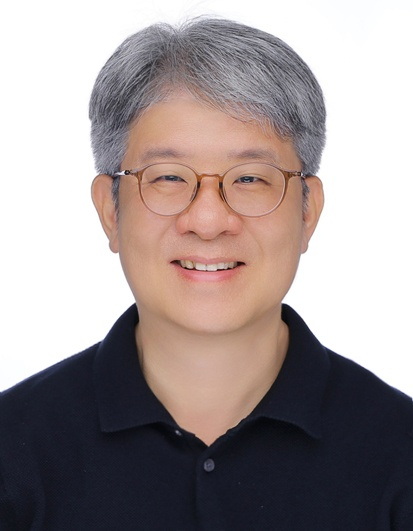
The author is a principal researcher at the Korea Astronomy and Space Science Institute.
Scientists are trained to question what others might overlook. They ask, almost by habit, “Is there evidence?” and are even willing to doubt their own assumptions. Research is not simply their occupation but their identity. Pride runs deep, yet when faced with logical counterarguments or data, they step back.
It is rare to see scientists and a president seated together. I recall seeing three different presidents from afar. The first was Roh Moo-hyun, who attended the 2003 Science Day ceremony. His unscripted admission — “I do not know science” — was met with applause and cheers. By contrast, the speeches heard at the 2013 New Year’s gathering for scientists by then-President Park Geun-hye and at the 2023 Korea Space Forum by former President Yoon Suk Yeol carried less resonance. At the time, few could have imagined the political fates awaiting them.
![President Lee Jae Myung listens to remarks from participants during the first plenary meeting of the National Science and Technology Advisory Council at the presidential office in Yongsan on Aug. 22. [PRESIDENTIAL OFFICE PRESS CORPS]](https://koreaseafood.online/data/photo/2025/09/04/3378f9dc-f036-4244-b15d-928815305219.jpg)
President Lee Jae Myung listens to remarks from participants during the first plenary meeting of the National Science and Technology Advisory Council at the presidential office in Yongsan on Aug. 22. [PRESIDENTIAL OFFICE PRESS CORPS]
Their approaches differed. Roh, who admitted to lacking scientific knowledge, showed respect by appointing the first deputy prime minister for science and technology. Park, despite being the daughter of the president who had laid the foundations for a science-driven nation, moved in another direction. Under her slogan of "normalizing the abnormal," welfare budgets for researchers were cut, and benefits in education and health were scaled back. Institutional autonomy to use performance bonuses or upgrade research facilities was curtailed, wounding scientists' pride.
The situation under Yoon brought different frustrations. At the Korea Space Forum, his security team installed airport-style screening systems, dominating the venue in a way that left scientists asking why such a large work force was needed. Beyond the symbolism, Yoon treated scientists as if they were suspects, cutting research and development budgets and leaving scars that remain unhealed.
Last month, President Lee Jae Myung struck a different tone. At a meeting of the Presidential Advisory Council on Science and Technology, he called science and technology the nation’s core engine of growth and pledged to expand funding. Scientists welcomed the commitment but stressed that money alone will not resolve their concerns. After years of neglect and bruised dignity, they hope the government’s renewed attention will begin to mend deeper wounds.
This article was originally written in Korean and translated by a bilingual reporter with the help of generative AI tools. It was then edited by a native English-speaking editor. All AI-assisted translations are reviewed and refined by our newsroom.


with the Korea JoongAng Daily
To write comments, please log in to one of the accounts.
Standards Board Policy (0/250자)