

Seokguram grotto: Symbol of Silla's past and future
Published: 14 Aug. 2025, 07:00
Updated: 30 Oct. 2025, 17:12
Audio report: written by reporters, read by AI
Everything about the Seokguram grotto leaves a vivid impression. etched onto the soul of anyone who stands before it for the first time. This cultural treasure of the Silla Dynasty (57 B.C. to A.D. 935) resonates with a profound sense of awe — regardless of who you are, where you come from or the culture you’ve lived in.
![Seokguram [LEE SO-YOON]](https://koreaseafood.online/data/photo/2025/10/30/0b1270c8-426d-4931-b6a5-912f386ad353.jpg)
Seokguram [LEE SO-YOON]
If you watch quietly, the Buddha figures within the grotto seem to stir to life. The overwhelming beauty, born of painstaking labor and spiritual devotion, calms shattered, restless hearts and leads them to peace. Above all, the otherworldly stillness that permeates the space offers comfort and a quiet sense of fulfillment.
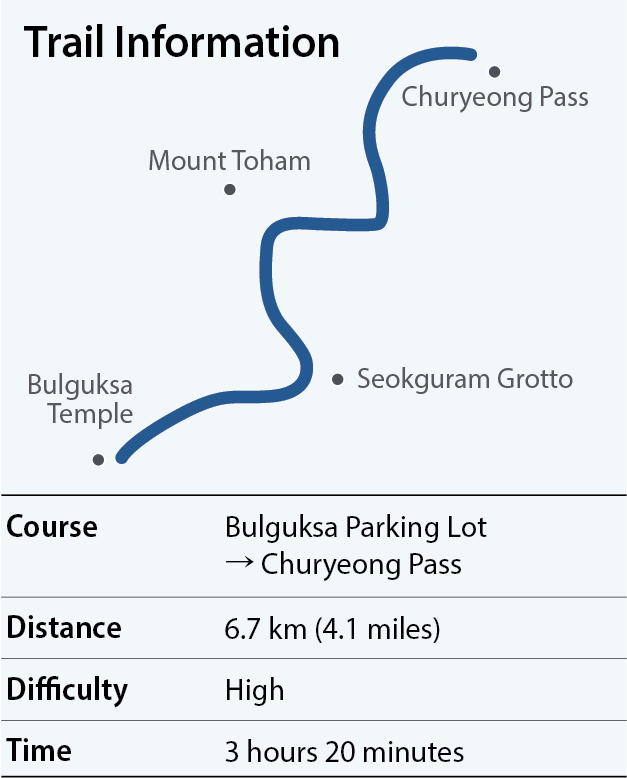
The steep road to Seokguram is one everyone should walk at least once. With every turn, the view beneath your feet compels you to slow down and take it in. In spring and autumn, dense fog often wraps the path in a dreamlike haze, as if you’re entering another realm.
As you ascend, a certain face naturally comes to mind: Kim Daeseong, the loyal Silla subject who dedicated his life to creating both Seokguram and the nearby Buddhist temple of Bulguksa. His legacy is bound to a curious legend.
A son reborn
The “Samguk Yusa,” Korea’s 13th-century chronicle of legends and history, tells of a poor woman named Gyeongjo in the village of Moryang-ri. Her son, Daeseong, labored as a servant in a wealthy household, earning just enough to build a thatched hut and farm a modest field. One day, a monk named Jeomgae held a Buddhist ritual at Heungnyunsa Temple, requesting fifty hemp cloths as an offering. A devotee donated them, and Jeomgae prayed that the donor would be blessed with peace, longevity and good fortune.
Moved, Daeseong and his mother offered their precious farmland. Shortly after, Daeseong died. That night, a voice was heard at the home of Kim Munryang, a respected Silla official:
“The soul of the child named Daeseong will be reborn in your house.”
When the baby was born, he refused to open his left hand for seven days. When he finally did, an iron object engraved with the characters “Daeseong” was revealed — thus he was given that name. In time, his mother from his previous life was brought into the household and cared for.
As an adult, Daeseong went hunting on Mount Toham and killed a bear. That night, he dreamed the bear appeared to him in human form, asking, “How could you kill me?” Terrified, he pleaded for forgiveness. The bear asked that a temple be built in its memory. Repentant, Daeseong renounced hunting and built Jangsu Temple on the very site of the encounter. He later founded Bulguksa Temple in honor of his benefactors, Kim Munryang and his wife, and constructed Seokguram as an offering to his mother from a previous life.
Legends like these defy logic but endure in cultural memory. Kim Daeseong is remembered as the protagonist of this extraordinary tale — one who straddled two lifetimes and honored two sets of parents.
![Bulguksa [LEE SO-YOON]](https://koreaseafood.online/data/photo/2025/10/30/8cf4c450-e939-46f5-aa84-ae4ef2334182.jpg)
Bulguksa [LEE SO-YOON]
The bear and Baekje
What stands out is Daeseong’s guilt over killing a bear. In his time, hunting was common, and there was no shame in killing wild animals. So why did he feel remorse?
Seokguram scholar Seong Nak-joo offers an intriguing theory: the bear was not a literal animal but a symbol. Across Asia, bear worship was widespread — especially in Baekje (18 B.C. to A.D. 660), where the bear was revered as a totem. The “bear” that Daeseong killed may have been a Baekje refugee. Seen this way, the legend becomes a metaphor for regret, healing and reconciliation.
Whether reincarnation occurred or not is beside the point. What matters is that people believed it. In a devout Buddhist society like Silla, no story held more power than that of a man building temples to bring peace to both his past and present parents. Perhaps this sentiment shaped the legends that comforted Baekje refugees and allowed Silla to imagine a more unified future.
The mystery of Seokguram’s architect
To visit Seokguram with this background in mind is to encounter something deeper than a remarkable example of Buddhist architecture. The inability to enter the inner sanctum only heightens one’s sense of longing. Everything about the grotto, crafted with uncanny precision, draws you closer.
Some scholars believe Kim Daeseong may have been a master sculptor himself. But as a noble, it’s unlikely he possessed such technical skill. More plausibly, he led a group of artisans — perhaps persuading them to realize a shared vision of spiritual and artistic perfection.
Seokguram is geometrically unique. Its circular chamber is unlike any previous Korean structure, save for Cheomseongdae Observatory. Both deviate from traditional Silla architecture, prompting speculation that the grotto may not have been built solely by Silla hands.
Silla’s greatest cultural achievements often involved Baekje artisans. The famed nine-story Hwangnyongsa Pagoda, once the tallest wooden structure in East Asia, was reportedly built by the Baekje craftsman Abiji. Another Baekje artisan, Asadal, helped construct the Sakyamuni Pagoda at Bulguksa. It is entirely plausible that Seokguram, too, was shaped through collaboration between Silla and Baekje craftsmen.
Architecturally, Seokguram bears hallmarks of the design of ancient Rome, the cultural root of Nestorianism — an early branch of Eastern Christianity. Its dome and symmetry reflect styles unknown in traditional Korean architecture. It is conceivable that foreign experts — perhaps Nestorian builders or engineers familiar with Roman techniques — contributed to its creation.
![Seokguram [LEE SO-YOON]](https://koreaseafood.online/data/photo/2025/10/30/7c8fbc2b-a8dd-4c15-9a92-b9b76ace975b.jpg)
Seokguram [LEE SO-YOON]
From reflection to unity
Kim Daeseong devoted 24 years of his life to building Seokguram and Bulguksa, but he passed away before seeing them completed. According to the “Samguk Yusa,” the Silla government finished what he began — perhaps recognizing that his efforts were not merely personal acts of faith, but acts of healing for an entire era.
Daeseong understood that without reflection — without a reckoning in the grotto — the vision of a Unified Silla (668-935) would remain incomplete. Bulguksa, in this light, was a temple of culmination. But Seokguram was a temple of confession.
The road to these sacred sites was not easy. It demanded a lifetime of sacrifice from Daeseong and sincere humility from the Silla elite. When they finally extended a hand to the refugees of Goguryeo (37 B.C. to A.D. 668) and Baekje, imagine how light their steps must have felt as they entered Bulguksa. In that moment, the temple became more than stone — it became the embodiment of a new Silla.
Seokguram still welcomes us. Though time has left its scars, let us not dwell on what was lost. Let us remember instead the prayers whispered in its central hall — the last ones spoken by Kim Daeseong, and the first ones offered by a generation seeking forgiveness and peace.
Sponcered by Gyeongju
![Bulguksa [LEE SO-YOON]](https://koreaseafood.online/data/photo/2025/10/30/00c6e446-3d7c-403a-8bae-1a2c36cbd0e6.jpg)
Bulguksa [LEE SO-YOON]


with the Korea JoongAng Daily
To write comments, please log in to one of the accounts.
Standards Board Policy (0/250자)