

A tower of sovereignty beneath the stars
Published: 07 Aug. 2025, 07:00
Updated: 30 Oct. 2025, 17:11
Audio report: written by reporters, read by AI
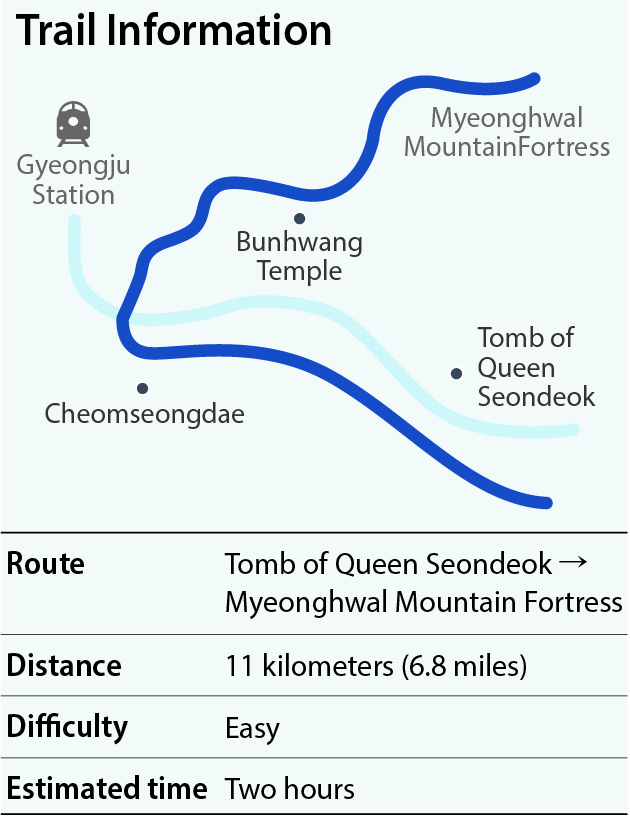
Where was the center of Seorabeol, the ancient name of today's Gyeongju and the capital of the Silla Dynasty? Naturally, it would have been Wolseong — the ancient royal palace at the heart of Silla. One can imagine its brilliant nightscape and the scientific elegance of Anapji Pond glistening under moonlight. Standing amid the ruins of Wolseong today, if you close your eyes and feel the wind, you might almost see a royal carriage pass by, trailed by a procession of gallant warriors.
But the grandeur of Wolseong has long vanished. All that remains is a vast stretch of red earth — a silent, barren land that leaves visitors with a sense of aching nostalgia. And yet, among the remnants of Silla’s glory, one structure endures: Cheomseongdae Observatory.
![Night view of Cheomseongdae. [LEE SO-YOON]](https://koreaseafood.online/data/photo/2025/10/30/72e621e7-19af-4908-9998-e4c6c01b4475.jpg)
Night view of Cheomseongdae. [LEE SO-YOON]
What astonishes us most about Cheomseongdae is that the tower we see today is exactly as it was when it was built over 1,400 years ago. These timeworn stones have stood witness to the unfolding of Korean history. Constructed without plaster or nails, the observatory has survived countless wars and natural calamities. Its very existence defies time.
And yet, modern visitors are often underwhelmed. Perhaps it’s because Cheomseongdae is smaller than expected — barely 10 meters tall, modest in scale beside the grand royal tombs nearby. Its unassuming size has led some to question whether it truly served as an astronomical observatory.
But historical records make one fact clear: Queen Seondeok commissioned its construction the moment she ascended the throne. In a time when Silla — smaller and militarily weaker than its rival kingdoms on the Korean Peninsula, Goguryeo (37 B.C. to A.D. 668) and Baekje (18 B.C. to A.D. 660) — was embroiled in fierce territorial struggles, the queen's first state project was not a fortress or an arsenal, but an observatory.
A declaration of sovereignty
In the sixth year of Tang Emperor Taizong’s reign — A.D. 632 — a woman claimed the throne of Silla. Queen Seondeok rose to power after intense courtly strife, earning the trust and admiration of figures like Kim Yushin and Kim Chunchu through her intellect and leadership, despite the prevailing prejudices of her time.
![Visitors are gathered around Cheomseongdae. [LEE SO-YOON]](https://koreaseafood.online/data/photo/2025/10/30/dd0bc834-3bbd-4311-b8a0-b27f8265a701.jpg)
Visitors are gathered around Cheomseongdae. [LEE SO-YOON]
Soon after, she ordered the construction of Cheomseongdae. The decision likely sent shock waves through the royal court. In the ancient world, the right to interpret the movements of the heavens was a divine prerogative reserved for emperors. Under the Tang Dynasty’s dominance, neighboring kingdoms were expected to follow China's calendar and astronomical authority.
To build an observatory in defiance of this norm was an audacious act. Silla, then reliant on Tang for survival against its neighbors, risked diplomatic friction by asserting its autonomy in this way.
Cheomseongdae was more than a scientific facility — it was a bold declaration. It told the world: Silla is a sovereign state. No longer bound by the China-centered worldview that cast the Tang emperor as the sole intermediary with the heavens, Silla would now read the stars for itself. For the Silla people, it became a source of immense pride — a symbol that they, too, were chosen by heaven.
![Cheomseongdae in summer. [LEE SO-YOON]](https://koreaseafood.online/data/photo/2025/10/30/c27894da-39c9-471f-8a9c-5f8a1f50d557.jpg)
Cheomseongdae in summer. [LEE SO-YOON]
Architecture that defies time
From late spring to early summer, lotus flowers bloom in profusion between Cheomseongdae and the nearby Gyerim Forest, their fragrance filling the air. Visitors often find themselves reluctant to leave, as if spellbound by the view.
Interestingly, the ground beneath Cheomseongdae was originally part of a pond. And yet, Silla’s engineers managed to construct a 250-ton stone tower on this watery terrain. The achievement was extraordinary. Even during the Korean War, when tanks rumbled down nearby roads and shook the ground, Cheomseongdae—built on this unlikely foundation—shifted just six degrees over 1,400 years.
Modern investigations uncovered the secret: the observatory’s foundation includes a mix of pond mud and crushed stone, which creates a cushioning effect that absorbs seismic shocks. It was advanced engineering by any standard.
But it’s not just the materials that impress. The site’s orientation was no accident. In ancient times, when buildings did not crowd the skyline, climbing Cheomseongdae offered a full view of the night sky — perfect for charting constellations, especially Polaris, the North Star.
The structure aligns precisely with the cardinal directions. Its south-facing window admits sunlight only during the equinoxes, remaining dark during the solstices — an ingenious way to track the solar calendar. Symbolism abounds: the square base and round body reflect the ancient belief that the earth is square and the sky round. The 362 stones represent the days of the lunar year, and the 28 layers stand for the constellations. With the addition of the compass needle and symbolic layers above and below the window, the total reaches 30, representing a full month. Twelve of those layers reflect the months, while 24 sections correspond to the solar terms used in East Asian lunisolar calendars.
A glimpse of the future
In an age marked by turmoil and the constant threat of invasion, Queen Seondeok did not fix her gaze solely on the battlefield. Even in an era when a single war could erase everything, she chose to build Cheomseongdae. She chose to look upward — to the stars, to the future.
To look at the sky was to see beyond the present. It was an act of hope, of vision. Through Cheomseongdae, she reminded her people not to be consumed by fear or division, but to dream of a unified, independent Silla — a sovereign nation destined to shine under its own heavens.
Sponsored by Gyeongju


with the Korea JoongAng Daily
To write comments, please log in to one of the accounts.
Standards Board Policy (0/250자)