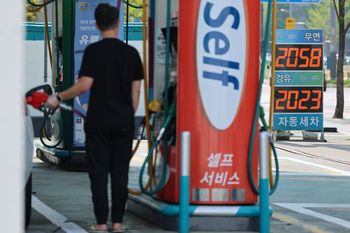
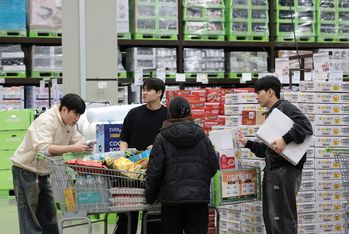
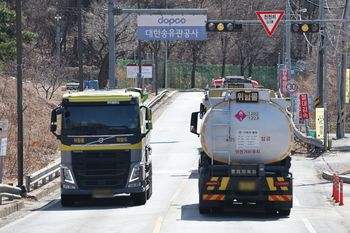
The cost of imports is surging on the back of an oil shock and a weakening won, raising concerns about a broadening inflation squeeze on businesses and households — even if the conflict in the Middle East eases.
Inflation is showing increasingly unstable momentum. Prices, which had been gradually rising since the second half of last year amid weakening won, surged after the outbreak of the Middle East conflict in late February.
Concerns about a so-called stagflation, in which stagnant growth coincides with high unemployment and high inflation rates, across global financial markets have spread as tensions continue to rise in the Middle East.
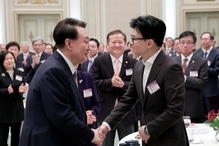
President Yoon Suk Yeol met with the interim leader of the conservative People Power Party for the first time at the Blue House in Seoul on Wednesday...
Korea added jobs for the 19th straight month in September, data showed Friday, but the growth continued to slow for the fourth month in a row amid concerns over a recession.
The World Bank has raised the alarm that the “danger of stagflation is considerable” and shaved its global growth outlook to 2.9 percent from 4.1 percent in the last report in January.
"The uncertainty surrounding the global and domestic economy is increasing," said Vice Finance Minister Lee Eog-weon on Tuesday.
The Kospi dropped 44 points or 1.5 percent compared to the previous trading day Friday morning, although selling subsided in the afternoon. It ended Monday at 2,909.32, down 27.12 points or 0.92 percent.
Korea JoongAng Daily Sitemap