

What Korea can learn from Japan's U.S. diplomacy
Published: 23 Mar. 2026, 00:01
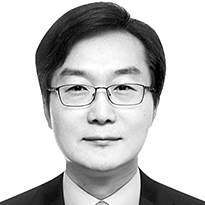
Jo Yang-hyeon
The author is a professor at the Korea National Diplomatic Academy and Head of the Korea-Japan Relations Division, Reset Korea Forum, at JoongAng Ilbo
The U. S-Japan summit held on Thursday in Washington, D.C., confirmed broad cooperation between the two countries and concluded without major conflict. The United States secured large-scale Japanese investment, while Japan maintained its principle of not deploying the Self-Defense Forces amid ongoing combat, despite strong U.S. pressure regarding the situation in Iran.
![Japanese Prime Minister Sanae Takaichi raises her fist while saying ″Japan is back″ as she delivers remarks during a dinner hosted by U.S. President Donald Trump at the White House in Washington, D.C., U.S., March 19, 2026. [REUTERS/YONHAP]](https://koreaseafood.online/data/photo/2026/03/23/b6cb5dd6-718d-424c-9a82-932eb4528f18.jpg)
Japanese Prime Minister Sanae Takaichi raises her fist while saying ″Japan is back″ as she delivers remarks during a dinner hosted by U.S. President Donald Trump at the White House in Washington, D.C., U.S., March 19, 2026. [REUTERS/YONHAP]
The meeting was initially intended to focus on policy coordination toward China ahead of U.S. President Donald Trump’s planned visit to Beijing. However, with the outbreak of war involving Iran in late February, Japan’s response to developments in the Strait of Hormuz quickly emerged as the top issue. Contrary to concerns that Prime Minister Sanae Takaichi’s first visit to the United States would be an extremely difficult test, Japan demonstrated seasoned diplomacy in balancing constitutional constraints and alliance obligations.
Ahead of the summit, President Trump sharply criticized what he described as a lack of cooperation from allies, including Japan, on social media and strongly pressured them to dispatch naval vessels to secure safety in the Strait of Hormuz. However, in the publicly released opening remarks of the summit, Trump adopted a surprisingly moderate tone, saying, “Japan is responding sufficiently.” The reversal was attributed to Takaichi’s thorough, logical approach and strategic message management.
Takaichi expressed support for the U.S. position on Iran’s nuclear development and the blockade of the Strait of Hormuz, pledging “continued close communications with the United States.” Takaichi also praised Trump, saying, “President Trump is the only person who can bring about world peace and prosperity.” At the same time, Takaichi explained the limitations of Article 9 of Japan’s Constitution, which renounces the use of force, as well as constraints under security laws, while emphasizing the importance of early stabilization of the situation in Iran. Takaichi did not commit to specific contributions such as dispatching warships.
Japan enabled the exercise of collective self-defense under the Abe Shinzo administration through reinterpretation of the Constitution and revisions to security legislation. Takaichi appears to have argued that deploying the Self-Defense Forces under existing legal frameworks would be difficult because the current conflict began with a pre-emptive U.S. strike. Trump likely acknowledged these legal constraints, as well as Japan’s demonstrated sincerity in tariff and defense cost-sharing cooperation last year and the Takaichi administration’s role in countering China in the Indo-Pacific region.
![U.S. President Donald Trump, right, meets with Japanese Prime Minster SanaeTakaichi in the Oval Office of the White House in Washington on March 19. [EPA/YONHAP]](https://koreaseafood.online/data/photo/2026/03/23/d088677e-ff6f-46f7-a8a9-ff47e9d07ef7.jpg)
U.S. President Donald Trump, right, meets with Japanese Prime Minster SanaeTakaichi in the Oval Office of the White House in Washington on March 19. [EPA/YONHAP]
The United States has proposed forming an international coalition to ensure freedom of navigation in the Strait of Hormuz. In the closed-door part of the summit, Japan may have suggested noncombat contributions such as deploying minesweepers and escorting commercial vessels under a multinational management system based on a United Nations resolution after the war ends, in an effort to meet long-term U.S. expectations. This reflects a strategy of fulfilling alliance obligations while avoiding immediately risky military involvement.
Notably, Japan’s diplomacy is not tilted solely toward the United States but also pursues practical interests while hedging risks. Remembering the painful experience of the oil shocks in the 1970s, Japan has maintained friendly relations with oil-producing countries in the Middle East. During U.S.-Iran tensions in 2019, Japan attempted mediation by conducting independent intelligence-gathering operations instead of joining a coalition. It is currently also engaging Iran through independent channels to ensure the safe passage of its vessels.
This approach shows that rather than overreacting to pressure from the Trump administration, it is crucial to accurately understand U.S. intentions through close communication. Korea, facing intertwined issues including tariffs, investment in the United States, defense cost-sharing and nuclear negotiations, should also draw up a realistic road map in coordination with the international community while accounting for uncertainty such as the potential prolongation of the war. Flexibility will be needed to strategically utilize bilateral relations with Iran, taking into account the safety of Korean vessels and postwar reconstruction. It is also important to thoroughly prepare for potential security gaps resulting from the weakening of U.S. strategic assets in the Indo-Pacific region due to conflicts in the Middle East.
This article was originally written in Korean and translated by a bilingual reporter with the help of generative AI tools. It was then edited by a native English-speaking editor. All AI-assisted translations are reviewed and refined by our newsroom.


with the Korea JoongAng Daily
To write comments, please log in to one of the accounts.
Standards Board Policy (0/250자)