

Public demand for constitutional reform can no longer be delayed
Published: 12 Mar. 2026, 00:04
Audio report: written by reporters, read by AI
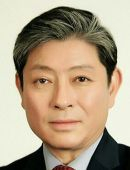
The author is a professor emeritus at Sungkyunkwan University Law School and former co-chair of the National Future Constitutional Reform Advisory Committee.
A recent survey has revealed the strong public demand for constitutional reform in Korea. According to a study of 12,000 respondents released by the National Assembly, about seven in 10 people, or 68.3 percent, said they support amending the Constitution. Support for revision exceeded opposition across all age groups, regions and political orientations. Among those who said they understood the issue well, the level of support was even higher.
![Eight lawmakers discuss how to reform the Constitution at the National Assembly in western Seoul in 1987. [YONHAP]](https://koreaseafood.online/data/photo/2026/03/12/dec55527-5ab9-4461-af57-f006c5a6151e.jpg)
Eight lawmakers discuss how to reform the Constitution at the National Assembly in western Seoul in 1987. [YONHAP]
Particularly noteworthy is the reason cited by supporters of constitutional reform. Among those who favor revision, 70.4 percent said it is necessary to respond to social change and new challenges. The Constitution is the supreme legal norm designed to guarantee the basic rights of citizens. When the social environment surrounding those rights changes, the system that protects them must also evolve.
Korea now faces an unprecedented set of overlapping crises. Rapid advances in artificial intelligence are transforming the social and economic landscape. At the same time, the country confronts a demographic cliff, regional population decline and the accelerating impact of climate change. None of these developments could have been anticipated in 1987 when the current Constitution was last amended. These structural shifts require a review of whether constitutional rights are adequately protected under new conditions and whether the Constitution should be redesigned for the future.
![National Assembly Speaker Woo Won-shik delivers opening remarks during a meeting with representatives and steering committee members of the civic group Citizens’ Constitutional Reform Network at the National Assembly in Yeouido, western Seoul, on Jan. 28 to discuss constitutional reform. [NEWS1]](https://koreaseafood.online/data/photo/2026/03/12/c14f98d3-2620-4329-89d2-72e74d8e34bf.jpg)
National Assembly Speaker Woo Won-shik delivers opening remarks during a meeting with representatives and steering committee members of the civic group Citizens’ Constitutional Reform Network at the National Assembly in Yeouido, western Seoul, on Jan. 28 to discuss constitutional reform. [NEWS1]
Public opinion regarding specific reform agendas reflects this trend. Broad support emerged for explicitly recognizing new constitutional rights, including the right to life at 85.9 percent, the right to safety at 87.2 percent and the right to informational self-determination at 79.9 percent. These responses suggest a strong public desire for a Constitution that more clearly safeguards the dignity and security of citizens in an era of rapid change.
Public awareness of forward-looking constitutional issues also appears to be growing. In the survey, 74.8 percent supported including a principle that national governance should consider the interests of future generations, including responses to the climate crisis. Meanwhile, 85.7 percent agreed that scientific and technological development should be harmonized with human dignity and fundamental rights.
No country in the world has yet incorporated provisions directly addressing artificial intelligence into its Constitution. If Korea were to draft constitutional provisions reflecting the realities of the AI era, it could provide a global precedent. Rather than responding passively to social transformation, constitutional reform should actively shape the future.
Many citizens also supported proposals to expand references to democratization movements in the Constitution’s preamble. Among the events proposed, references to the May 18 Democratization Movement of 1980 received the highest level of support at 90.6 percent, followed by the June 10 pro-democracy uprising of 1987 at 73.9 percent and the Busan-Masan democratic protests of 1979 at 58.2 percent. Another 83 percent supported including the state’s responsibility for balanced regional development in the Constitution, reflecting concern over widening regional disparities and the decline of local communities.
Debate over constitutional reform has continued for decades. Over the past 40 years, the issue has been widely discussed in academic circles and in the National Assembly. Including the most recent National Future Constitutional Reform Advisory Committee, the Assembly has established six advisory bodies on constitutional reform.
The survey results suggest that most citizens no longer want the issue postponed. Some 69.5 percent said the National Assembly should pursue a step-by-step reform approach, focusing first on areas where political agreement is possible. When asked about timing, more respondents selected the upcoming June local elections, at 39.6 percent, than the 2028 parliamentary elections or the 2030 presidential election.
![National Assembly Speaker Woo Won-shik speaks during a press conference on constitutional reform at the National Assembly in Seoul on March 10, urging the ruling and opposition parties to form a special committee on constitutional revision by March 17. [YONHAP]](https://koreaseafood.online/data/photo/2026/03/12/27736a94-3003-41bf-ad9d-e9bfc4104c39.jpg)
National Assembly Speaker Woo Won-shik speaks during a press conference on constitutional reform at the National Assembly in Seoul on March 10, urging the ruling and opposition parties to form a special committee on constitutional revision by March 17. [YONHAP]
The survey also indicated that the National Assembly itself should lead the reform process. A plurality of respondents, 37.2 percent, said constitutional revision should be initiated by the Assembly rather than legal experts or civic groups.
There is little reason to delay constitutional reform any longer. What is required now is a political decision by the National Assembly. Lawmakers should establish a special committee on constitutional revision without delay. Issues likely to provoke deep disagreement, particularly those concerning changes to the structure of political power, can be addressed later. The priority should be advancing reforms that both ruling and opposition parties can support.
Constitutional reform should not be treated as a partisan matter but as a national task. If lawmakers work together on innovations such as constitutional provisions related to artificial intelligence, Korea could develop a forward-looking constitutional model that other advanced countries might study. Just as young Koreans have led global cultural trends through K-culture, the nation’s constitutional framework should also evolve through innovation.
This article was originally written in Korean and translated by a bilingual reporter with the help of generative AI tools. It was then edited by a native English-speaking editor. All AI-assisted translations are reviewed and refined by our newsroom.


with the Korea JoongAng Daily
To write comments, please log in to one of the accounts.
Standards Board Policy (0/250자)