

What we can learn from the 2022 nickel upheaval
Published: 18 Feb. 2026, 20:30
Updated: 22 Feb. 2026, 18:18
Kim Sung-jae

The author is a business administration professor at Furman University and author of “The Story of Tariffs” (2025).
Can the world’s most trusted metal exchange cancel $12 billion in trades overnight? On March 8, 2022, the London Metal Exchange (LME) did exactly that.
The chain of events began a month earlier. On Feb. 24, 2022, Russian forces invaded Ukraine, prompting the United States and its Western allies to impose sweeping sanctions on Russia. As tensions escalated, fears of supply disruptions spread rapidly across global commodity markets.
Crude oil, which had been trading in the low $90s per barrel, surged past $100 on the day the war began and continued to climb. Wheat and corn prices jumped more than 80 percent. Gold, the quintessential safe haven, rose above $2,000 per troy ounce.
No asset, however, proved more volatile than nickel. Russia accounted for roughly 10 percent of the global nickel supply and produced about 20 percent of the world’s class 1 nickel, refined to 99.8 percent purity. Such high-grade nickel, which meets the LME's benchmark specifications, is indispensable for battery cathodes and specialty alloys.
 At the start of 2022, LME nickel traded around $20,000 per ton. By March 4 of that year, it had surpassed $30,000. When markets opened the following week, prices tore through $40,000 and then $50,000 in rapid succession.
When trading began in London at 1 a.m. on March 8, nickel prices shot upward with lightning speed. Shortly after 8 a.m., they breached $100,000 per ton. Concluding that prices had entered a state divorced from physical supply and demand, the exchange halted nickel trading at 8:15 a.m.
Then came an even more extraordinary step. At noon that same day, the LME retroactively voided all nickel trades executed after midnight. Within hours, transactions worth roughly $12 billion vanished. Hedge funds that had sold futures to lock in profits saw losses approach 1 trillion won ($692 million).
Suspicion quickly gathered around the decision. The biggest beneficiary appeared to be Tsingshan Group, the world’s largest nickel producer, led by Chairman Xiang Guangda. Expecting prices to fall as supply increased, he had shorted at least 150,000 tons of nickel — a wager that would pay off only if prices declined.
When nickel topped $100,000 per ton, Xiang’s losses swelled to about $12 billion. Had he gone bankrupt, major banks trading with him could also have faced default risk. Analysts increasingly found it plausible that the LME’s cancellation was, in effect, a rescue operation for its banking partners.
More recently, as silver prices have continued to rise, the New York Commodity Exchange, known as Comex, has repeatedly raised margin requirements, a move that tends to trigger price declines. By coincidence, large banks had been betting on falling silver prices. It all carries a sense of déjà vu from the nickel upheaval. Now that four years have passed, what, if anything, has the market learned?
This article was originally written in Korean and translated by a bilingual reporter with the help of generative AI tools. It was then edited by a native English-speaking editor. All AI-assisted translations are reviewed and refined by our newsroom.
The author is a business administration professor at Furman University and author of “The Story of Tariffs” (2025).
Can the world’s most trusted metal exchange cancel $12 billion in trades overnight? On March 8, 2022, the London Metal Exchange (LME) did exactly that.
The chain of events began a month earlier. On Feb. 24, 2022, Russian forces invaded Ukraine, prompting the United States and its Western allies to impose sweeping sanctions on Russia. As tensions escalated, fears of supply disruptions spread rapidly across global commodity markets.
Crude oil, which had been trading in the low $90s per barrel, surged past $100 on the day the war began and continued to climb. Wheat and corn prices jumped more than 80 percent. Gold, the quintessential safe haven, rose above $2,000 per troy ounce.
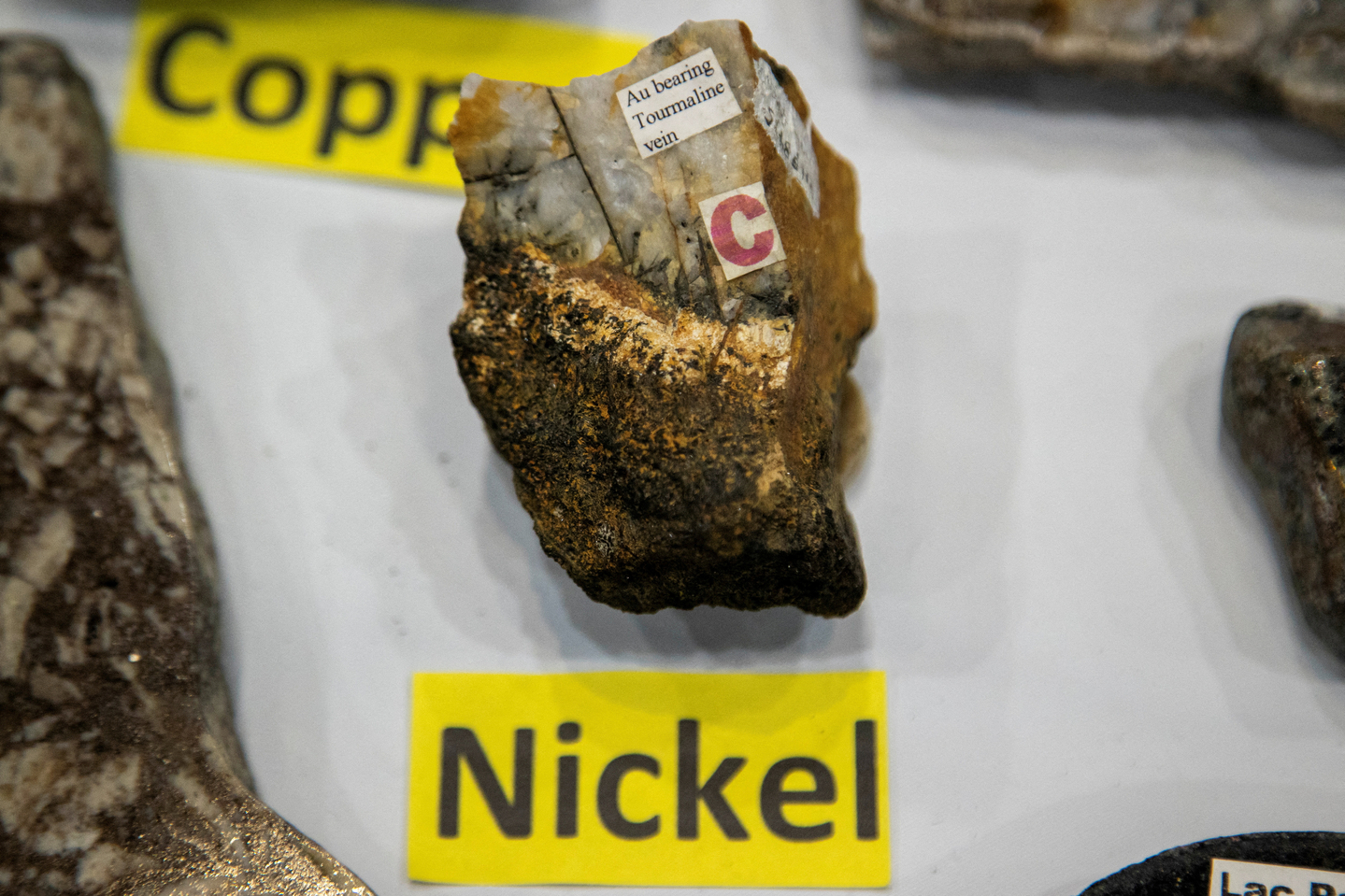
No asset, however, proved more volatile than nickel. Russia accounted for roughly 10 percent of the global nickel supply and produced about 20 percent of the world’s class 1 nickel, refined to 99.8 percent purity. Such high-grade nickel, which meets the LME's benchmark specifications, is indispensable for battery cathodes and specialty alloys.
FILE PHOTO: A nickel sample is displayed at the Prospectors and Developers Association of Canada (PDAC) annual mining conference in Toronto, Ontario, Canada March 3, 2025. REUTERS/Carlos Osorio/File Photo
When trading began in London at 1 a.m. on March 8, nickel prices shot upward with lightning speed. Shortly after 8 a.m., they breached $100,000 per ton. Concluding that prices had entered a state divorced from physical supply and demand, the exchange halted nickel trading at 8:15 a.m.
Then came an even more extraordinary step. At noon that same day, the LME retroactively voided all nickel trades executed after midnight. Within hours, transactions worth roughly $12 billion vanished. Hedge funds that had sold futures to lock in profits saw losses approach 1 trillion won ($692 million).
Suspicion quickly gathered around the decision. The biggest beneficiary appeared to be Tsingshan Group, the world’s largest nickel producer, led by Chairman Xiang Guangda. Expecting prices to fall as supply increased, he had shorted at least 150,000 tons of nickel — a wager that would pay off only if prices declined.
When nickel topped $100,000 per ton, Xiang’s losses swelled to about $12 billion. Had he gone bankrupt, major banks trading with him could also have faced default risk. Analysts increasingly found it plausible that the LME’s cancellation was, in effect, a rescue operation for its banking partners.
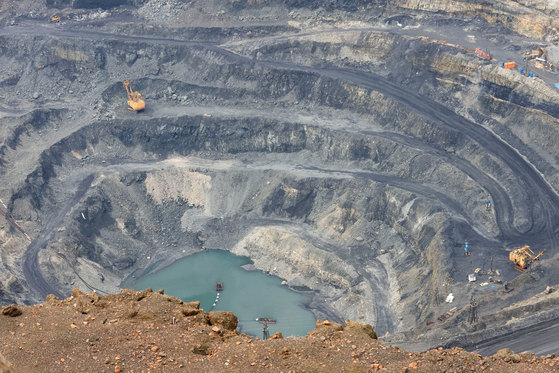
FILE PHOTO: A general view shows Zapolyarny mine of Medvezhy Ruchey enterprise, which is a subsidiary of the world's leading nickel and palladium producer Nornickel, in the Arctic city of Norilsk, Russia August 24, 2021. Picture taken August 24, 2021. REUTERS/Tatyana Makeyeva/File Photo
More recently, as silver prices have continued to rise, the New York Commodity Exchange, known as Comex, has repeatedly raised margin requirements, a move that tends to trigger price declines. By coincidence, large banks had been betting on falling silver prices. It all carries a sense of déjà vu from the nickel upheaval. Now that four years have passed, what, if anything, has the market learned?
This article was originally written in Korean and translated by a bilingual reporter with the help of generative AI tools. It was then edited by a native English-speaking editor. All AI-assisted translations are reviewed and refined by our newsroom.


with the Korea JoongAng Daily
To write comments, please log in to one of the accounts.
Standards Board Policy (0/250자)