

Dutch top envoy calls for deeper chip alliance with Korea amid power politics
Published: 11 Feb. 2026, 17:30
Updated: 11 Feb. 2026, 17:58
-
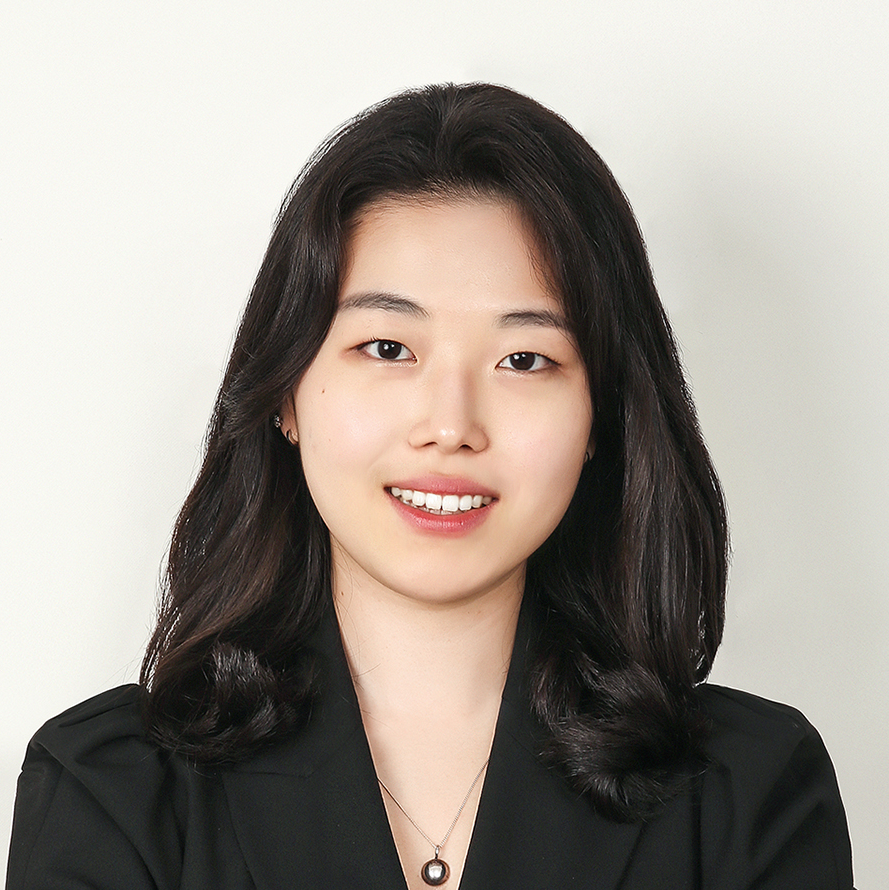
- SEO JI-EUN
- [email protected]
![Dutch Foreign Minister David van Weel speaks in an exclusive roundtable at the Dutch Embassy in central Seoul on Tuesday. [EMBASSY OF THE NETHERLANDS TO KOREA]](https://koreaseafood.online/data/photo/2026/02/11/0bc86a2b-cdde-4a23-8a0c-79b1a9cb5743.jpg)
Dutch Foreign Minister David van Weel speaks in an exclusive roundtable at the Dutch Embassy in central Seoul on Tuesday. [EMBASSY OF THE NETHERLANDS TO KOREA]
Dutch Foreign Minister David van Weel said in Seoul on Tuesday that what was once a trade relationship in the semiconductor industry is being recast as a higher-stakes alignment between two "mid-sized powers" seeking to increase technological self-reliance in a world where international norms are increasingly sidelined by raw interests.
"We have gold in our hands between reliable partners," van Weel said in a media roundtable at the Dutch Embassy, describing the synergy. "A semiconductor is a great example because we are very complementary there and also dependent on each other [...] We need the products that come out of Korea and you need the machines to make those products."
The Netherlands, home to lithography giant ASML, provides essential machinery that allows Korean titans like Samsung and SK hynix to produce memory chips at a global scale.
"In the world we live in, creating more resilience and redundancy within our supply chains is wise to do and no country can do that alone."
![Officials and ASML executives cut the ribbon at the opening ceremony of ASML’s chip equipment plant in Hwaseong, Gyeonggi, on Nov. 12, 2025. [MINISTRY OF TRADE, INDUSTRY AND RESOURCES]](https://koreaseafood.online/data/photo/2026/02/11/384a217e-1c52-49d3-a48c-4e56170361c6.jpg)
Officials and ASML executives cut the ribbon at the opening ceremony of ASML’s chip equipment plant in Hwaseong, Gyeonggi, on Nov. 12, 2025. [MINISTRY OF TRADE, INDUSTRY AND RESOURCES]
"We need to see the world as it is and not how we want it to be and realize that we need to deal with the world that we live in," van Weel said. "That is a world where power politics, where interests play a larger role than international norms and rule of law."
He argued that for the rule of law to prevail, like-minded democracies must "convene power," combining military projection with economic strength. To achieve this, he stressed the need for "strategic autonomy" — reducing dangerous dependencies on Russian energy, Chinese raw materials and heavy technological reliance on the United States.
Van Weel affirmed while that NATO remains the "cornerstone of our security," he called for an end to the era where Europe relies almost exclusively on Washington for its defense.
"In any good relationship, those kind of dependencies are unhealthy," the former senior NATO official said. "We need to shift the burden more from the heavy U.S. side to a more equal European part."
Van Weel highlighted the Netherlands’ "big step" of committing 3.5 percent of its GDP to defense spending starting in 2030, framing it as a way to "show the U.S. that this alliance is worth fighting for" in a world where "our democracies are still the most aligned in the world."
The urgency of this cooperation is underscored by the deepening military ties between Pyongyang and Moscow — a development van Weel said has "shook our image of how secure we are in Europe."
"We need to apply more pressure to Russia [...] to change Putin's calculation on NATO," he said, noting that the war in Ukraine has forced Europe to realize it has a "very aggressive neighbor."
This threat is not only conventional but "hybrid."
Van Weel pointed to recent large-scale hacks and data leaks in Korea as evidence that both nations are targets of a new kind of warfare involving sabotage and cyberattacks. He called for the two digital powerhouses to align their experiences to counter these state-sponsored operations, making it "less attractive for a potential adversary to attack us."
Van Weel held a “two plus two dialogue” on Wednesday, a first-of-its-kind format between the two nations. Unlike a foreign-and-defense format, the meeting paired the foreign ministers with their respective trade ministers as the core of the bilateral bond now "lies in the economic sphere," according to van Weel.
This visit marks van Weel’s final mission to Seoul as Foreign Minister. He is expected to transition to the role of Minister of Justice and Security under the new Dutch administration in two weeks, and said the position would “definitely still be a link for cooperation” with South Korea on hybrid threats.
BY SEO JI-EUN [[email protected]]


with the Korea JoongAng Daily
To write comments, please log in to one of the accounts.
Standards Board Policy (0/250자)