

Poland submarine bid loss offers lessons for Korea’s defense industry
Published: 30 Dec. 2025, 00:04
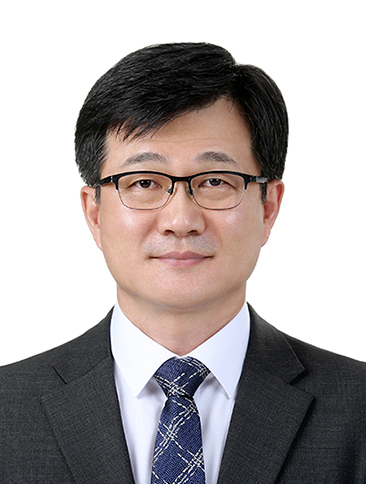
The author is the director of the Jeonbuk National University Institute for K-Defense Industry and a former head of the Defense Acquisition Program Administration.
Poland has selected Sweden’s Saab as the contractor for its next-generation submarine program, which involves the acquisition of three 3,000-ton submarines. The project carries an initial construction cost of up to 4 trillion won ($2.8 billion) and could reach 8 trillion won when maintenance, repair and operations are included. Korean companies failed to secure the bid.
![This photo, provided by Hanwha Ocean on Aug. 26, shows a Jangbogo-III Batch-2 submarine. [HANWHA OCEAN]](https://koreaseafood.online/data/photo/2025/12/30/3bb235c8-c001-43d8-a9f7-f98bb5067953.jpg)
This photo, provided by Hanwha Ocean on Aug. 26, shows a Jangbogo-III Batch-2 submarine. [HANWHA OCEAN]
The question is whether Korea’s defeat should be seen as a “graceful loss” or as an early warning under Heinrich’s Law, which holds that a major accident is preceded by numerous smaller failures. In this case, the latter interpretation is more convincing.
Until just before the announcement, Korean officials regarded France and Germany as their main competitors. Sweden was barely considered. Yet Poland’s operational environment is the Baltic Sea, where the average depth is around 50 meters (164 feet). A 2,000-ton Swedish submarine was better suited to such conditions than the 3,600-ton model proposed by Korea. Poland’s operational requirements were not read accurately. Korea also failed to grasp the timing of the final decision. Poland did not make use of the European Union’s Security Action for Europe (SAFE) defense procurement fund, and the outcome was not the result of European coordination behind the scenes.
Failure in international arms competitions is not unusual. But if the Polish case is brushed aside, similar setbacks are likely to follow. Next year’s Canadian patrol submarine project, which involves the procurement of eight to 12 diesel submarines in the 3,000-ton class, is roughly five times larger than the Polish deal. A loss there could stall the momentum of Korea’s defense exports. Vigilance is essential.
First, Korea must rebuild a clear command center for defense exports. Arms exports surged from $2.9 billion in 2020 to $7.3 billion in 2021 and $17.3 billion in 2022, before falling sharply to $13.5 billion in 2023 and $9.6 billion in 2024. During the Yoon Suk Yeol administration, the on-site command center function effectively stopped operating.
Defense exports rest on three interconnected fields: research and development (R&D), defense firms and defense policy. Without binding these together, export growth cannot be sustained. The head of the Defense Acquisition Program Administration (DAPA) should serve as the focal point. Instead, the previous government sharply cut the defense R&D budget under the banner of dismantling so-called research cartels. DAPA focused narrowly on force enhancement, while exports were led mainly by the Ministry of National Defense. As the ministry stands somewhat removed from the industrial front line, its grasp of on-the-ground realities is inevitably limited. Korea’s defense firms managed to keep exports afloat, but only just.
The Lee Jae Myung administration has sharply increased the defense R&D budget, making a rapid recovery in research possible. What remains is restoring DAPA’s role as the operational command center. The DAPA chief should meet senior officials in partner countries directly, assess the level of competitors and share that intelligence with working-level teams to craft follow-up strategies.
In the Canadian submarine competition, Korea’s principal rival is Germany’s TKMS, the world’s largest supplier of conventionally powered submarines. Germany’s HDW shipyard, which transferred core design and construction technologies to Korea during the introduction of the 1,200-ton Jangbogo-I submarines in the 1980s and 1990s, was acquired by TKMS in 2005. There are also reports that Canada may make use of the SAFE fund.
![A rendered image of HD Hyundai Heavy Industries's HDS-2300, its own-developed 2,300-ton submarine. [HD HYUNDAI HEAVY INDUSTRIES]](https://koreaseafood.online/data/photo/2025/12/30/fb2a41a2-e592-46c0-b974-e73a10641189.jpg)
A rendered image of HD Hyundai Heavy Industries's HDS-2300, its own-developed 2,300-ton submarine. [HD HYUNDAI HEAVY INDUSTRIES]
Although Hanwha Ocean and HD Hyundai Heavy Industries are competing as a unified team, the challenge remains formidable. Korea should not grow complacent simply because its proposed 3,000-ton submarine offers strong performance. Under DAPA’s leadership, rigorous review discussions are needed, with a red-team process to probe both strengths and weaknesses. Potential vulnerabilities in key submarine components must be identified and addressed thoroughly.
Second, the presidential office should activate a tiered, whole-of-government defense export control system. DAPA would consolidate input from the field, the Ministry of National Defense would coordinate across ministries such as foreign affairs, industry and culture, and the presidential office would make final decisions. Korea should recall why exports reached $17.3 billion in 2022.
Time is limited. Some remain optimistic about the Canadian bid, but Korea should proceed as if the probability of success is below 40 percent. Special envoys for defense exports may also be needed, though such efforts would be most effective if deployed discreetly at decisive moments.
This article was originally written in Korean and translated by a bilingual reporter with the help of generative AI tools. It was then edited by a native English-speaking editor. All AI-assisted translations are reviewed and refined by our newsroom.


with the Korea JoongAng Daily
To write comments, please log in to one of the accounts.
Standards Board Policy (0/250자)