

SeoulArts president highlights university as a gateway to Korean artistic experiences
Published: 29 Dec. 2025, 15:01
Updated: 06 Jan. 2026, 13:38
-
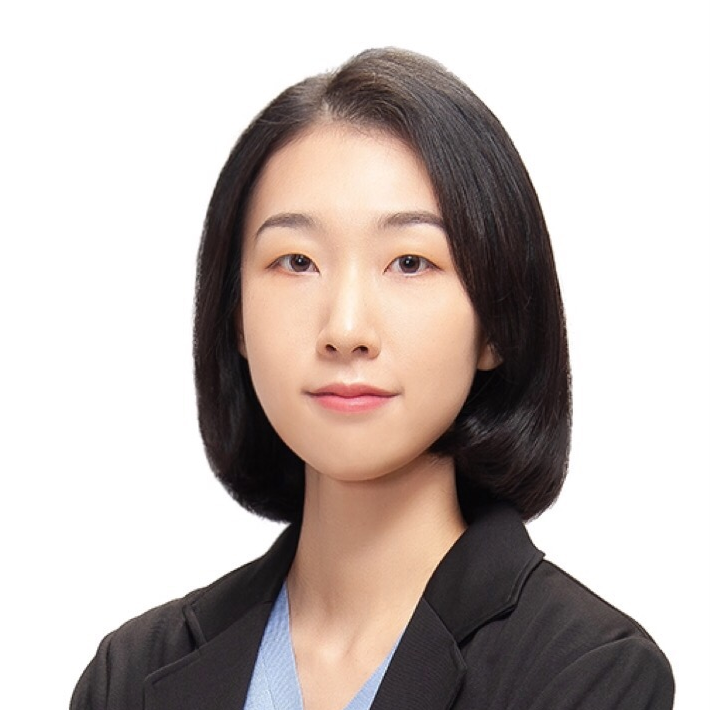
- LEE TAE-HEE
- [email protected]
![Seoul Institute of the Arts President Chang Ji-hun poses for a photo during an interview with the Korea JoongAng Daily on Dec. 24. [PARK SANG-MOON]](https://koreaseafood.online/data/photo/2026/01/06/106d18a4-ec4a-4514-9e0d-dff37fb6bc86.jpg)
Seoul Institute of the Arts President Chang Ji-hun poses for a photo during an interview with the Korea JoongAng Daily on Dec. 24. [PARK SANG-MOON]
With the world's eyes on Korea's art and content, Seoul Institute of the Arts President Chang Ji-hun believes the school, colloquially known as SeoulArts, can be a gateway for international students who truly want to experience Korean art.
"SeoulArts teaches a contemporary reinterpretation of Korean art, and I would like to tell international students to come to SeoulArts if they want to truly experience what Korean art is," said Chang. "Our programs and curricula are built on a long tradition and history, and each professor spends a great deal of time helping students reflect on artistic identity."
"For international students, one of the reasons they come to Korea is for the culture. SeoulArts is a place where students can naturally absorb and learn what Korean culture is and what Korea’s artistic identity means."
The school offers Associate of Fine Arts programs in 15 majors such as theater, film and Korean music. It has two Bachelor of Fine Arts programs — performing arts and media arts — and one Master of Fine Arts (MFA) program in advanced innovation convergence.
For those interested, SeoulArts is accepting documents from applicants seeking eligibility assessment for international student admissions to its associate of fine arts programs until Jan. 5, 2026. Those considered eligible can submit their online application between Jan. 9 and 14, with selected students starting their studies in the spring 2026 semester.
The school hopes to be more global by not only having a bigger international student body, but also by introducing its works to audiences abroad.
"We recently created the SeoulArts Repertory," said Chang. "In the past, the Dongrang Repertory Theater Company introduced our theatrical productions abroad and played a significant role in promoting Korean culture."
"The newly created SeoulArts Repertory builds on that legacy but expands the scope to include musicals, film, video, animation and design. Our goal is to showcase these creative works to our society and international audiences."
SeoulArts also creates opportunities for students to learn from global artists through the CultureHub program. The school has CultureHub studios in New York, Los Angeles, Italy and Indonesia, with resident artists in each studio. Artists also give special lectures to SeoulArts students through teleconferencing.
Chang sat down with the Korea JoongAng Daily on Wednesday at the SeoulArts campus in Ansan, Gyeonggi, to discuss the school's plans to become more global.
Below are edited excerpts from the interview, edited for length and clarity.
![President Chang Ji-hun, center, poses for a photo with artists participating in the Intercultural Day workshop on Sept. 23. [SEOUL INSTITUTE OF THE ARTS]](https://koreaseafood.online/data/photo/2026/01/06/624f9aa8-dcee-4562-8ce1-e38ce6ce4199.jpg)
President Chang Ji-hun, center, poses for a photo with artists participating in the Intercultural Day workshop on Sept. 23. [SEOUL INSTITUTE OF THE ARTS]
Q. You began your term as president in August. What are your main goals for leading SeoulArts?
As an arts college dedicated to training professional artists, we produce a tremendous amount of creative content. But it feels like a missed opportunity for our works to only be consumed within the university. SeoulArts was founded on the principle of reinterpreting traditional Korean art through a contemporary lens, and we create works with a distinct identity that sets us apart from other educational institutions. Ultimately, I want to share these works beyond campus.
The second goal is to achieve flexibility in the academic system. We offer associate programs, a one-year bachelor’s completion program and an MFA program. But at junior colleges, the enrollment quota for bachelor’s programs is limited to 20 percent of the enrollment quota of associate degree programs. This means that some students are unable to continue further education. Although the government says it aims to promote diversity in academic systems, this has yet to be realized in practice. We are making efforts to address these structural challenges.
And third is about international students. SeoulArts is closely associated with Hallyu, the Korean wave, so we actually had a lot of study abroad agencies offer to send international students to us. If we had said yes, it would have been easy to have 100, or even 200 international students. We only have 36 international students, but those are students who have chosen to study here. We prioritize the quality of education, and our goal isn't to increase international enrollment just for financial gain. International students should receive the same education as Korean students, and their time here should help them grow as artists. That said, we do hope to increase our international student body as it will help SeoulArts become more global, and we are also considering expanding our CultureHub initiatives.
Q. How do you plan to expand CultureHub?
We want to diversify our CultureHub programs. We also want more people to experience CultureHub programs and have many students get the opportunity to engage with international artists.
We recently made an open call to invite four artists to Korea through the CultureHub's residency program. We usually have our professors reach out to invite artists, but this time it was an opportunity in which artists could apply. We were just choosing four, and had over 650 applicants from countries all over the world apply. I think this shows two things. One is that there's a growing interest in Korea. And the second is how there's a growing interest in SeoulArts globally.
![Director Robert Wilson leads a special acting workshop for SeoulArts students at the Drama Center in Jung District, central Seoul, on Nov. 23, 2024. [SEOUL INSTITUTE OF THE ARTS]](https://koreaseafood.online/data/photo/2026/01/06/9dc3579f-9735-436b-b074-bbe99b26c029.jpg)
Director Robert Wilson leads a special acting workshop for SeoulArts students at the Drama Center in Jung District, central Seoul, on Nov. 23, 2024. [SEOUL INSTITUTE OF THE ARTS]
Q, SeoulArts is currently accepting applications for international admissions to its associate of fine arts programs. What qualities does the school look for in its applicants?
The required technical skills can vary depending on the major the students are applying for. But when we select students, we don't choose them simply because they have certain skills or are proficient in specific programs. We select them based on their potential.
For international admissions, we conduct interviews with applicants who are abroad through Zoom and do in-person interviews for those already in Korea. We do this to better understand each applicant’s potential, their artistic views and whether they demonstrate the qualities and mindset of an artist. If the applicant is able to clearly present themselves and express their ideas effectively, we believe they should be given the opportunity to study at SeoulArts.
Q. Starting from the 2026 early admissions intake for international students, SeoulArts eased its Korean language requirements. What led to this change?
Teaching international students, we’ve found that Korean proficiency doesn't make a significant difference in how well students learn. So, rather than emphasizing Korean proficiency, we decided to slightly ease language requirements and focus more on evaluating each applicant’s artistic potential. We believe it is more important to select strong students and provide them with quality education than to prevent talented applicants from enrolling because they can't meet language requirements. It's not a change we made to simply increase enrollment numbers. But to attract talented students, especially as an arts school, we felt that greater flexibility was necessary. After all, we don't really have our students write theses. Arts education involves hands-on practice, and students experience new things through physical movement.
Q. The school offers support for international students through the Life in SeoulArts program. How have students responded, and which activities have been particularly well received?
The response from students has been extremely positive. In particular, we run a mentor-mentee program that pairs international students with Korean students. Through the program, international students learn Korean while domestic students, in turn, learn the international students' native language.
Q. The university created its MFA program in 2024. How has the program been operating so far, and what is its direction moving forward?
Our MFA program currently has 13 students, and our inaugural students are set to graduate. Student satisfaction with the program has been extremely high, and our professors provide one-on-one mentoring to help students fully realize the artistic work they aspire to create. We were selected for the government's Meister University funding project and received 2 billion won ($1.4 million), part of which was used to send MFA students overseas. Although the Meister University project came to an end, we plan to continue offering similar overseas experience for students and support their graduation projects by using our own budget.
Q. What direction should arts education in Korea take going forward?
I believe AI has opened Pandora’s box, influencing not only the arts but nearly every field. It places increasing pressure on us to constantly learn new technologies and achieve more in less time. However, when it comes to understanding what gives life meaning, the kind of happiness we seek and how we engage with deeper philosophical questions, art plays a vital role. Art has the power to heal, alleviate loneliness and foster a sense of personal fulfillment.
For this reason, arts education should aim to balance both dimensions. While learning how to incorporate AI into artistic practice is certainly important, it is equally essential to teach how art can be used to heal and address emotional strain. Because technology evolves so rapidly, merely chasing the latest tools does not lead to meaningful arts education. Instead, a well-rounded approach — one that integrates liberal arts and the humanities alongside technology — must go hand in hand.
![SeoulArts' campus in Ansan, Gyeonggi [SEOUL INSTITUTE OF THE ARTS]](https://koreaseafood.online/data/photo/2026/01/06/966125cb-5420-4d42-9eb1-66de74ae17dc.jpg)
SeoulArts' campus in Ansan, Gyeonggi [SEOUL INSTITUTE OF THE ARTS]
President's Bio
Chang Ji-hun is the 15th president of SeoulArts, with his three-year term starting on Aug. 1.
He has been teaching as a professor at SeoulArts' School of Film and Media Arts since 2003, and served as the university's dean of student affairs between 2010 and 2012. Between 2014 and 2017, he took on the role of the university's dean of planning and acted as vice president of academic affairs in 2022 and 2023.
Chang graduated from SeoulArts' associate program in broadcasting in 1992, then earned a bachelor's in broadcasting at Northern Michigan University. He earned a master's in film and TV production at Boston University in 1998 and a doctoral degree from Hongik University in fine arts in 2008.
BY LEE TAE-HEE [[email protected]]


with the Korea JoongAng Daily
To write comments, please log in to one of the accounts.
Standards Board Policy (0/250자)