

Human rights and the essentials of our life
Published: 10 Dec. 2025, 00:03
Updated: 10 Dec. 2025, 14:41
Audio report: written by reporters, read by AI
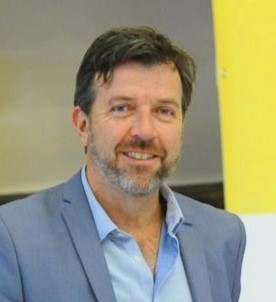
The author is the representative of Seoul Office of the United Nations High Commissioner for Human Rights.
Today in Paris, 77 years ago, world leaders made one of the most consequential global pledges of the modern era: the Universal Declaration of Human Rights (UDHR). By proclaiming the UDHR, the United Nations General Assembly set out for the first time in history a consensus on the basic rights to which all people, everywhere, are entitled, simply by virtue of being human. To honor this milestone, December 10 is now celebrated as Human Rights Day around the world.
By joining the UN, all member states acknowledge that they are obliged to respect, protect and fulfill the rights in the UDHR for everyone in their country, without discrimination as to race, religion, sex, language, political or other opinion, national or social origin, property, birth or other status. The UDHR gave birth to a global movement to safeguard human rights through legally binding treaties, which now form the core of international human rights law.
![North Koreans walk around a marketplace in Hyesan, Yanggang Province, in September 2020. The photo was taken from a Chinese region that borders North Korea. [YONHAP]](https://koreaseafood.online/data/photo/2025/12/10/b92adf2f-7c71-4aa3-a37d-f1f8edf39dca.jpg)
North Koreans walk around a marketplace in Hyesan, Yanggang Province, in September 2020. The photo was taken from a Chinese region that borders North Korea. [YONHAP]
Human Rights Day is a time to take stock, with clear eyes, of the state of human rights in the world. Since its adoption, the world has witnessed significant improvement in the enjoyment of human rights enshrined in the UDHR. But today we see a pushback against even the idea of human rights. Those of us who work in the field of human rights are alarmed by unspeakable acts of violence, carried out with impunity in a growing number of crises, and a worrying slide in many places towards authoritarianism and away from democracy and accountability. Discrimination is widespread and even lauded. Civil society — organizations and people who work for the common good, independent of government — are struggling. Some are reducing or stopping their important work due to massive funding cuts. In many places, human rights defenders are under direct physical attack.
Perhaps because of this, human rights can seem to focus on the worst abuses: execution, torture, slavery, sexual and gender-based violence. Sure, human rights protect us from harm, but they also lay the foundation for a decent life — for health, education, work, happiness and safety. Think of the right to equal treatment and effective redress under the law, the right to an adequate standard of physical and mental health, the right to privacy, the freedom of movement, the right to practice one’s religion (or to have none), the right to hold and express opinions, to choose one’s work and receive equal pay for equal work. These are just some of the rights that the UN works to realize every day.
Our office in Seoul has been monitoring and reporting on the human rights situation in the Democratic People’s Republic of Korea (DPRK) since 2015. Our recent report on the last ten years of human rights in the DPRK concludes that despite some positive developments, the human rights situation in the country has not improved in the last decade and, in many instances, has degraded. Notably, the government has tightened its control over its citizens to a degree unseen elsewhere in the world. And many of these violations have been ongoing for decades.
What to do? The DPRK has voluntarily ratified five of the UN’s core human rights treaties. They represent the Government’s commitment to the international community that it will faithfully implement these rights for its people. These treaties provide a clear roadmap for improving the rights situation in the country, for taking a new direction, to avoid another lost decade. But, as the UN High Commissioner for Human Rights has said, “the human rights landscape cannot be divorced from the broader isolation that the DPRK is currently pursuing. In 2025, the country remains more closed and isolated than at almost any other time in its history”. Ending isolation and improving human rights are essential to unlocking the potential of the DPRK’s people, most importantly the youth.
![The UN Human Rights Office's Seoul representative James Heenan speaks during an event titled ″Public sessions with victims and witnesses on the human rights situation in North Korea in the past decade″ in Seoul on June 25. [AFP/YONHAP]](https://koreaseafood.online/data/photo/2025/12/10/23e00e1a-b60b-4469-94d3-8c2223c0c7ca.jpg)
The UN Human Rights Office's Seoul representative James Heenan speaks during an event titled ″Public sessions with victims and witnesses on the human rights situation in North Korea in the past decade″ in Seoul on June 25. [AFP/YONHAP]
This year’s Human Rights Day asks us to remember that human rights are essential to our daily lives — fundamental values we share with all people, despite our differences. So, we invite readers to consider: What are the “everyday essentials” that make your life worth living? What gives you joy? Is it time with family, safe at home, or delicious food, or your ability to enjoy arts and culture from all around the world, or international travel, or perhaps the sense of community you find in your religion? Now consider how many different rights must be respected for those essentials of your life to be possible. How would your life change if any one of those rights were taken away? Reading the UDHR, it becomes clear that the everyday essentials of our lives all depend on the fulfilment of our fundamental rights. The rights that many of us consider a given are, in reality, not enjoyed by everyone around the world. The population in the DPRK is among the most isolated on earth, where people are struggling to enjoy their basic essentials. Which of your “everyday essentials” would you wish for the people of the DPRK?
The first article of the UDHR states a simple fact: that “all human beings are born free and equal in dignity and rights.” On Human Rights Day and every day, we are challenged to stand up for our rights as well as the rights of others — not only friends and family who may look, talk, worship, or love like us, but also people whom we may never meet — just like the people in the DPRK who live in extreme isolation from the rest of the world even though they are our neighbors just a short distance from us.


with the Korea JoongAng Daily
To write comments, please log in to one of the accounts.
Standards Board Policy (0/250자)