

Why further delays for the Sejong National Museum Complex are unnecessary
Published: 15 Aug. 2025, 00:03
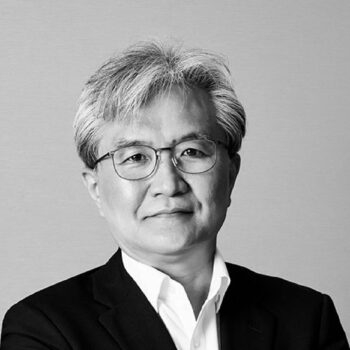
The author is a professor of architecture at the University of Seoul.
Hyper-dense megacities face complex challenges in becoming safe, inclusive and resilient. By contrast, newly built cities that have yet to reach a critical mass struggle to achieve economic and social self-sufficiency. Moving a nation’s capital, with its deep historical roots and concentrated functions, to a new city brings a different order of difficulty. In modern urban planning, examples of successful capital relocation are rare.
Plans for a new administrative capital were launched in 2003 under the Roh Moo-hyun administration, but the Constitutional Court ruled them unconstitutional in October 2004. The project was subsequently reshaped into an administrative city — now called Sejong Special Self-Governing City — with the goal of reaching a population of 500,000 by 2030.
![Prime Minister Kim Min-seok inspects a construction status board and heat wave preparedness plan during a visit to the National Museum of Urban Architecture construction site in Sejong on July 7. [YONHAP]](https://koreaseafood.online/data/photo/2025/08/15/564adef2-dfd1-4b5f-8066-7113e5ef18b6.jpg)
Prime Minister Kim Min-seok inspects a construction status board and heat wave preparedness plan during a visit to the National Museum of Urban Architecture construction site in Sejong on July 7. [YONHAP]
Since Sejong’s official launch in 2012, most central government ministries and public agencies have moved there, with the exception of a few, including the Ministry of Foreign Affairs and the Ministry of National Defense. But with the National Assembly and the presidential office remaining in Seoul, many senior officials spend hours each day on high-speed trains. Some commute from Seoul or stay in Sejong only during the workweek, citing children’s education and the perception of Seoul apartments as the safest investment.
![Former President Yoon Suk Yeol applauds with children during the opening ceremony of the National Children’s Museum at the National Museum Complex in Sejong on Dec. 26, 2023. [PRESIDENTIAL OFFICE]](https://koreaseafood.online/data/photo/2025/08/15/e2664e21-24a7-446f-bf10-824f2461fe9f.jpg)
Former President Yoon Suk Yeol applauds with children during the opening ceremony of the National Children’s Museum at the National Museum Complex in Sejong on Dec. 26, 2023. [PRESIDENTIAL OFFICE]
In this context, the National Museum Complex now under construction is key to Sejong’s evolution from a “bureaucrats’ city” into a place where life and culture coexist. The master plan, selected through an international competition in 2016, envisions five museums — a Children’s Museum, Urban Architecture Museum, Design Museum, Digital Cultural Heritage Museum and National Archives Museum. Adjacent land will host a large central park and a new Sejong branch of the National Folk Museum. Nearby, the Sejong National Assembly Building and a presidential office in Sejong are also planned. Whether the museums will operate as an integrated institution or a federation remains undecided, but strong leadership will be essential.
The Children’s Museum has already opened, followed by the Urban Architecture Museum, with the others preparing to open in sequence. However, reports indicate that funding shortfalls have delayed the project. To the ministries that allocate budgets, cultural infrastructure like the museum complex may seem less urgent. Delays do not cause immediate inconvenience, nor do they usually provoke political controversy or public complaints.
Seoul and the surrounding metropolitan area act like a black hole, drawing in resources and talent from across the country — a reality that affects Sejong and other declining or even disappearing regional cities. The problem cannot be solved by housing supply or admissions policies alone. Real estate and education are intertwined in a complex knot, and at its root lies “cultural inequality.” For younger generations, the lack of cultural opportunities is a decisive factor in their reluctance to leave the capital region.
While media attention often focuses on relocating the Ministry of Oceans and Fisheries to Busan, building the Sejong National Assembly Building or establishing a presidential office in Sejong, the museum complex draws far less coverage. In Washington, visitors cannot enter the White House or the U.S. Capitol without special permission, but the National Mall is crowded year-round. In many world capitals, museums and galleries are the spaces that attract people. Sejong’s museum complex could play the same role.
![The Geumgang Pedestrian Bridge, linking Sejong City Hall in the south with Sejong Central Park, the National Sejong Arboretum and the National Museum Complex in the north, opened on March 24, 2022. It is the longest pedestrian-only bridge in Korea, featuring a double-decker circular structure. [NATIONAL AGENCY FOR ADMINISTRATIVE CITY CONSTRUCTION]](https://koreaseafood.online/data/photo/2025/08/15/aefab885-bf81-4228-82e9-2bbc871fbabf.jpg)
The Geumgang Pedestrian Bridge, linking Sejong City Hall in the south with Sejong Central Park, the National Sejong Arboretum and the National Museum Complex in the north, opened on March 24, 2022. It is the longest pedestrian-only bridge in Korea, featuring a double-decker circular structure. [NATIONAL AGENCY FOR ADMINISTRATIVE CITY CONSTRUCTION]
The idea of building a temporary administrative capital was first floated by President Park Chung Hee in 1977 and revived 26 years later by President Roh Moo-hyun in 2003. Sejong has since become a symbolic project for balanced national development. President Lee Jae Myung reiterated on Aug. 1, during a meeting with provincial governors, that “balanced regional development is a national survival strategy.”
The Presidential Committee on National Policy Planning is currently drafting the new administration’s blueprint. The priorities it identifies will directly influence the 2026 national budget. Without a world-class museum complex, Sejong will struggle to fulfill its role as an administrative city worthy of the nation’s stature. The complex will be a litmus test for whether the capital relocation plan, three decades in the making, can ultimately succeed.
This article was originally written in Korean and translated by a bilingual reporter with the help of generative AI tools. It was then edited by a native English-speaking editor. All AI-assisted translations are reviewed and refined by our newsroom.


with the Korea JoongAng Daily
To write comments, please log in to one of the accounts.
Standards Board Policy (0/250자)