

Preventing climate catastrophes from extreme heat, floods and wildfires
Published: 07 Aug. 2025, 00:04
Audio report: written by reporters, read by AI
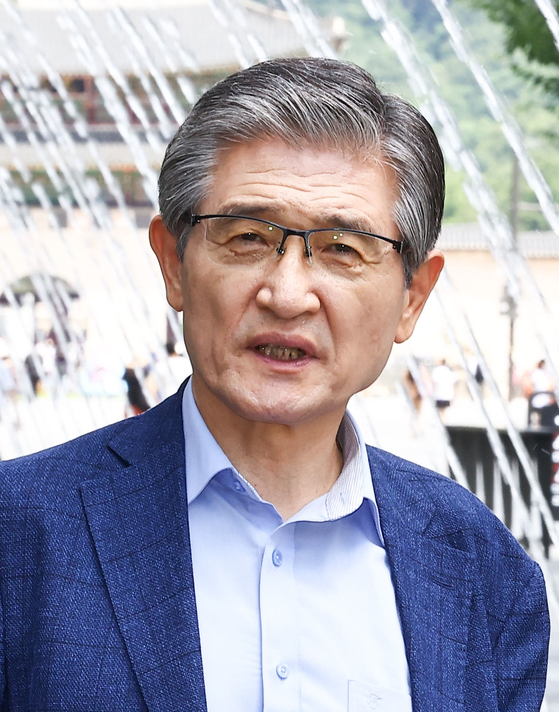
The author is the former Climate Change Ambassador of Korea under the Ministry of Foreign Affairs.
Torrential rains not seen in two centuries have ravaged regions including Sancheong in South Gyeongsang, Gapyeong in Gyeonggi and Seosan in South Chungcheong. The country is also enduring the longest July heat advisory on record.
In Europe, where temperatures have reached 46 degrees Celsius (114 degrees Fahrenheit), the deadly heat has claimed more than 2,300 lives, with over 1,000 excess deaths each day. The Institute and Faculty of Actuaries in Britain projects that after 2050, global temperatures could rise by more than 3 degrees Celsius, causing roughly 4 billion deaths, and that by 2070 to 2090, the world’s total economic output could shrink by 50 percent.
![A vehicle is stuck in mud near Mail-ri Camping Ground in Jojeong-myeon, Gapyeong County, Gyeonggi, following damage from heavy rainfall on the morning of July 21. [JEON MIN-KYU]](https://koreaseafood.online/data/photo/2025/08/07/75fc48bc-cc18-4e23-9fd3-fd1a08117e37.jpg)
A vehicle is stuck in mud near Mail-ri Camping Ground in Jojeong-myeon, Gapyeong County, Gyeonggi, following damage from heavy rainfall on the morning of July 21. [JEON MIN-KYU]
Yet carbon emissions continue to climb, and the Donald Trump administration withdrew the United States from the Paris Climate Agreement. Environmental experts and scientists have issued dire warnings about the risk of human extinction, but their voices often echo in vain.
A fundamental overhaul of the United Nations’ climate response framework is urgently needed. Current measures largely involve governments imposing unilateral emission-reduction targets on companies, which has proven ineffective.
First, it is unrealistic to expect meaningful greenhouse gas cuts if obligations rest solely on producers. Countries prioritize GDP growth and exports, and businesses face immense pressure to maintain output. High-emission export industries, such as manufacturing energy-intensive goods, are concentrated in developing nations and in newly industrialized economies like Korea. Asking them to cut production and exports in the name of climate action is unlikely to succeed.
Instead of systems like Europe’s planned Carbon Border Adjustment Mechanism, which primarily burdens producers, a consumer‑based approach is needed. A carbon consumption tax would place responsibility on those who import and consume carbon‑intensive goods. This would require shifting national carbon accounting from the current GDP‑based production standard to a consumption‑based method that includes imports.
Second, climate policy must go beyond the quantitative transition of increasing renewable energy supply. Introducing carbon pricing on fossil fuels would drive a qualitative transition across the entire economy toward carbon neutrality. Many fear that carbon taxes would burden the economy, but gradual pricing can improve the profitability of renewable energy investments and spur technological innovation. Demonstrating that aggressive emission cuts can also produce green growth is essential to unlocking bold action.
Third, consumers cannot remain passive bystanders. Effective climate action requires bottom‑up participation, not only top‑down government mandates. Consumers must share responsibility for emissions and willingly bear part of the cost.
A recent survey found that 48 percent of respondents were willing to pay more for green energy. Differentiated pricing systems could allow consumers to voluntarily select carbon‑free energy and products, fostering a “Me First” mindset of personal responsibility. If urban consumers pay extra for renewable energy that is reinvested into community solar projects for farmers and fishermen, it could also promote balanced regional development.
![A man reacts as he passes under a cooling mist as temperatures soar during a heatwave in Madrid on August 5. [AFP/YONHAP]](https://koreaseafood.online/data/photo/2025/08/07/75cc6e26-81a6-47a8-a96e-0244f5dee962.jpg)
A man reacts as he passes under a cooling mist as temperatures soar during a heatwave in Madrid on August 5. [AFP/YONHAP]
Korea lags behind other advanced economies in expanding renewable energy production. Yet the country can lead in economic transformation by reflecting carbon costs in energy prices, shifting its industrial structure toward carbon neutrality and pursuing green growth.
In infrastructure investment, incorporating carbon reductions as a benefit in preliminary feasibility studies would expand green projects. Including carbon savings as a form of revenue in the management evaluations of public enterprises such as Korail and Seoul Metro could enhance the profitability and service of public transit, while reducing car use, traffic congestion, fine dust and carbon emissions.
The existing Presidential Commission on Carbon Neutrality and Green Growth must function as a driver of bold policy. Introducing a carbon tax paired with cuts to income tax — ecological tax reform — would demonstrate that the transition to a carbon‑neutral, green‑growth model is not only feasible but also an opportunity for national leadership.
Translated from the JoongAng Ilbo using generative AI and edited by Korea JoongAng Daily staff.


with the Korea JoongAng Daily
To write comments, please log in to one of the accounts.
Standards Board Policy (0/250자)