

Four pillars of AI sovereignty in the 21st century
Published: 15 Jul. 2025, 00:05
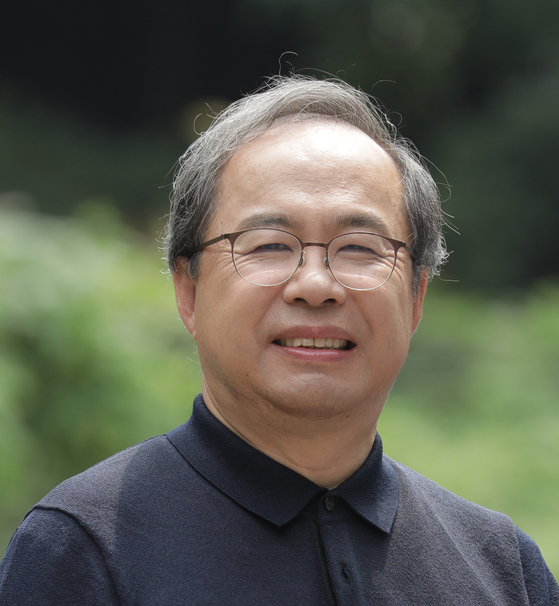
The author is a professor of electrical and electronic engineering at KAIST.
In 1919, the Declaration of Independence issued during the March 1 Movement declared to the world that Korea was a sovereign nation with political autonomy. At the time, sovereignty meant possessing territory, a population and national authority. In Korea’s case, the Korean alphabet, Hangul, might be added as a unique marker of identity.
Today, however, the concept of sovereignty continues to evolve. In the age of artificial intelligence, “AI sovereignty” has emerged as a new requirement for national independence. Also referred to as “Sovereign AI,” the term denotes a nation’s ability to independently develop and maintain its own AI models, infrastructure, data systems, talent and economic ecosystem. It requires technological and industrial autonomy, security, responsibility and a long-term capacity for self-reliance.
![President Lee Jae Myung takes part in a commemorative ceremony with other attendees at the launch event for the Ulsan AI Data Center, titled “Korea’s AI Highway,” held at the Ulsan Exhibition and Convention Center on June 20. [JOINT PRESS CORPS]](https://koreaseafood.online/data/photo/2025/07/15/25beafc0-22d7-4c7b-a378-bf7a45fafd67.jpg)
President Lee Jae Myung takes part in a commemorative ceremony with other attendees at the launch event for the Ulsan AI Data Center, titled “Korea’s AI Highway,” held at the Ulsan Exhibition and Convention Center on June 20. [JOINT PRESS CORPS]
Why is AI sovereignty so important? Because a nation's ability to control its own AI systems directly affects its national security, data sovereignty, intelligence infrastructure, industrial leadership, economic independence, political autonomy, global competitiveness and cultural preservation.
To ensure this sovereignty, four core conditions must be met.
First, a country must possess its own foundation model — a comprehensive AI model with wide-ranging capabilities. Examples include the United States' ChatGPT and China’s DeepSeek. These models can generate text and video, assist with creative tasks and even control physical robots when integrated with hardware. With a foundation model in place, a country can develop a range of applied AIs, referred to as “AIX,” and offer personalized services through agent-based AI.
Without its own foundation model, a country becomes fully dependent on foreign technology. If an imported model discontinues support for Korean-language services or degrades in performance, Korea could risk losing digital control over its language infrastructure. As foreign models increase their market share, they may also raise prices or limit access. This would make Korea an “AI colony” rather than a self-reliant state.
Second, AI sovereignty requires access to high-performance computing infrastructure — especially GPUs. The number of GPUs a country owns directly determines its ability to develop, train and operate AI models. GPUs are the engines of AI innovation. Building national AI data centers with sufficient computing power demands a large-scale investment, and the government must lead that effort.
These centers would become shared resources where startups, universities and public institutions could develop their own models and services. Just as Korea built expressways in the 1970s and broadband networks in the 1990s, it must now construct a national “AI highway” through GPU-equipped data centers. That infrastructure will fuel the next wave of economic and industrial growth.
Third, AI sovereignty depends on human capital. Building and refining AI models requires a large number of highly skilled researchers. Training this next generation of AI talent is a national responsibility. These individuals must possess strong mathematical skills, deep knowledge of software engineering, algorithm design, computer architecture and AI semiconductors — and the ability to integrate them.
The number of AI-trained master’s and PhD holders will determine Korea’s AI competitiveness. To develop this talent pool, the country must establish well-resourced AI departments at a minimum of 10 national universities, each with at least 100 students. Full support for tuition and living expenses until graduation should follow, along with competitive incentives to retain talent.
Lastly, an AI ecosystem — referred to as “AIX” — must be established. This refers to a virtuous cycle where companies generate profit from AI, reinvest earnings and foster continuous innovation. The government’s role is essential in building this ecosystem. Without it, sustainable growth in AI is impossible.
![Ha Jung-woo, former head of Naver’s AI Innovation Center, greets the press after being appointed as the inaugural Senior Secretary for AI Strategy during a personnel announcement briefing at the presidential office in Yongsan District, Seoul, on June 15. [NEWS1]](https://koreaseafood.online/data/photo/2025/07/15/726af4d8-4573-4589-8620-212b1cfc467b.jpg)
Ha Jung-woo, former head of Naver’s AI Innovation Center, greets the press after being appointed as the inaugural Senior Secretary for AI Strategy during a personnel announcement briefing at the presidential office in Yongsan District, Seoul, on June 15. [NEWS1]
Ultimately, the success of Korea’s newly inaugurated government may hinge on its AI strategy. Establishing a foundation for AI sovereignty will be essential not just for technological competitiveness but also for national security and future prosperity.
From this perspective, it is encouraging that President Lee Jae Myung has appointed top experts in AI development and commercialization to key leadership roles, including the senior secretary for AI strategy and the minister of science and ICT. These selections suggest a clear recognition of AI’s central importance. There are high expectations that this team will operate as a unified force in building the nation’s AI future.
Translated from the JoongAng Ilbo using generative AI and edited by Korea JoongAng Daily staff.


with the Korea JoongAng Daily
To write comments, please log in to one of the accounts.
Standards Board Policy (0/250자)