

The new global order: Survival of the fittest in the age of Trump
Published: 07 Mar. 2025, 00:04
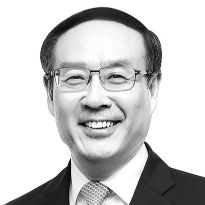
Oh Se-jung
The author is a professor emeritus of physics and astronomy at Seoul National University and a former president of SNU.
Since Donald Trump took office as U.S. president, the world has been swept into an unpredictable and turbulent vortex. For the past 80 years, the United States has led the international order based on national self-determination, serving as the leader of liberal democracies. Now, however, it feels as if we are regressing to a jungle ruled by the law of the strong. A prime example was last week’s disastrous televised meeting between Trump and Ukrainian President Volodymyr Zelensky.
Completely disregarding Ukraine’s position as a party to the war, the U.S. and Russia made it clear that they would take the lead in negotiating an end to the conflict, even going so far as to humiliate Ukraine by declaring that Zelensky, has “no cards” to play.
![U.S. President Donald Trump on Feb. 28 [REUTERS/YONHAP]](https://koreaseafood.online/data/photo/2025/03/07/0bfdc9e4-04ad-49b6-922f-a5c1e6cda5e7.jpg)
U.S. President Donald Trump on Feb. 28 [REUTERS/YONHAP]
Trump’s “America-first” doctrine is equally evident in economic policy. Washington has already announced plans to raise tariffs on products from Canada, Mexico, and the European Union, and it is only a matter of time before Korea and Japan become targets. The U.S. government is also openly intervening in key industries that will drive the global economy, such as semiconductors and AI. The Biden administration previously lured chip factories to the United States with subsidy promises; now, Trump is using tariff barriers as leverage. This kind of preferential treatment for specific industries and corporations is a violation of World Trade Organization (WTO) rules. Furthermore, Trump himself announced the Stargate Project, a $500 billion initiative to boost AI development, signaling the government’s full-fledged support for private investment in future industries.
In this rapidly changing landscape, how should Korea respond? The urgent task at hand is for the government and private sector to work together to navigate this new jungle of survival of the fittest. However, with the government’s leadership paralyzed by a presidential impeachment crisis and a political sphere still fixated on ideological disputes, Korea’s response remains dangerously sluggish.
![Representatives from the Democratic Party and People Power Party discuss the so-called K-chips Act at the National Assembly in western Seoul on Feb. 18. [YONHAP]](https://koreaseafood.online/data/photo/2025/03/07/ffc9719a-4f9a-49e0-be72-762a48e703fa.jpg)
Representatives from the Democratic Party and People Power Party discuss the so-called K-chips Act at the National Assembly in western Seoul on Feb. 18. [YONHAP]
A prime example is the ongoing debate over the Special Semiconductor Act. It is universally acknowledged that the semiconductor industry is critical to the nation’s future. Yet, political gridlock persists due to disagreements over an exemption to the 52-hour workweek for researchers. Anyone familiar with research and development understands that new products often encounter unforeseen challenges at the final stage, requiring intense time and effort to resolve. Scientists and engineers frequently work around the clock, driven by professional pride and a commitment to perfection. In such exceptional cases, flexible policies are necessary. However, Korea’s rigid regulations only serve to benefit foreign competitors.
The same issue plagues the education sector. In science and technology research, a single brilliant idea can determine success or failure. Take, for example, the groundbreaking AI model developed by China’s DeepSeek — a project spearheaded by 30-year-old scientist Luo Fuli. To cultivate such talent, the United States and China have established robust programs in universities and secondary schools to nurture mathematically and scientifically gifted students. In contrast, Korea, in the name of “fairness,” prohibits applicants from listing their achievements in international math and science competitions on college applications. This policy has had absurd consequences: a Korean student who won a gold medal at the International Mathematical Olympiad was rejected by Seoul National University but received a scholarship to attend MIT instead. Korea’s own policies are stifling homegrown talent.
Even more concerning is the recent decision to reduce the scope of math and science subjects in the college entrance exam, purportedly to curb reliance on private education. At a time when mathematics and science are the backbone of national competitiveness, Korea’s education policies seem to be heading toward a dangerous downward equalization.
As AI continues to advance, it is becoming increasingly clear that such capabilities will define a nation’s competitive edge. Recognizing this, countries around the world are mobilizing all available resources to support related technologies and industries. In the past, governments and private sectors maintained distinct roles, with regulatory policies designed to serve public interests. Now, however, these traditional boundaries are eroding as governments and industries work in unison. The role of the state is shifting from regulation to promotion.
To survive in this new reality, Korea has no choice but to strengthen its competitiveness. This requires a collective awakening—among policymakers and the public alike—to the gravity of the situation. The stakes are high, and there is no time to waste.
Translated using generative AI and edited by Korea JoongAng Daily staff.


with the Korea JoongAng Daily
To write comments, please log in to one of the accounts.
Standards Board Policy (0/250자)