Anthropic logo displayed at Moscone Center during the Dreamforce 2026 technology summit in San Francisco, California, on Sept. 17REUTERS/YONHAP
U.S. AI company Anthropic purchased 165.69 metric tons (183 U.S. tons) of Korean-language books from a Korean company to train its AI. Books from Japan and Taiwan have also become targets of Anthropic's ambitious project, dubbed "Project Panama."
Earlier on Saturday, the JoongAng Ilbo and JoongAng Sunday had reported that Anthropic had purchased approximately 80 metric tons of books from a Korean company in five shipments between March 2025 and June this year. Additional investigation increased the total to 165.69 metric tons over seven shipments, which is estimated to contain approximately 414,000 books — equivalent to one copy of every new title published in Korea over six to seven years.
Data from ImportKey and Panjiva, which provide import, export and shipping information, showed on Sunday that Korean book wholesaler and distributor Woongjin Booxen exported books to the United States through Busan Port. The shipments arrived at Long Beach and Los Angeles, California, and Tacoma, Washington, with Better World Books (BWB) listed as the buyer.
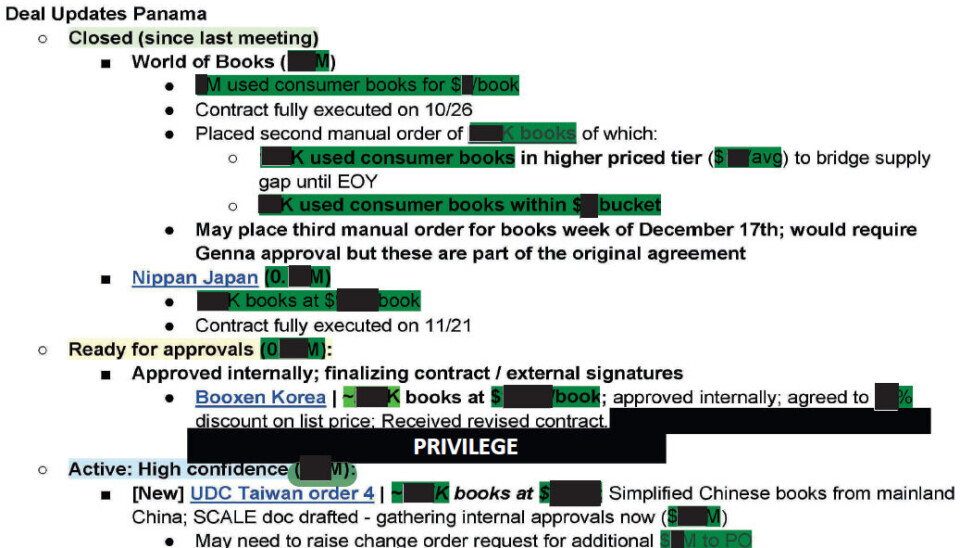
Exhibit 12 of Bartz v. Anthropic, submitted to a U.S. court, details Anthropic's discussions with Asian book distributors over supply contracts, targeting Korea, Japan and Taiwan.
At a meeting on Nov. 27, 2024, Anthropic reviewed the status of those agreements. The meeting documents indicated that Anthropic had completed a book supply agreement with Japanese book distributor Nippon Shuppan Hanbai, commonly known as Nippan, and that the terms of its agreement with Woongjin Booxen had received internal approval.
Japanese broadcaster Nippon TV reported, using the import-export data analysis tool Sayari, that "records showed a major Japanese publishing group's affiliate exported more than 50 metric tons of Japanese books to the United States since last year." The affiliate was Nippan IPS, a subsidiary of Japanese book wholesaler and distributor Nippan.
ImportKey, however, contained records of substantially larger shipments.
By a conservative estimate, Nippan IPS shipped 122.155 metric tons of books to BWB in eight shipments between February 2025 and January this year. This calculation includes only shipments for which Tokyo, Japan, was listed as the cargo pickup location. Three additional records listed Nippan IPS as the seller and BWB as the buyer, but identified Busan as both the cargo pickup location and the port of loading. These shipments totaled 80.799 metric tons. The nature of these transactions could not be confirmed.
Anthropic also purchased books from Taiwanese book distributor United Distribution Co. (UDC).
An analysis of shipping records from November 2024 through this year found that UDC exported 563.143 metric tons of books to BWB across 16 shipments. The books departed from ports in Taipei, Kaohsiung and Keelung, Taiwan. One shipment arrived in the United States as recently as Sept. 4.
Anthropic's internal meeting documents dated Nov. 27, 2024, included references to a "fourth order" from UDC and indicated that the contract was "gathering internal approvals."
Particularly notable was a reference to "simplified Chinese books coming from mainland China," which suggests that Anthropic may have sought to import Chinese books indirectly through Taiwan because of difficulties importing them directly from China amid tensions between Washington and Beijing. Taiwan uses traditional Chinese characters, while mainland China uses simplified Chinese characters.
Japan, Taiwan targeted along with Korea for Project Panama
Exhibit 12 of Bartz v. Anthropic, submitted to a U.S. court, details Anthropic's discussions with Asian book distributors over supply contracts, targets of which included Korea, Japan and Taiwan.
At a meeting on Nov. 27, 2024, Anthropic reviewed the status of those agreements. The meeting documents indicated that Anthropic had completed a book supply agreement with Japanese book distributor Nippon Shuppan Hanbai, commonly known as Nippan, and that the terms of its agreement with Woongjin Booksen had received internal approval.
Japanese broadcaster Nippon TV reported, using the import-export data analysis tool Sayari, that "records showed a major Japanese publishing group's affiliate exported more than 50 metric tons of Japanese books to the United States since last year." The affiliate was Nippan IPS, a subsidiary of Japanese book wholesaler and distributor Nippan.
Anthropic's internal data submitted to the U.S. court during the Bartz v. Anthropic lawsuitSCREEN CAPTURE
ImportKey, however, contained records of substantially larger shipments.
By a conservative estimate, Nippan IPS shipped 122.155 metric tons of books to BWB in eight shipments between February 2025 and January this year. This calculation includes only shipments for which Tokyo, Japan, was listed as the cargo pickup location. Three additional records listed Nippan IPS as the seller and BWB as the buyer, but identified Busan as both the cargo pickup location and the port of loading. These shipments totaled 80.799 metric tons. The nature of these transactions could not be confirmed.
Anthropic also purchased books from Taiwanese book distributor United Distribution Co. (UDC).
An analysis of shipping records from November 2024 through this year found that UDC exported 563.143 metric tons of books to BWB across 16 shipments. The books departed from ports in Taipei, Kaohsiung and Keelung, Taiwan. One shipment arrived in the United States as recently as Sept. 4.
Anthropic's internal meeting documents dated Nov. 27, 2024, included references to a "fourth order" from UDC and indicated that the contract was "gathering internal approvals."
Particularly notable was a reference to "simplified Chinese books coming from mainland China," which suggests that Anthropic may have sought to import Chinese books indirectly through Taiwan because of difficulties importing them directly from China amid tensions between Washington and Beijing. Taiwan uses traditional Chinese characters, while mainland China uses simplified Chinese characters.
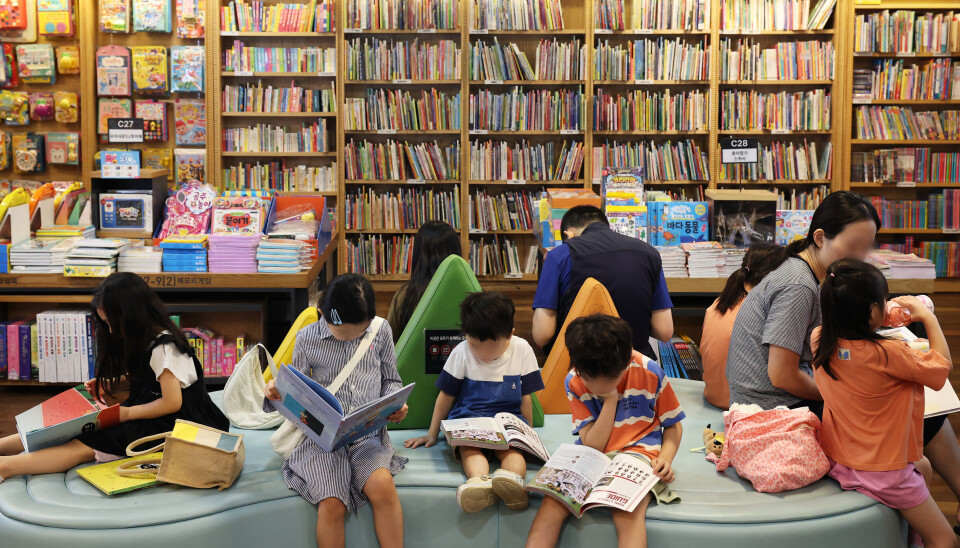
People read books at the Kyobo Book Centre in Jongno District, central Seoul on July 28.NEWS1
AI likely moving on to old books
Having mastered newly published books, onlookers suspect that Anthropic — and possibly other AI developers — have moved on to older books for training purposes.
Since the beginning of this year, large orders for used books have emerged worldwide. Antiquarian bookstores in Germany suddenly received large orders in the early morning hours, while secondhand bookstores in Tokyo's Jimbocho district also reported bulk orders from unidentified buyers.
In Korea, inquiries about purchasing used books began arriving in August at the secondhand bookstores operated by Yes24 and Aladin, as well as bookstore Seoul Book Bogo.
"I suspect AI companies have finished training their models on new books and have now begun looking for used books to train them on older materials," said Kim Su-hyeon, a director at Seoul Book Bogo.
The inquiries to Korean companies came from a book distribution company in Arizona, identified only as Company B, which wrote in an email that it is "looking for suppliers who can regularly sell general Korean-language books in pallet or container quantities."
Before AI companies began training their models on new and used physical books, they had already used pirated digital copies, which also came to light in the "Bartz v. Anthropic" lawsuit.
Between 2020 and 2021, Anthropic downloaded approximately 4 million digital books from piracy websites, including Library Genesis (LibGen), Pirate Library Mirror (PiLiMi) and Books3. A summary judgment issued in the case in June last year found that the downloaded digital books had been used to train different large language models (LLMs).
The U.S. court determined that downloading digital books from piracy websites constituted unlawful acquisition and ordered Anthropic to compensate copyright holders. The court identified 482,460 works out of the approximately 4 million downloaded copies as eligible for compensation, subject to conditions including registration with the U.S. Copyright Office within five years of first publication.
The Anthropic logo is seen in this illustration created on March 1.REUTERS
Even North Korea targeted
The eligible works include books by some of South Korea's most prominent authors, namely Nobel Prize in Literature laureate Han Kang, Hwang, Kim Young-ha and Kim Ae-ran.
A review of Anthropic's copyright settlement website as of Friday found 25 titles by 16 Korean authors. Another nine titles were nonfiction works by authors including Buddhist monk Haemin, University of London professor Ha-Joon Chang and philosopher Byung-Chul Han. All were English translations rather than Korean-language editions.
The works eligible for compensation also include "The Accusation" (2018), a novel by North Korean writer Bandi. The book was published in South Korea and became known to English-language readers through a translation by Deborah Smith, who also translated Han Kang's "The Vegetarian" (2007).
Anthropic agreed to pay $3,000 per work, for a total settlement of $1.5 billion. Korean authors, including Han, received notices about compensation in February. Documents released by the U.S. court showed that compensation claims had been submitted for 440,490 of the 482,460 eligible works, or 91.3 percent, as of April 16.
However, the number of Korean books included in the settlement may not fully reflect the issue's extent.
The approximately 4 million pirated digital books downloaded by Anthropic included most Korean books translated into English. Lists of digital books available through PiLiMi and other sources have been posted on the developer platform GitHub. They include numerous Korean works, ranging from novelizations of television dramas such as "Mr. Sunshine" (2018) to web novels, making the full extent of the collection difficult to determine.
Pages from the Anthropic website and the company's logos displayed on a computer screen in New York on Feb. 26AP/YONHAP
Korean government aware since February
According to the latest findings, the Literature Translation Institute of Korea (LTI Korea) and the government had already been aware of the issue since February.
LTI Korea, which supports overseas translations of Korean literature, notified Korean authors in February about compensation available for Anthropic's illegal downloading of digital books, it was confirmed Saturday.
After learning of the case, the Ministry of Culture, Sports and Tourism passed the information to LTI Korea. The institute subsequently sent official notices to Korean authors under the title "Guidance on Remedies for Korean Literary Authors Affected by Copyright Infringement by a U.S. AI Company."
The notices explained how authors could apply for compensation, including the procedures on Anthropic's copyright settlement website, and stated that the deadline for submitting claims was March 30.
"We conducted our investigation and provided guidance primarily to authors whose translated works had been published with support from LTI Korea," an institute official said.
LTI Korea identified 20 authors whose works were affected by illegal downloading, covering 21 titles. They included Nobel Prize in Literature laureate Han and prominent Korean authors Kim Ae-ran, Kim Young-ha, Shin Kyung-sook, Jeong You-jeong and Hwang. The authors reportedly told LTI Korea that they would apply for compensation either directly or through their literary agencies.
However, the authors identified by the institute represent only a portion of those affected. The approximately 4 million digital books downloaded by Anthropic contain far more works by Korean authors than those identified as eligible for compensation, including deceased authors Cho Se-hui and Hwang Sun-won.
"As we expect there may be more affected authors beyond those currently identified, we ask that you share this information widely with other authors you know," LTI Korea wrote in its notice.
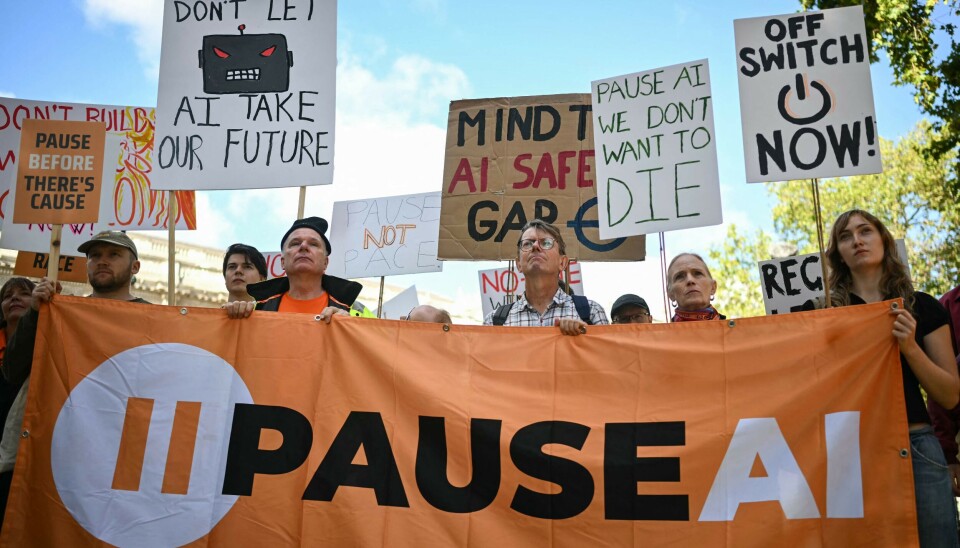
People hold placards and a banner during a "emergency protest" by the civic action group PauseAI UK outside Downing Street in London on Sept. 16, after news that AI researcher Jacob Coxon has decided to leave the industry.JUSTIN TALLIS
Korea's legal vacuum over AI copyright creates larger risk
As AI companies expand their training materials from pirated digital books to new physical books and then used books, publishers and authors have few effective safeguards for their copyrights.
Anthropic's settlement compensates copyright holders for the unlawful acquisition of books downloaded from piracy websites, not for the use of those books in AI training. In fact, the ruling in Bartz v. Anthropic found that purchasing books and using their contents to train AI models constituted fair use.
Korea currently has no specific legal provisions governing copyright issues arising from AI training.
"In 2023, there was an attempt to amend the Copyright Act to require copyright holders' consent for AI training, but it failed," said Park Jeong-in, a research professor at Duksung Women's University's AI DynaInfo and an expert in copyright law. "We are now in a legal vacuum."
The European Union, on the other hand, began implementing its AI Act in August, introducing provisions restricting the use of copyrighted works for AI training when authors or other rights holders have expressly reserved their rights.
Korea's publishing organizations have begun speaking out against the lack of safety nets for creators.
"AI companies must pay fair compensation to publishing rights holders," the Korean Publishers Society said in an appeal statement Thursday. The Korean Publishers Association also plans to investigate AI companies' purchases of used books.
This article was originally written in Korean and translated by a bilingual reporter with the help of generative AI tools. It was then edited by a native English-speaking editor. All AI-assisted translations are reviewed and refined by our newsroom.