Korean manufacturers redraw China playbook as U.S. pressure escalates
Samsung, SK hynix and Hyundai are shifting investment toward the United States, India, Vietnam and Japan as the Trump administration and intensifying U.S.-China competition reshape supply chains.
A production line at SK hynix’s plant in Wuxi, China.SK HYNIX
Decisions about manufacturing and overseas expansion in strategic industries such as semiconductors are no longer driven by economics alone. As geopolitical developments increasingly shape business decisions, Korean manufacturers across the chip, auto and shipbuilding industries are weighing a growing set of risks in drawing global strategies. In this series, “Redefining Korea’s economic security in an era of U.S.-China rivalry,” the Korea JoongAng Daily examines how Korean companies navigate geopolitical pressures and realign their global supply chains.— ED.
China used to serve as a key consumer market and manufacturing hub for Korean companies, but the role has faded since the early 2020s amid the intensifying rivalry between Washington and Beijing, particularly in high-tech sectors including semiconductors.
With U.S. restrictions limiting investment and equipment upgrades in China, Korean chipmakers have explored and identified alternative production sites in the United States, Vietnam and Japan.
Still, Samsung Electronics and SK hynix face a dilemma as pressure from both Seoul and Washington for more factories mounts even as uncertainty lingers over how long the memory chip boom will last.
Korea classifies chips as a core national technology, and the government is keen to protect manufacturing information and keep operations at home. The Trump administration, however, has pressed the chipmakers to build more factories in the United States or face heavy tariffs.
Samsung and SK hynix have already pledged 800 trillion won ($600 billion) to the Korean government to build a massive chip manufacturing cluster in the Jeonnam-Gwangju region. The investment is meant to keep pace with AI-driven chip demand and also to stimulate the rural economy outside the capital.
This investment is separate from the Yongin cluster in Gyeonggi, where the two companies are expected to spend up to a combined 1.6 quadrillion won.
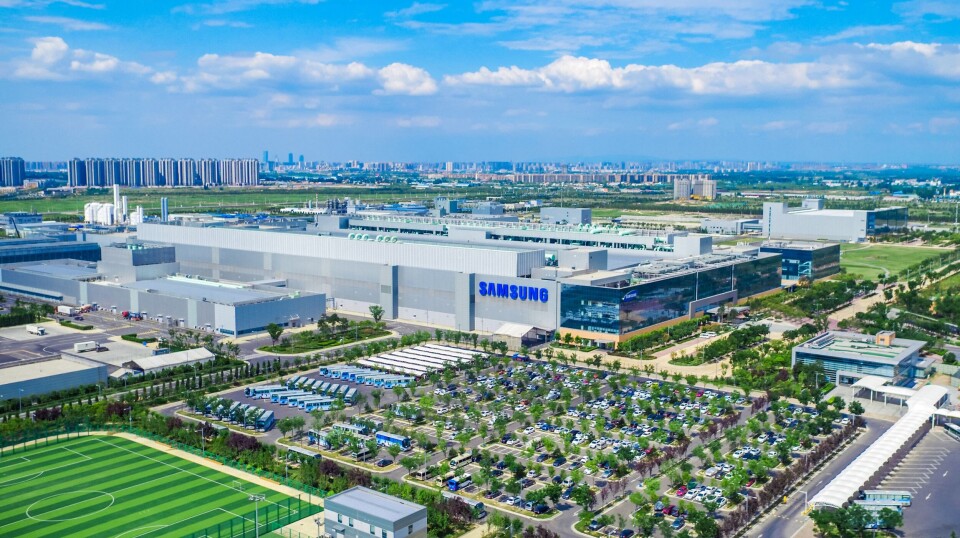
Samsung Electronics' Xi'an chip plant in ChinaSAMSUNG ELECTRONICS
For their part, the United States has been steering Samsung and SK hynix away from significant investments in their Chinese facilities by ending the validated end-user waiver in 2025. Samsung and SK hynix each operate a mix of memory chip production facilities using China's relatively mature process technologies and testing and packaging facilities.
Before the termination, chipmakers were free to import controlled U.S. chip equipment without obtaining approval from U.S. authorities each time. However, now they have to renew their licenses annually to do so.
Because of the chip shortage driven by the AI boom, every facility counts, and Chinese operations cannot be ignored given the ecosystem and supply chain network the chipmakers have built there over the years along with cheaper labor. But with U.S. pressure growing, Samsung and SK hynix now are scouting other locations outside Korea, including the United States, Vietnam and Japan.
“We do not have any plans to expand capacity in China beyond our existing manufacturing base there,” an SK hynix spokesperson told the Korea JoongAng Daily. “The volume of our chip equipment imports to China is enough within the range of what the U.S. license allows us.”
A Samsung Electronics spokesperson echoed the view, saying the chipmaker does not have plans for significant investment in China.
“We will maintain our facilities in China, and some of our lines might go through upgrades or transitions, but that is the extent of it,” the spokesperson added.
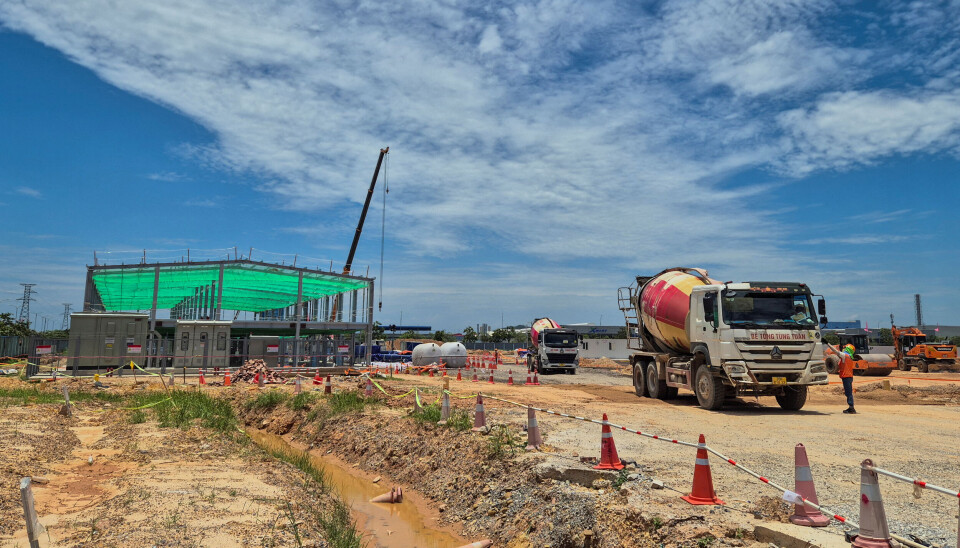
A view of construction work on the new Samsung semiconductor plant, a memory chip testing plant, amid a global memory chip shortage, in Thai Nguyen province, Vietnam,on May 25.REUTERS/YONHAP
Outside Korea and China, the two chipmakers are expanding overseas, diversifying their manufacturing footprints into the United States, Vietnam and potentially Japan.
Samsung and SK hynix are facing growing pressure from the Trump administration to produce their memory chips in the United States. Memory chips are critical components in AI accelerators from Big Tech companies such as Nvidia, Google, Microsoft and Amazon.
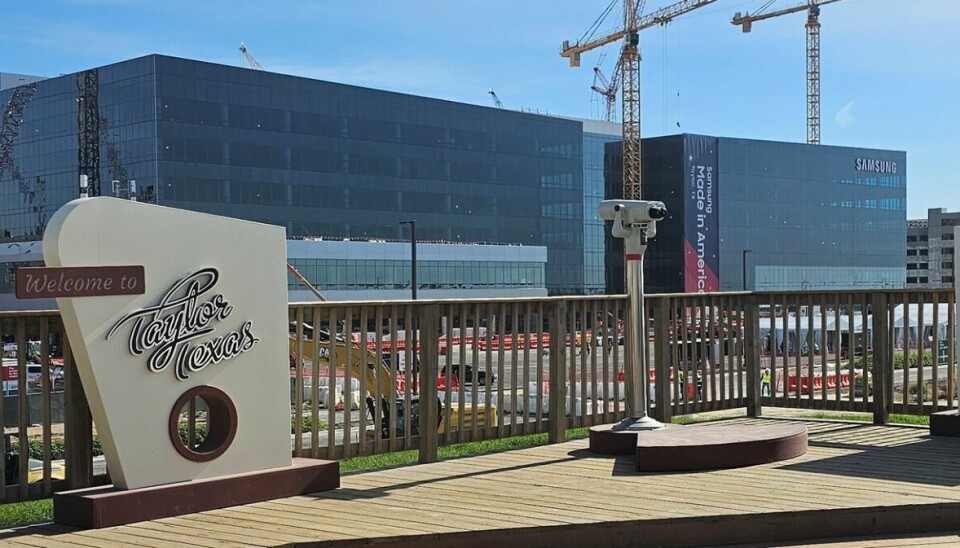
Samsung currently operates a foundry plant in Austin, Texas, and its first foundry factory in nearby Taylor is scheduled to go online next year, with a combined $37 billion going into the site. The company is also building a $4 billion chip testing and packaging factory in Vietnam.
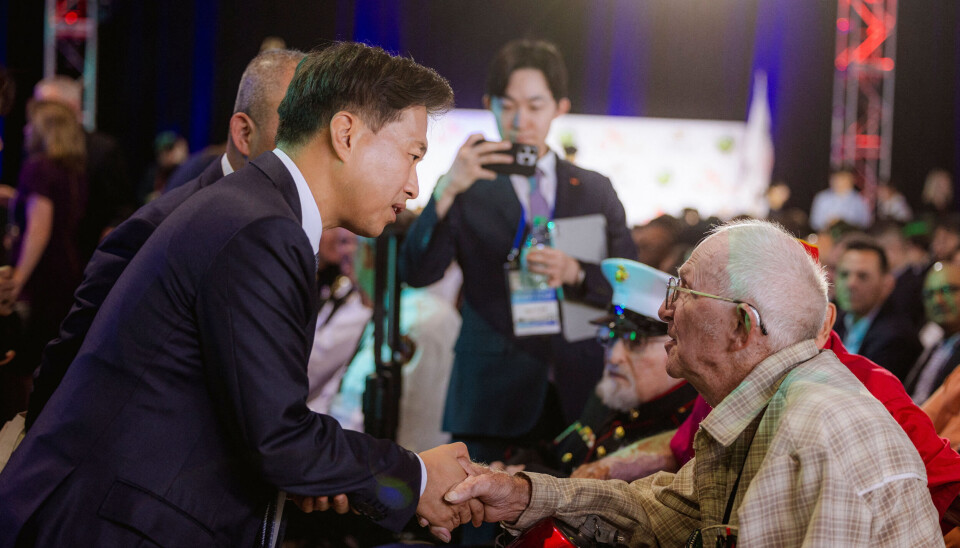
Kwak Noh-jung, president and CEO of SK hynix, greets American veterans from the Korean War at a groundbreaking ceremony for an advanced packaging production facility for memory chips used in AI applications at Purdue University in West Lafayette, Indiana, U.S. on Aug. 27.REUTERS/YONHAP
SK hynix, on the other hand, recently started construction on a $4 billion chip packaging factory in West Lafayette, Indiana. It is also looking at potential sites in Japan and the United States for further investments.
Samsung Electronics' Taylor plant under constructionTAYLOR CITY
Beyond semiconductors, Korean makers of smartphones, displays, home appliances and cars have also been moving production out of China, once favored as a low-cost manufacturing hub.
Samsung Electronics closed its last remaining smartphone plants in Tianjin in 2018 and Huizhou in 2019, shifting production to Bac Ninh and Thai Nguyen in Vietnam and Noida in India. About half of its smartphones are now made in Vietnam. LG Display sold its LCD plant in Guangzhou, while LG Electronics listed its Indian unit and is building a third home appliance factory in the country. Mexico has also emerged as a base for exports to the U.S., with Kia, Samsung and LG all operating plants there.
India rises
Chipmaking is not the only industry caught in the geopolitical crossfire. Hyundai Motor Group, chastened by the erosion of its once-formidable position in China, has recalibrated its strategy around India, marshaling capital and production capacity in one of the world’s fastest-growing car markets.
The Korean automaker acquired a General Motors plant in Talegaon, Pune, in western Maharashtra, in 2023, and has invested 70 billion rupees, roughly $800 million, to overhaul the facility, which began mass production last October.
Hyundai will invest an additional $15.5 billion in India, mainly in hydrogen sectors to expand its business to buses, trucks and commercial vehicles after its Indian subsidiary went through an initial public offering worth $3.4 billion in October 2024, choosing India for the first public listing of any of its overseas subsidiaries.
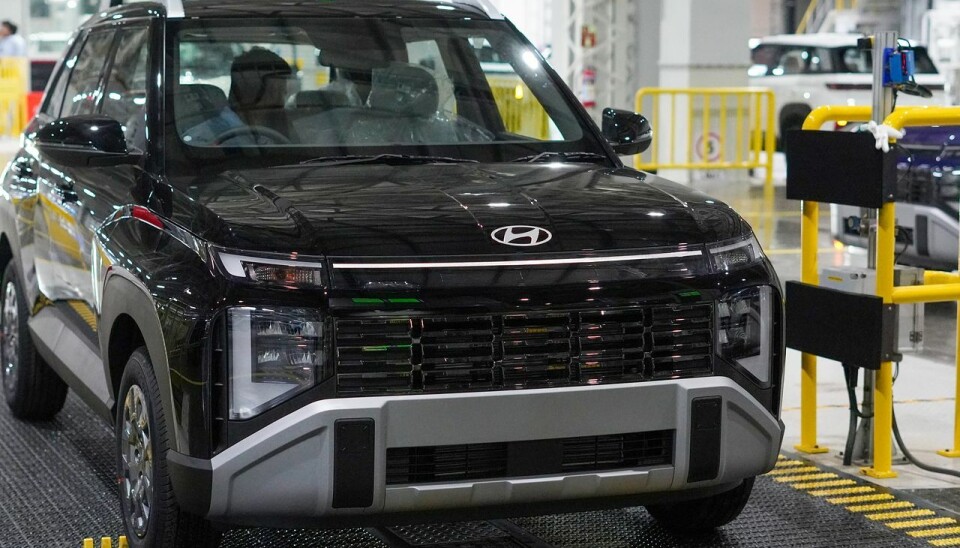
Hyundai Motor's Venue small SUV is manufactured at its plant in Talegaon, Pune, in the western Maharashtra.HYUNDAI MOTOR
The pivot traces largely to a stunning reversal of fortune in China, one that has elevated India from a peripheral market to the linchpin of Hyundai’s strategy. Hyundai and Kia’s combined sales in China, which peaked at 1.8 million vehicles in 2016, dwindled to about 203,000 by 2024, primarily due to Beijing's retaliation against Korea’s deployment of the Terminal High Altitude Area Defense missile defense system in 2017.
The group has dismantled much of its Chinese manufacturing plants, retaining only four of the eight plants it once operated, two each for Hyundai and Kia.
Its first Chinese factory in Beijing, with an annual capacity of 300,000 vehicles, was idled in 2019 and sold in 2021, while its Chongqing plant was off-loaded to a local buyer at the end of 2023.
Their annual production capacity, once slated to reach 2.7 million vehicles, was cut to about 1.7 million in 2025. Hyundai Mobis, the parts maker under Hyundai, also sold its Chongqing factory, while HL Mando withdrew from the city in 2023, followed by steelmaker Hyundai Steel.
India presents a starkly different picture; Since establishing its local subsidiary in 1996, Hyundai has built its annual sales in the country to roughly 600,000 vehicles.
The Pune plant, which houses an engine plant, a proving ground and a training center alongside its assembly lines, has an annual capacity of 170,000 vehicles, which Hyundai plans to expand to 250,000 by 2028 and 320,000 by 2030.
“Advanced economies, resetting their relationships with China, have come to see India as both an emerging market and a critical hub for diversifying their supply chains,” said Kim Kyung-hoon, who leads the India and South Asia team at the Korea Institute for International Economic Policy. “The Indian government has a strong appetite for industrial cooperation with Korea, given its manufacturing strength.”
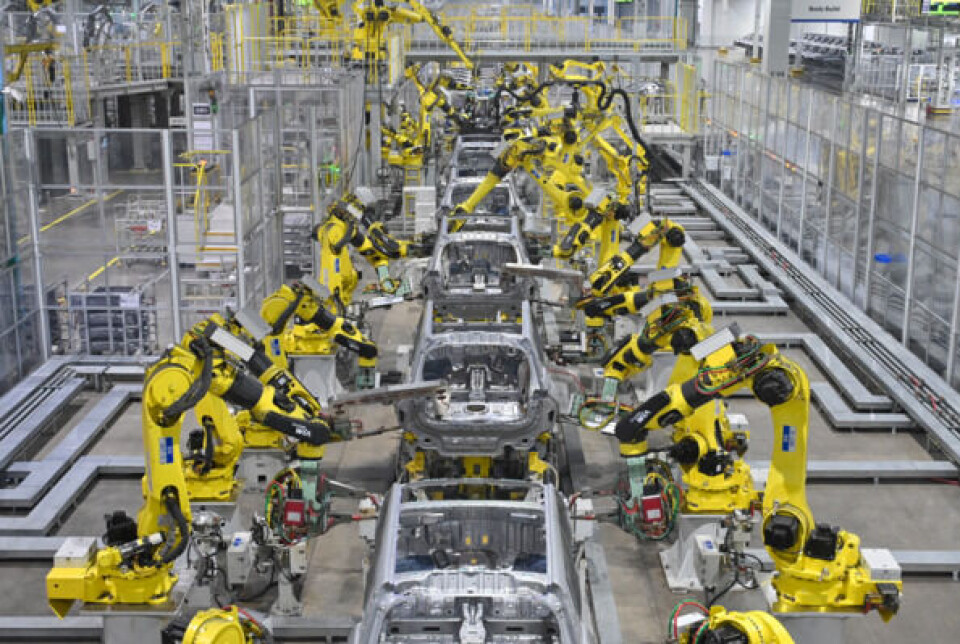
Industrial robots weld car bodies at Hyundai Motor's plant in Talegaon, Pune, in western Maharashtra.HYUNDAI MOTOR
With Pune now in full operation, Hyundai’s production capacity in India is approaching one million vehicles a year, including 824,000 at its two Chennai plants.
Kia’s factory in Anantapur, with capacity of 431,000, lifts the group’s total to 1.43 million this year, and the completion of Pune’s first expansion phase in 2028 will put it on course for 1.5 million.
Pune has been producing the latest Venue, a compact crossover SUV that ranks among India’s most popular models, since October last year. A total of 121,294 Venues have been sold through August and have been exported to about 30 countries, including Mexico, Chile, South Africa and Saudi Arabia.
Hyundai said, however, it has not written off the Chinese market, as the company's CEO José Muñoz in August pledged to restore annual sales there to 500,000 vehicles by 2030, a goal built around the China-specific Ioniq V and partnerships with local companies to tailor vehicles to Chinese tastes.
Hyundai plans to follow with two electric SUVs in 2027, a compact and a midsize model, each offered in fully electric and extended-range versions.
Yet the target is more modest than it appears, as it counts exports. Hyundai intends to sell its China-developed Ioniq models in Asia Pacific, North America and the Middle East.
The Elexio, an electric SUV introduced in China last year, has already arrived in Australia, where Muñoz said the reception had been “very positive,” prompting the company to consider a broader regional rollout.
“Also, we have the opportunity to hedge the risks that we have in other regions globally,” Muñoz said. “If [the Ioniq series] succeeds in China, we will [expand to] markets like Asia Pacific, Southeast Asia and potentially in Central and South America.”