Seoul proposes record 55.74 trillion won budget to expand youth AI access, rental housing citywide
Mayor Oh Se-hoon's budget proposal prioritizes generative AI subscriptions for young people, public housing and welfare while holding projected debt steady.
Seoul Mayor Oh Se-hoon presents Seoul’s proposed 2027 budget during a briefing at Seoul City Hall in Jung District, central Seoul, on Oct. 29.NEWS1
Seoul's city government has proposed a record 55.74 trillion won ($41.68 billion) budget for 2027, prioritizing youth support and housing stability with free generative AI subscriptions and public rental housing.
Unveiled on Thursday by Mayor Oh Se-hoon of the conservative People Power Party, the budget is 4.27 trillion won larger than this year’s budget — an 8.3 percent increase. It is the first annual budget the city administration, which took office in July, has drafted.
The city plans to hold debt steady despite growing financial obligations for national government-backed programs. Its contribution to nationally subsidized projects, including marriage and child care support, will increase by 1.17 trillion won from this year. Nevertheless, the city projects outstanding debt of 11.57 trillion won at the end of next year, roughly unchanged from this year’s forecast.
Funding for policy programs will increase 9 percent to 31.58 trillion won. The figure excludes budgets for the education office and district governments as well as administrative operating expenses.
A standout initiative is the youth AI access program. The proposal allocates 26.6 billion won to provide 500,000 young people with generative AI subscriptions and skill-level-tailored training. The aim is to prevent differences in people’s ability to afford and use AI from widening gaps in employment opportunities.
The budget also earmarks 46 billion won for the Seoul Software Academy, which has a strong job placement record, to train 4,500 AI professionals.
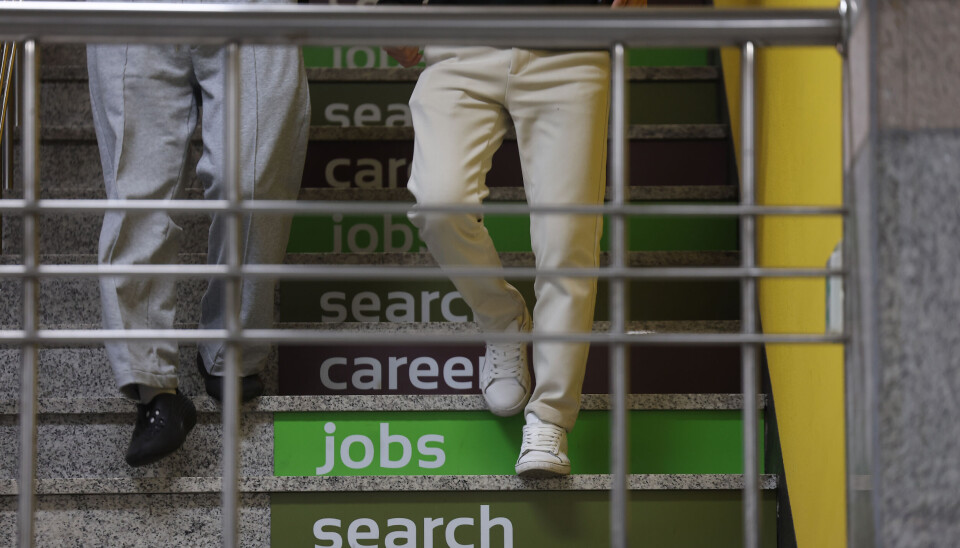
Visitors walk down the stairs at an employment support center in a college in Seoul on April 20.YONHAP
However, the youth AI program must still win approval from the city council, where the liberal Democratic Party (DP) holds a majority. The city included 5.63 billion won for the initiative in a supplementary budget proposal in September, but the council cut the entire allocation. DP council members argued then that preparations for the program were inadequate.
The city has since revised the program and requested funding again. The revision could set the stage for another clash during deliberations on next year’s budget.
Next year’s budget proposal allocates 1.12 trillion won to housing supply. The housing budget aims to provide 27,200 units of public rental housing next year. Of those, 20,736 units, or about 76 percent, will be secured by purchasing existing homes. The city will also build 3,364 units, with 3,100 leased as public rental housing.
Apartment complexes are seen from Namsan in Jung District, central Seoul, on Oct. 5.NEWS1
The city also plans to provide 500 units of studio apartments for its housing support program for university students.
The city also plans to purchase 3,027 housing units for young people and newlyweds.
It will also expand monthly rent subsidies to 32,000 young people, up from 23,000 this year.
Another 23.1 billion won is set aside for funding the Rapid Integrated Planning, an urban renewal project that streamlines redevelopment and reconstruction procedures. The budget will also fund the Moa Housing & Moa Town urban renewal initiative for smaller and older neighborhoods.
In welfare spending, 4.81 trillion won has been earmarked for livelihood, medical and educational benefits, an increase of 953.1 billion won from this year.
The city also plans to introduce a pension for middle-aged residents approaching retirement or facing an income gap. Under the program, 10,000 participants would each save 80,000 won a month, with the city contributing another 20,000 won.
A nurse takes care of a newborn baby in a nursery in Yangcheon District, western Seoul, on Aug. 3.NEWS1
Marriage, childbirth and child rearing support would receive 143.4 billion won. The broader budget for supporting vulnerable groups would rise 13.1 percent to 17.69 trillion won.
Seoul also aims to create a “vibrant 24-hour economy,” with shopping and leisure activities continuing into the night. The city would spend 10.5 billion won expanding the “Moonlight Night Markets” program from six locations to 16.
Another 10 billion won would be spent on improving nighttime lighting along about 4 kilometers (2.5 miles) of the Han River, including areas around Jamwon Han River Park in Seocho District, southern Seoul and Hannam Bridge, which links Yongsan District, central Seoul with Gangnam District, southern Seoul.
A further 5.6 billion won would fund a permanent light show at Dongdaemun Design Plaza in Jung District, central Seoul.
The Dongdaemun Design Plaza in Jung District, central SeoulSEOUL DESIGN FOUNDATION
Other projects to transform urban spaces would also receive substantial funding. The proposal allocates 22.2 billion won to build a second Sejong Center for the Performing Arts in Yeouido, Yeongdeungpo District, western Seoul. It will also allocate another 53.3 billion won to develop Nodeul Island in Yongsan District into a global arts destination.
Another 16.8 billion won would go toward converting Jamsu Bridge, which connects Yongsan District and Seocho District, into a pedestrian-only bridge, with an opening targeted for August 2027.
“We have expanded investment in what residents need for their daily lives without increasing debt,” Oh said. “We will give young people opportunities to get ahead and provide housing stability for residents concerned about housing.”
The budget proposal will be submitted to the Seoul Metropolitan Council on Friday.
This article was originally written in Korean and translated by a bilingual reporter with the help of generative AI tools. It was then edited by a native English-speaking editor. All AI-assisted translations are reviewed and refined by our newsroom.