Alleged Chinese spy's snooping on Korea-U.S. drills raises alarm over shared intelligence practices
A former Chinese PLA officer allegedly intercepted communications near key Korean and U.S. bases, intensifying concerns over Seoul’s intelligence-sharing credibility with Washington.
Military trucks and equipment are seen at Camp Humphreys in Pyeongtaek, Gyeonggi, on Aug. 17.NEWS1
A former member of China's People's Liberation Army was found to have intercepted military communications at U.S. military bases in Korea — particularly during joint drills between Seoul and Washington, as well as trilateral exercises with Tokyo.
Security experts have urged Korea to bolster counterintelligence against China after a series of Chinese espionage cases disrupted intelligence cooperation betweenKorea and the United States.
A former lieutenant colonel who spent four decades in the Chinese Army’s signal-intelligence unit intercepted communications at Korean and U.S. military bases 13 times between March 2024 and August this year, according to an indictment obtained by People Power Party Rep. Kim Meen-geon from the Ministry of Justice on Tuesday.
Seven of the 13 surveillance operations coincided with bilateral and trilateral military exercises, including Ulchi Freedom Shield (UFS).
A timeline of military snooping
The suspect began hissurveillance operations at a hotel near Kunsan Air Base in Gunsan, North Jeolla, from March 12 to 14, 2024. The base is home to the Korean Air Force's 38th Fighter Group and the U.S. Air Force's 8th Fighter Wing.
The surveillance overlapped with Freedom Shield, a major South Korea-U.S. military exercise held from March 4 to 14, 2024. The drills ranged from detecting and striking North Korean cruise missiles to air assaults, air-to-air live-fire exercises, air-to-ground bombing and battalion-level combined air operations known as Buddy Squadron drills.
About three months later, on June 29, 2024, the suspect visited a hotel near Busan naval base — home to the Commander, Navy Region Korea.
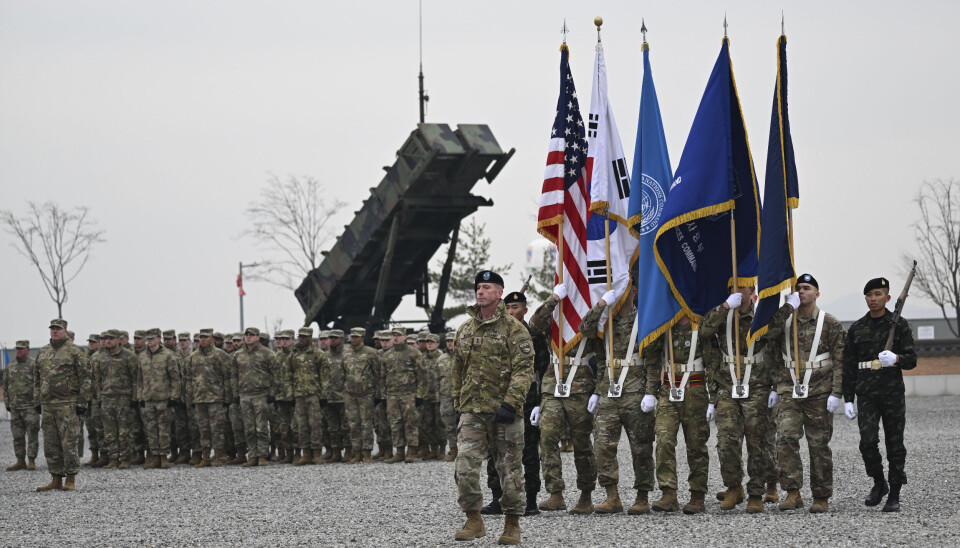
Members of the United Nations Command honor guard carry flags during a change-of-command ceremony for the United Nations Command, Combined Forces Command, and the United States Forces Korea at Camp Humphreys in Pyeongtaek, Gyeonggi, on Dec. 20, 2024.AP/YONHAP
The visit coincided with the final day of Freedom Edge, the first trilateral military exercise between Seoul, Washington and Tokyo, which ran from June 27 to 29. The participating fleet included the U.S. aircraft carrier USS Theodore Roosevelt, Korea's Aegis destroyer ROKS Seoae Ryu Seong-ryong and the Japan Maritime Self-Defense Force's helicopter carrier JS Ise.
The drills covered maritime missile defense, antisubmarine warfare, air defense and aerial operations. It was designed to strengthen military interoperability among the three countries to counter threats not only from Pyongyang but also from Beijing.
The suspect carried out another covert eavesdropping operation from a hotel near Camp Humphreys in Pyeongtaek from Aug. 24 to 27, 2025. The base houses the Combined Forces Command and the U.S. Eighth Army.
The timing again overlapped with a major Korea-U.S. military exercise: UFS, which was held from Aug. 18 to 28. The drill, as one of the allies' largest combined exercises, simulates a full-scale war with North Korea and involves U.S. troops stationed in South Korea as well as forces deployed from the U.S. mainland.
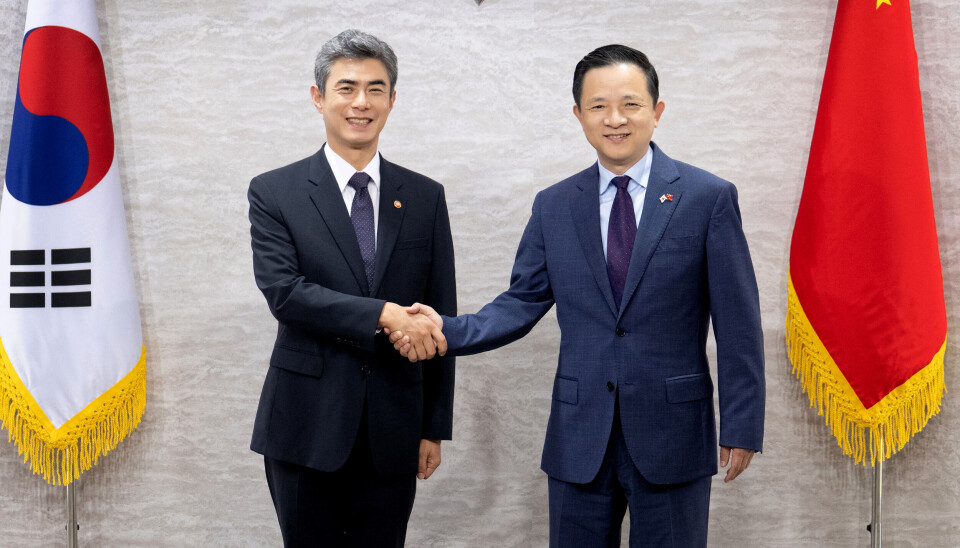
Korean Defense Minister Kang Shin-chul, left, shakes hands with Chinese Ambassdor to Korea Dai Bing at the Ministry of Defense in central Seoul on Oct. 20.NEWS1
The suspect conducted several other surveillance operations during major military exercises: at Camp Humphreys from March 11 to 12, 2025, during Freedom Shield, which ran from March 10 to 21; and at Kunsan Air Base from Oct. 28 to Nov. 2, 2025, during Freedom Flag, held from Oct. 27 to Nov. 7.
The pattern persisted into 2026, as the suspect continued to eavesdrop on communications near key military installations during major Korea-U.S. exercises: at Kunsan Air Base from March 9 to 12, as Freedom Shield ran from March 9 to 19; and at Gwangju Air Base from April 18 to 22, during the Freedom Flag exercise from April 10 to 24.
The suspect targeted Kunsan Air Base in seven of his 13 surveillance operations, more than any other military installation. The base is the closest U.S. military air base in Korea to China and Taiwan and hosts the U.S. Seventh Air Force's elite 8th Fighter Wing, known as the Wolf Pack.
Legal consequences and security implications
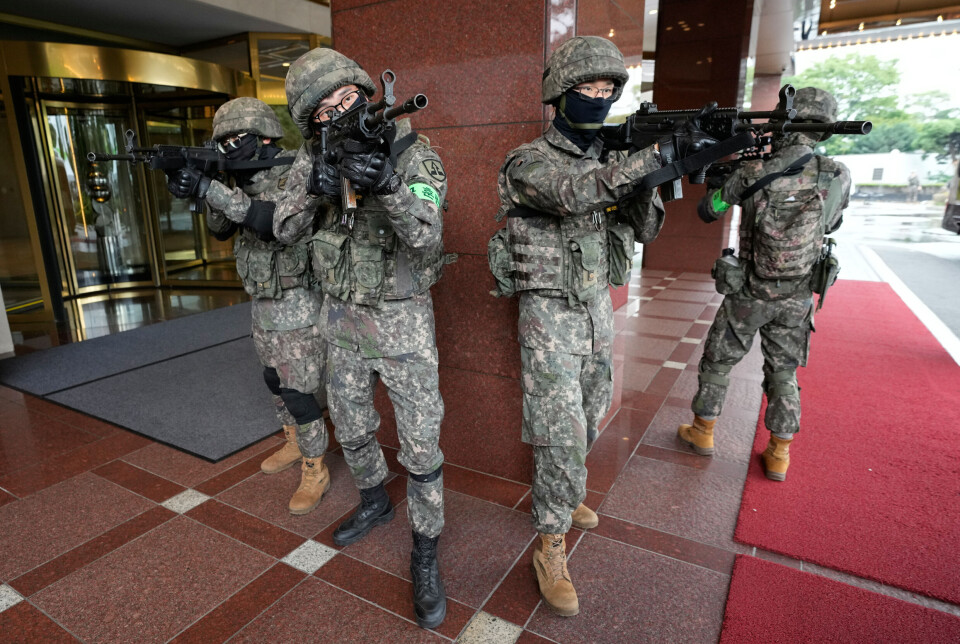
Korean Army soldiers take part in an antiterror drill as a part of the Ulchi Freedom Shield military exercise between the United States and Korea in Seoul on Aug. 19.AP/YONHAP
Prosecutors indicted the suspect on Sept. 1 on the grounds that his surveillance activities could allow him to infer classified military information, including flight operations and aerial reconnaissance plans.
As Korea emerges as a stage of Chinese espionage activities, experts say Seoul must strengthen its counterintelligence efforts against Beijing to safeguard its alliance with Washington.
China's People's Liberation Army even established a front company in Korea to recruit U.S. semiconductor specialists, according to a report published by the U.S. National Counterintelligence and Security Center in August last year.
A senior U.S. administration official warned on Oct. 9 that Korea must meet the longstanding intelligence and counterintelligence standards of its alliance with Washington. The United States has already begun restricting some of the intelligence on North Korea that it shares with the South.
U.S. Air Force One with U.S. President Joe Biden arrives at Osan Air Base in Pyeongtaek, Gyeonggi, on May 20, 2022.AP/YONHAP
“Stronger counterintelligence measures are necessary for Korea's own security and national interests, not simply to satisfy U.S. demands,” said Kang Jun-young, a professor at Hankuk University of Foreign Studies’ Graduate School of International and Area Studies.
“Seoul must first draw a clear line on Beijing’s military espionage and technology theft before it can bring together the counterintelligence capabilities left after the Defense Counterintelligence Command's dissolution and reform the relevant laws.”
The damage may already be done
The suspect was charged only with benefiting the enemy because the revised Criminal Act, which expanded espionage laws to cover spying by foreign nationals, did not take effect until Sept. 13.
“China's espionage activities appear largely aimed at countering the United States, but we don't know where the stolen intelligence ultimately ends up,” said Yun Sang-yong, a professor of military studies at Seokyeong University. “That raises concerns that South Korea could face greater security threats from North Korea as well.”
Soldiers at Camp Humphreys are seen during joint military exercise Ulchi Freedom Shield in Pyeongtaek, Gyeonggi, on Aug. 17.NEWS1
Another former member of China's People's Liberation Army, who was indicted alongside the wiretapping suspect, also obtained and leaked after-action review (AAR) materials from the UFS.
“The AAR contains operational plans for a full-scale war scenario, as well as vulnerabilities within military units,” Yun said. “Footage of Apache helicopters taking off and landing, which was also leaked, could reveal details about their weapons and firing ranges.”
“Even if individual pieces of intelligence are not sensitive on their own, they can reveal critical military secrets when pieced together,” said Yang Uk, a research fellow at the Asan Institute for Policy Studies. “Such espionage activities must be taken seriously under the mosaic theory, which recognizes the risks of combining seemingly harmless information.”
This article was originally written in Korean and translated by a bilingual reporter with the help of generative AI tools. It was then edited by a native English-speaking editor. All AI-assisted translations are reviewed and refined by our newsroom.