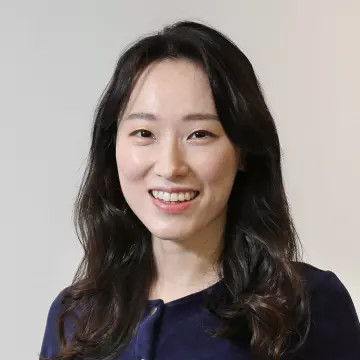
A 29-year-old full-time child who left her job after feeling burned out and became her sick father’s caregiver while looking for a new career opportunity.JJONY
As AI reshapes Korea’s job market, a growing number of young adults are turning otherwise unremarkable day-to-day life into content, documenting their routines on YouTube and blogs as they look for ways to make their time productive. Some do household chores, care for aging parents or run errands in exchange for financial support from their families.
Unlike the so-called kangaroo tribe — unmarried adults who continue to live with and remain financially dependent on their parents — this group sees their role in the household as a form of work, with clearly defined responsibilities.
The rise of these “full-time children” comes as young Koreans face a tougher path to financial independence, with AI shrinking entry-level job opportunities and high housing and living costs making it harder to build wealth.
On the other hand, the parents of today’s young adults — many of them of the Korean baby boomer generation — tend to be relatively well off, having accumulated assets during Korea’s rapid economic growth in the 1980s and 1990s.
While no official figures track the number of full-time children, they could total as many as 8 million, according to Jeon Young-soo, an associate teaching professor at Hanyang University’s Graduate School of International Studies, who published a book titled “Full-time Children” (translated) in February. The calculation was based on the number of people in their 20s and 30s who live with their parents.
Screen captures from YouTube videos documenting the routines of “full-time children"SCREEN CAPTURE
Not the 'kangaroo tribe'
Full-time children take on the role for different reasons, but many see it as a stopgap until they can land a job and strike out on their own.
Shin Suh-ji, 22, is one of the growing number of young Koreans who live with their parents while treating household help as part of the arrangement. She earns 600,000 won($450)a month in pocket money for chores including cleaning the bathroom, sorting recyclables and folding laundry.
“My allowance is partly compensation for the household chores I do, but it also gives me the time to focus on my studies and other priorities,” said Shin, a biotechnology major in her third year in university. For her, the arrangement isn’t about putting off independence indefinitely, but buying time to focus on school while her parents are willing and able to support her.
Some full-time children take pride in the role, seeing it not as a fallback but as a necessary contribution to the family.
“I think keeping the household in order is really important because a clean home is essential to staying healthy, both physically and mentally,” said a YouTuber who describes herself as a full-time child and runs a channel documenting her life as a “boarding house” operator. Her daily chores include cleaning the bathroom, making dinner, feeding the family parrot and working part-time at a convenience store, all while studying for a professional certification.
She is among a growing number of young Koreans documenting life as full-time children, which has generated more than 500 posts under its Instagram hashtag.
The rise of such a cohort is being fueled by a weak job market that is making it harder for young Koreans to strike out on their own. The unemployment rate for those aged between 15 and 29 has risen for the third straight year as of August, from 4.1 percent in 2024 to 4.9 percent in 2025 and 5.4 percent in 2026, according to the Ministry of Data and Statistics.
That gap, driven in part by weaker earnings among younger workers, is becoming increasingly visible in household wealth. People in their 50s saw the largest on-year increase in net assets, with holdings rising 7.9 percent in 2025 to 551.61 million won, while net assets held by those aged 39 and under fell 0.9 percent to 219.5 million won, according to data from the Ministry of Data and Statistics.
The squeeze is also becoming more structural, as AI reshapes the entry-level jobs that have traditionally provided a foothold for young workers. A Bank of Korea report in August found that employment of youth aged between 15 and 29 fell by 285,000 between June 2022 and June 2026, with 94 percent of the decline concentrated in industries highly exposed to AI, including publishing and computer programming.
Inflation is further adding to the burden of growing up financially independent from their parents. A government survey released last year found that 54.4 percent of Koreans aged 19 to 34 lived with their parents in 2024. The figure is expected to have grown this year, with average jeonse (lump-sum deposit) costs in Seoul at 711.78 million won in August, up 9 percent on year, according to KB Financial Group’s real estate data.
“If housing costs and living expenses were much lower than they are now, and it were relatively easy to find a job I wanted, I think the share of people becoming full-time children would definitely be lower than it is today,” Shin said. “If financial independence were much easier to achieve, I certainly wouldn’t have relied on my parents for this kind of financial support.”
This trend isn’t unique to Korea. Full-time children have become more visible as economies move from rapid growth into maturity, when young adults face a different economic landscape from the one their parents entered.
Full-time children first appeared in China and went viral in 2023 as youth unemployment prompted some young people to take on household roles for their parents. In Britain, rising home prices and rents have likewise pushed more young adults back into the family home. About 35 percent of men aged 20 to 35 lived with their parents, up from 26 percent in 2000, according to the Office for National Statistics.
Apartment complexes seen from the Lotte World Tower in Songpa District, southern Seoul, on July 12.NEWS1
A welfare solution for super-aged Korea
For some families, having a full-time child is an efficient arrangement in a changing society: Aging parents have wealth, while unemployed children have the time to care for them.
That is the case for Kim, a 29-year-old Seoul resident. Kim became the primary caregiver for her father last July, after he suffered a stroke in 2024. She took on the role instead of her mother, who was just a year away from retirement.
A meal prepared by a full-time child surnamed Kim, 29, who took on the role of caretaker for her sick father.JJONY
As a full-time child, Kim prepares lunch for her father, helps him get dressed and wash his face, and then takes care of household chores, including cleaning. In return, she lives under her parents’ roof and receives 200,000 won a month.
From the family’s perspective, the arrangement was both an economic and practical choice. “I had been questioning my career and had quit my job to explore a new path when my younger sibling, who had been caring for our father while working part-time, landed a full-time job. So I volunteered to take over his care,” Kim said.
But that doesn’t mean she has given up entirely on her career or her efforts to achieve financial independence. “I run a blog and Instagram account to show that I’ve been consistently trying new things and challenging myself. I’m also constantly looking into other opportunities and considering what I could do next.”
Some argue that the rise of full-time children is not necessarily a negative development in Korea, where a rapidly aging population is driving up the cost of caring for aging parents. Hiring a private caregiver costs an average of 3.7 million won a month, according to the Ministry of Health and Welfare — about 1.7 times the 2.24 million won median monthly income of households headed by people 65 and older in 2024.
The cost of care for older adults is likely to become an even greater burden for Korean families as the country ages; Korea entered the ranks of super-aged societies in late 2024, when people aged 65 and older surpassed one-fifth of the population.
A student looks through job postings at a university in Seoul on Sept. 12.YONHAP
“The rise of full-time children signals the emergence of a new form of family welfare,” said Prof. Jeon in his book. “Rather than pursuing an increasingly precarious form of individual independence, it is a model in which resources are shared and welfare is achieved through solidarity and cooperation with the parental generation.”
But if the trend becomes entrenched, it could weigh on economic growth by changing how wealth is accumulated and deployed across generations.
“If this goes beyond a temporary phenomenon and becomes an entrenched way of life, it could set the economy on a path toward long-term stagnation,” said Kim Yong-jin, a business professor at Sogang University.
“For wealth to be created, a country needs new businesses to emerge and grow, creating new jobs. But if full-time children remain in that lifestyle, they will simply inherit their parents’ assets and live off that wealth instead of working to create new wealth. In that environment, they are also likely to face greater difficulties getting married or having children, which could accelerate population decline and aging,” Kim added.