SK hynix bets on 3-D stacking as next frontier in AI memory
SK hynix unveiled its AI memory roadmap, centered on 3-D-stacked DRAM, high bandwidth memory and customized storage for increasingly complex AI workloads.
SK hynix CEO Kwak Noh-Jung delivers opening remarks at the 2026 SK hynix Future Forum at the company’s Icheon campus in Icheon, Gyeonggi, on Sept. 8.SK HYNIX
SK hynix is betting on 3-D-stacked chips and memory tailored to specific AI workloads as its next-generation technologies, as increasingly sophisticated AI systems demand faster, more efficient ways to store and move growing volumes of data.
The company presented its roadmap during its annual Future Forum held at the company’s Icheon campus in Icheon, Gyeonggi, on Tuesday.
“In the past, the memory market was a straight road where the competition was about who could run faster,” SK hynix CEO Kwak Noh-jung said. “Today, it's more like driving on a winding road that changes by the moment. It's also important to understand the speed and direction of changes in the external environment and adapt quickly and flexibly.”
The evolution of AI is demanding changes in memory as well. Unlike conventional AI, which primarily responds to users' questions, agentic AI can devise its own plans and carry out multiple tasks. That means AI systems have more data to remember and manage.
Rather than relying on a single type of general-purpose memory, AI systems increasingly need a “memory hierarchy” that combines high bandwidth memory (HBM), dynamic random-access memory (DRAM) and solid-state drives according to the workload.
Such architectures could become a key competitive advantage for future AI systems, according to Yoon Sung-roh, a professor at the Department of Electrical and Computer Engineering at Seoul National University.
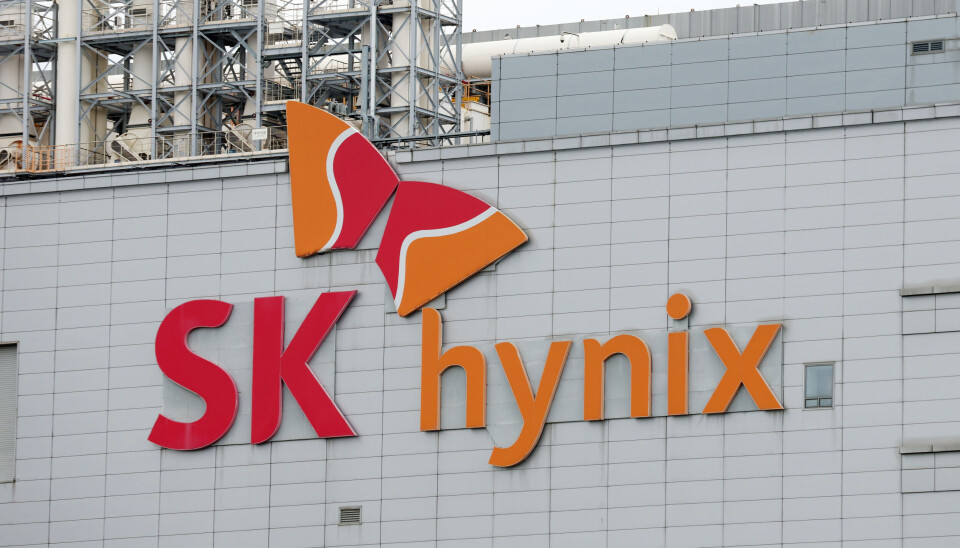
SK hynix's headquarters in Icheon, Gyeonggi, on Aug. 24NEWS1
SK hynix is pursuing what it calls a “full-stack AI memory” strategy, which combines technologies such as 3-D-stacked DRAM, HBM and high bandwidth flash according to different AI workloads. The company also plans to work with customers from the system design stage. The strategy would take SK hynix beyond simply supplying memory chips to jointly design products for customers' AI systems.
Another technology in focus is 3-D memory. As conventional chip scaling approaches its limits, the technology stacks chips vertically to shorten the distance data must travel and improve speed and power efficiency.
“It's more than simply stacking chips vertically. It's a technology that breaks down the boundary between memory and logic,” said Shin Chang-hwan, a professor at Korea University’s School of Electrical Engineering.
SK Hynix's 12-layer sixth-generation high bandwidth memory, or HBM4, chips on display at the SK AI Summit in Seoul on Nov. 3, 2025.YONHAP
SK hynix identified wider data-transfer pathways and the use of logic foundries for DRAM peripheral circuitry as some of the key directions for the technology.
SK hynix is not just building chips for AI. It is putting AI to work on the factory floor.
The company is using its proprietary GaiA platform to bring AI into fab operations, alongside safety-monitoring robots and drones equipped with vision-language models for work at height.
The chip giant is also developing a system that can detect problems on production lines, analyze their causes and recommend responses, with employees making the final call.
“We will reconsider things we have long taken for granted from the perspective of our customers and partners and look for possibilities we have yet to see amid changes in the AI ecosystem,” Kwak said.
This article was originally written in Korean and translated by a bilingual reporter with the help of generative AI tools. It was then edited by a native English-speaking editor. All AI-assisted translations are reviewed and refined by our newsroom.

![인사말 하는 곽노정 SK하이닉스 대표이사 사장 (서울=연합뉴스) = 곽노정 SK하이닉스 대표이사 사장이 지난 8일 이천캠퍼스 수펙스센터에서 열린 '2026 SK하이닉스 미래포럼'에서 인사말을 하고 있다. 2026.9.9 [SK하이닉스 뉴스룸. 재판매 및 DB 금지] photo@yna.co.kr/2026-09-09 09:53:03/](https://image.koreajoongangdaily.com/12867465.webp?imageId=12867465&width=960&height=548&format=jpg)