A Samsung Electronics semiconductor plant under construction in Taylor, Texas.SAMSUNG ELECTRONICS
Korean chipmakers are reportedly facing growing pressure to invest more in the United States as Washington prepares a second round of semiconductor tariffs tied to how much companies manufacture locally.
The United States is making the push on a separate track from the $200 billion U.S. investment package under discussion between Seoul and Washington, Korean government sources said. Any additional investment demands could be seen as going beyond the scope of the agreement reached by the two countries’ presidents.
“Semiconductors are a strategic industry for us as well,” a Korean government source said, with officials appearing intent on managing the issue as discreetly as possible.
The pressure comes as the Trump administration plans a second round of semiconductor tariffs, which would give tariff exemptions based on how much companies produce in the United States. The country is expected to apply the so-called Taiwan model, which links the scale of investment and production in the United States to the volume of tariff-free imports, to Korea and other countries.
The United States and Taiwan agreed in trade negotiations earlier this year that Taiwanese companies including TSMC would build plants in the United States in return for tariff-free import quotas tied to their U.S. production capacity. While plants are under construction, companies are allowed to export tariff-free volumes of up to 2.5 times their new production capacity, with the figure falling to 1.5 times after construction is completed.
U.S. Commerce Secretary Howard Lutnick later claimed that Taiwan had agreed to move as much as “40 percent” of its semiconductor production capacity to the United States.
U.S. Commerce Secretary Howard Lutnick, center, announces an investment from TSMC as he stands next to U.S. President Donald Trump, left, and TSMC CEO C.C. Wei, at the White House in Washington on March 3, 2025.REUTERS/YONHAP
Samsung Electronics and SK hynix are already building production facilities worth billions to tens of billions of dollars in Texas and Indiana. But Washington appears to be using its arrangement with Taiwan to pressure Korea to invest even more.
The semiconductor industries in Taiwan and Korea, however, have different structures.
For TSMC’s nonmemory chips, locating production facilities close to major customers such as U.S. Big Tech companies offers advantages.
But for memory chips such as dynamic random-access memory (DRAM) and NAND flash, which are the mainstay of Samsung Electronics and SK hynix, economies of scale achieved through large manufacturing clusters are crucial to cost competitiveness. Moving the entire memory chip ecosystem to the United States would entail enormous infrastructure costs and higher labor expenses.
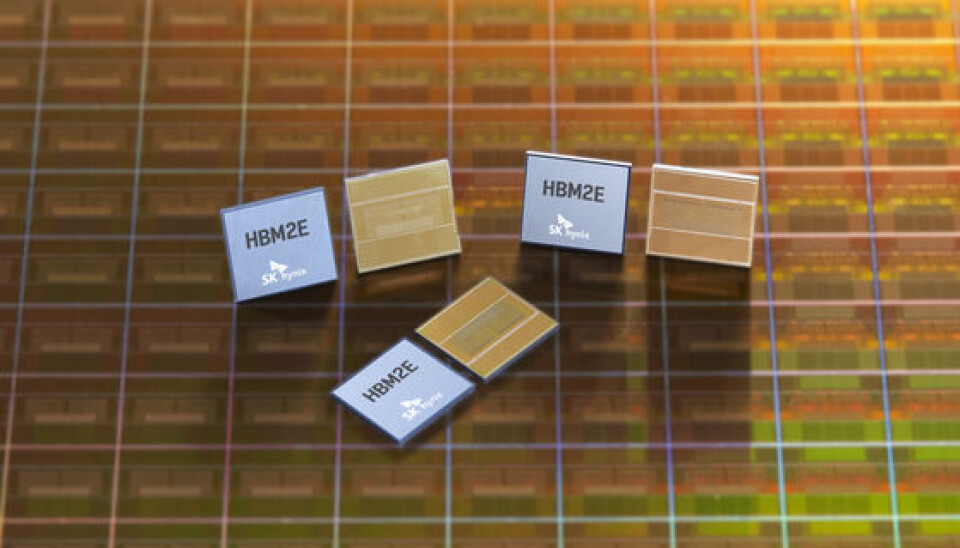
Image of SK hynix DRAM chipsSK HYNIX
There are also concerns that higher production costs could ultimately be passed on to U.S. companies through increased costs for building servers and data centers, potentially making such a move counterproductive for the United States.
U.S. pressure on Taiwan is also seen as an effort to guard against supply disruptions in the event of a Chinese invasion. Pressure on Korea, however, is seen as aimed at shifting Korea's investment to the United States and also limiting further investment in China.
That interpretation has gained further traction as U.S. pressure for semiconductor investment intensified around the time the Korean government began moving in earnest to establish a semiconductor megacluster in the southwestern Honam region. Continued pressure to shift core memory chip production to the United States could also raise concerns over Korea’s “industrial sovereignty.”
This article was originally written in Korean and translated by a bilingual reporter with the help of generative AI tools. It was then edited by a native English-speaking editor. All AI-assisted translations are reviewed and refined by our newsroom.

![미국에 건설 중인 삼성전자 반도체 공장 (서울=연합뉴스) 미국 텍사스주 테일러시에 건설 중인 삼성전자 반도체 공장 전경. 2025.2.14 [삼성전자 제공. 재판매 및 DB금지] photo@yna.co.kr/2025-02-14 14:39:21/](https://image.koreajoongangdaily.com/12908614.webp?imageId=12908614&width=960&height=548&format=jpg)