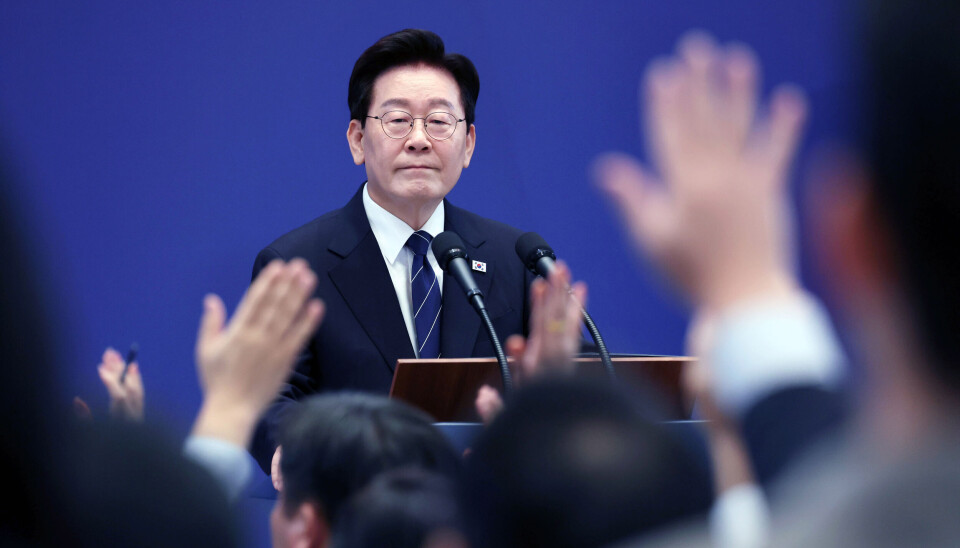
President Lee Jae Myung takes questions from reporters during a press conference at the Blue House guesthouse on Sept. 18.JOINT PRESS CORPS
Lee Ha-kyung
The author is a senior columnist at the JoongAng Ilbo.
In September 1993, President Kim Young-sam’s first year in office, Chief Justice Kim Deok-ju resigned. As head of the Seoul Civil District Court, Kim had ordered the suspension of Kim Young-sam as New Democratic Party leader. The final blow was allegations of real estate speculation exposed through a public disclosure of officials’ assets. My junior reporters had just secured decisive facts when the president moved first. Our scoop evaporated.
Kim Young-sam's justice minister, an acquaintance from high school, and the Seoul mayor, a former human rights lawyer, also resigned soon after taking office. When the press raised suspicions, the president acted swiftly. His approval rating soared.
Kim Young-sam put public duty before private interest. Two days after taking office, he disclosed his family’s assets, saying “the water must be clean from the top,” then mandated asset disclosure for public officials. Along with dismantling the Hanahoe military clique that put his predecessors in power and introducing real-name financial transactions, it became emblematic of his reforms. Those forced out protested, but Kim Young-sam did not flinch. His approval rating topped 90 percent. The southwestern region, which had voted for his rival Kim Dae-jung, was especially enthusiastic.
President Lee Jae Myung’s press conference last week centered on reflection: The people are always right, and I fell short. His usual confident smile, jokes and punchy remarks disappeared. He spoke with restraint. On a constitutional revision allowing consecutive terms, which had fueled suspicion, he said, “I have absolutely no intention of seeking another term.” He also asked the Democratic Party (DP) to remove a provision giving a special counsel authority to withdraw indictments.
But Lee still has far to go. Unlike Kim Young-sam, he has not fully separated public duty from private interest. Although he asked the ruling party to drop the special counsel’s power to withdraw indictments, he said cases involving investigations suspected of being maliciously fabricated should be examined by a special counsel. The DP recommends candidates and Lee appoints the counsel. If the counsel reaches a predetermined conclusion and prosecutors then withdraw charges, how is that materially different?
Lee said he would carefully consider public expectations in deciding whether to appoint Justice Minister nominee Kim Seung-won. Yet DP lawmakers on the Legislation and Judiciary Committee unilaterally adopted his confirmation report, while the presidential office appeared inclined to appoint him. The nominee abruptly withdrew the next day. Had his former aides not submitted a petition to the presidential office alleging sexual harassment, he might have been appointed. Kim Seung-won had co-chaired a group advocating withdrawal of indictments against Lee when the president led the DP. His nomination itself was problematic.
The possibility of an amendment enabling Lee to seek consecutive terms is gone. Yet the National Assembly speaker’s remark that “ultimately, it is for the people to decide” left political poison behind. The opposition floor leader responded that there would be “absolutely no constitutional revision under this administration.”
During a state visit to France, asked about such an amendment, Lee said his term was clearly limited by the Constitution. Such evasiveness invited speculation. Any debate over another term inevitably became entangled with questions about Lee’s pending criminal cases. The setting was ironic. In France, former presidents Jacques Chirac and Nicolas Sarkozy faced criminal trials after leaving office, despite protections while serving. Both were convicted, and Sarkozy served time in prison. It showed no one is above the law.
Lee had long avoided saying plainly that he had no intention of seeking another term. His lawyerly phrasing exhausted and angered the public. Even after the press conference, the People Power Party said it would believe him if he truly renounced another term.
Confusion remains over withdrawing indictments. Lee speaks of a “great common world” that restrains the strong and supports the weak. Seeking a privilege for himself would contradict that principle. He should say clearly: “Do not withdraw the indictments in my cases. I will stand trial when my term ends.” That could help restore trust lost through ambiguous words and actions.
Lee should also acknowledge the damage done to constitutional reform as a national agenda. The 1987 Constitution is an outdated garment for the 21st century. Decentralization, responses to a low birthrate and the climate crisis and dispersing presidential power are pressing tasks.
Yet constitutional reform became tainted by suspicions that it could serve the private goal of extending political power. It has become a politically suspect term. The question is how to revive an agenda that has been left politically lifeless.
“대통령 임기 끝나면 재판받겠다”고 하면 된다
이하경 대기자
김영삼(YS) 전 대통령의 취임 첫해인 1993년 9월 김덕주 대법원장이 자진 사퇴했다. 그는 서울민사지방법원장 때 YS의 신민당 총재 직무정지 결정을 내렸다. 결정타는 공직자 재산공개로 드러난 부동산 투기 의혹이었다. 필자가 후배 기자들의 현장 취재를 지휘하면서 결정적 팩트를 확보한 직후였는데, 대통령이 선제적으로 상황을 정리한 것이다. 특종 기회는 물거품이 됐다. YS의 고교 후배인 법무부 장관, 인권변호사 출신 서울시장도 임명 직후 사퇴했다. YS는 언론이 의혹을 제기하면 속전속결로 정리했다. 지지율은 수직 상승했다.
YS는 사(私)를 버리고 공(公)만 생각했다. 취임 이틀 만인 2월 27일 “윗물부터 깨끗해야 한다”며 본인과 가족의 재산을 공개했다. 그리고나서, 공직자 재산공개를 법으로 강제했다. 하나회 척결, 금융실명제 도입과 함께 YS 개혁의 상징이 됐다. 퇴진하는 당사자들이 억울해하고 화병까지 났지만 YS는 눈 하나 깜짝하지 않았다. 그해 대통령 지지율은 헌정 사상 최고인 90%대를 찍었다. 김대중(DJ)을 찍었던 호남이 가장 열광했다. 사심을 버린 대통령과 민심이 제대로 하나가 됐다.
이재명 대통령의 지난주 기자회견 핵심 메시지는 반성이다. 국민은 늘 옳고, 내가 부족했다는 것이다. 특유의 자신만만한 표정과 웃음기, 농담, 사이다 발언은 사라졌다. 겸손하고 절제된 어조로 일관했다. 오해가 들끓었던 연임 개헌에 대해 “연임할 생각 전혀 없다”고 깨끗이 정리했다. 더불어민주당에는 특검의 ‘공소취소권’ 조항을 빼달라고 요구했다. 민심에 한걸음 다가섰다.
그러나 아직 갈 길이 멀다. 공(公)만 바라본 YS와 달리 사(私)를 버리지 못하고 있다. 특히 자기 사건에 대한 공소취소에 미련이 남은 것 같다. 여당에 특검의 공소취소권 조항을 빼달라고 했지만 “악의적 수사 조작이 의심되는 사건들에 대해서는 특검을 통해 진상을 규명하는 게 맞다”고 말했다. 특검은 민주당이 후보를 추천하고, 이 대통령이 임명한다. 특검이 미리 정해진 결론을 내리고 검찰이 공소취소를 할 수 있다. 그렇다면 공소취소 특검과 뭐가 다른가. 사(私)의 그림자가 어른거린다.
이 대통령은 김승원 법무부 장관 후보자 거취에 대해서 “국민 눈높이를 고려해 신중하게 결정하겠다”고 했다. 그러나 여당 법사위원들은 단독으로 청문보고서를 채택했다. 청와대의 임명 기류도 여전했다. 김 후보자는 다음 날 느닷없이 자진 사퇴했다. 전직 보좌진이 청와대에 성추행 의혹을 제기하는 탄원서를 전달하지 않았다면 임명됐을 것이다. 김 후보자는 ‘이재명 대표 공소취소 모임’의 공동대표였다. 그를 지명한 것 자체가 문제였다. YS였다면 어림없었을 것이고, 지지율이 반토막 나는 황당한 일도 벌어지지 않았을 것이다. 위기의 이 대통령에게는 사심없이 직진하는 YS 스타일이 출구다.
이 대통령이 연임하는 개헌의 가능성은 소멸됐다. 그러나 개헌 주체인 입법부 수장의 “결국 국민이 결단할 문제”라는 발언은 치명적 독(毒)으로 남았다. 야당 원내대표는 “이번 정부에서 개헌은 절대 없다”고 했다. 대통령은 프랑스 국빈 방문 중 연임 개헌 얘기가 나오자 “내 임기는 헌법상 명확하게 제한돼 있다”고 빙빙 돌려서 대답했다. 이러니 오만 억측이 나돌 수밖에 없었다. 연임 개헌은 파고들어가면 종착역이 이 대통령 공소취소라는 건 삼척동자도 알고 있다. 하필이면 프랑스에서 연임 개헌 가능성을 열어둔 듯한 발언을 한 것도 이해가 되지 않는다. 그 나라에서는 재임 중 재판이 중지된 시라크, 사르코지 두 대통령이 퇴임 후 형사 피고석에 앉았다. 모두 유죄를 선고받았고, 사르코지는 감옥살이까지 했다. 누구도 법 위에 있지 않다는 살아있는 증거다.
이 대통령은 “연임할 생각이 전혀 없다”는 명확한 표현을 피해 왔다. 이를 위해 구사해 온 법률가의 기교적 화법은 국민을 지치고 화나게 했다. 회견 이후에도 국민의힘이 “연임하지 않겠다면 믿겠다”고 하는 불신의 악순환은 누가 책임질 것인가. 공소취소를 놓고도 국민은 혼란스러워 할 것이다, 억강부약(抑强扶弱)의 대동세상(大同世上)을 외치면서 나의 특권을 챙기는 것은 위선이다. 지금이라도 “내 사건의 공소취소는 하지 말아 달라. 임기가 끝나면 재판받겠다”고 딱부러지게 정리해야 한다. 이중적 태도와 언어에 질려 떠난 민심이 돌아올 것이다.
이 대통령은 개헌이라는 중대한 국가 발전 동력을 꺼뜨린 데 대해서도 고개를 숙여야 한다. 1987년 헌법은 21세기에 맞지 않는 낡은 옷이다. 지방분권, 디지털·AI·저출산·기후위기 대응, 대통령 권력 분산은 시대적 과제다. 그런데 공적 자원인 개헌 어젠다를 집권 연장이라는 사익을 위해서 오염시켰다는 의심을 샀다. 이제 개헌은 불순한 정치 용어로 전락했다. 싸늘한 주검이 된 개헌을 어떻게 살릴 것인가.
This article was originally written in Korean and translated by a bilingual reporter with the help of generative AI tools. It was then edited by a native English-speaking editor. All AI-assisted translations are reviewed and refined by our newsroom.