A complex of prefabricated wooden container accommodations stands near the Port of Nagoya in Japan on Sept. 11, ahead of the 2026 Aichi-Nagoya Asian Games.YONHAP
Concerns have emerged over the poor accommodation provided to Korea’s men’s basketball team at the 2026 Aichi-Nagoya Asian Games after a leak was discovered in the team’s quarters.
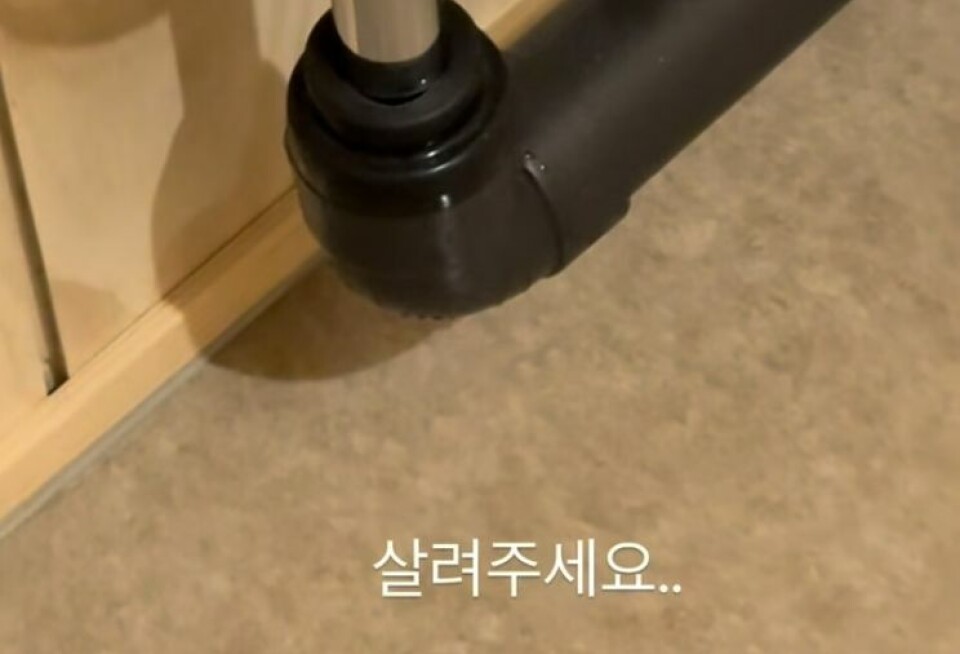
Korean guard Byun Jun-hyung posted a video of a bathroom at the team’s accommodation on social media on Friday, accompanied by the brief plea, “Please save us.”
The video showed water pouring from beneath a sink and soaking the bathroom floor.
The organizing committee had initially planned to construct an athletes’ village near the Port of Nagoya but scrapped the plan, citing cost savings and environmental considerations. Instead, some 17,000 athletes and officials from participating countries have been divided among existing accommodations such as hotels, which house about 9,000 people; the Costa Serena, a large Italian cruise ship accommodating 4,000; and temporary container units at the Port of Nagoya housing 2,000.
A screen capture from a video posted by Korean basketball player Byun Jun-hyung shows water leaking in the bathroom of the team’s container accommodation at the Asian Games, accompanied by the caption, “Save me…”SCREEN CAPTURE
Images showing hundreds of prefabricated container units packed closely together on an asphalt lot at Garden Pier in the Port of Nagoya prompted a wave of criticism over the poor conditions, undermining the organizers’ claims that the arrangement would be environmentally friendly and cost-effective.
Korea’s men’s basketball team, which began playing its group-stage games ahead of the Games’ opening ceremony on Sept. 19, is also staying in the temporary container accommodation.
According to Chinese news outlet Record China, China’s men’s basketball team was assigned three players to each room in the container complex, with communal toilets and showers.
Each 70-square-meter (753-square-foot) container unit was designed to accommodate up to six people, with individual delegations allowed to determine room assignments. The single beds are 195 centimeters (6 feet 5 inches) long, and although bed extenders have reportedly been provided, concerns remain that both the beds and showers are too cramped for basketball players who stand over 2 meters (6 feet 7 inches) tall.
Signage for the 20th Asian Games Aichi-Nagoya 2026 on display in Nagoya, Japan, on May 21.REUTERS/YONHAP
Adding to the concerns, record rainfall of up to 104.5 millimeters (4.1 inches) per hour battered the Nagoya area on Tuesday, prompting the temporary evacuation of hundreds of athletes and officials staying in the temporary accommodation.
Images posted on social media showed Indonesian athletes sitting or lying on the floor of an elevated parking structure after fleeing the torrential rain. Members of Korea’s men’s basketball team were away at practice at the time, but were instead stranded at the training venue for about four hours. Rainwater also leaked through the roofs of some competition venues.
Korea is sending a 1,052-member delegation, comprising 792 athletes and 260 officials, to compete in 41 sports. The country is targeting about 45 gold medals and a top-three finish in the overall medal standings. The main contingent is scheduled to depart for Japan on Thursday.
This article was originally written in Korean and translated by a bilingual reporter with the help of generative AI tools. It was then edited by a native English-speaking editor. All AI-assisted translations are reviewed and refined by our newsroom.