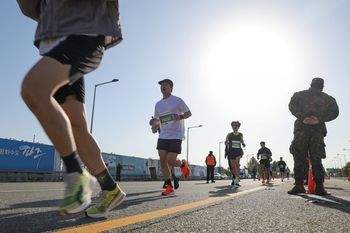
Twelve runners collapsed from heat exhaustion during a marathon in Paju, Gyeonggi, on Sunday, as authorities pointed to unseasonably warm weather as the likely cause.
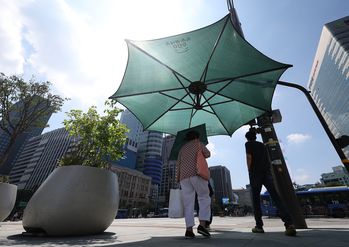
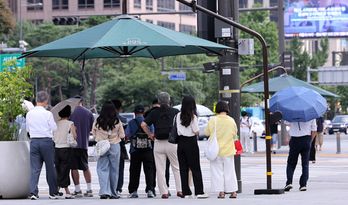
Pedestrians gather in the shade of a canopy while waiting to cross the street in Gwanghwamun, central Seoul on April 15.
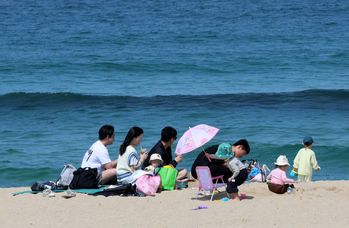
Summer came early to Korea, as the country saw a sudden spike in afternoon temperatures that almost reached a high of 30 degrees Celsius (86 degrees Fahrenheit) in mid-April, as experts warn of hotter days to come.
Despite 2026 kicking off with a prolonged cold snap, Korea is expected to see a warmer-than-usual year overall, raising the possibility that it could become the fourth-hottest year on record following the past three years.
Seoul’s winters may last a mere 12 days per year by 2081, while the number of extremely hot days and tropical nights may surge to more than 90 annually, according to a new forecast.
Korea’s weather agency will add tougher heat alerts next year, including a new “severe” heat wave warning and advisory for tropical nights, as extreme heat becomes more common.
Korea reported record-high electricity demand this summer amid a prolonged heat wave, the industry ministry said Monday.
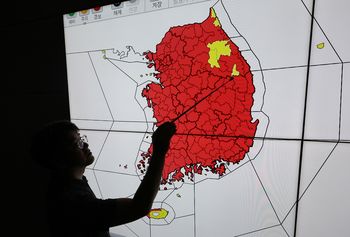
The heat wave disaster alert level was lowered from “serious,” the highest level, to “alert” as of 9 p.m. Monday.
Korea has logged its hottest summer since records began, breaking last year's record and marking the second straight year of extreme heat.
Toxic red tide blooms have erupted along the southern coast of South Gyeongsang, a region home to a high concentration of fish farms, resulting in mass die-offs of flatfish and other species.
Korea JoongAng Daily Sitemap