Korea's gross national income per capita barely moved last year, remaining in the $36,000 range as Japan's surged ahead on the back of a calculation adjustment and Taiwan's extended its lead thanks to the semiconductor boom.
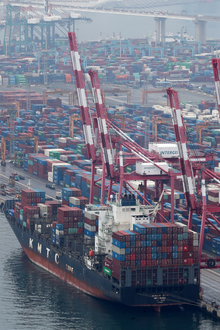
The Korean economy expanded 1 percent in 2025 amid strong exports but posted negative growth in the fourth quarter, central bank data showed Tuesday. The country's real GDP — a key measure of economic growth — contracted 0.2 percent.
The country's gross national income reached $33,745 in 2023, according to data from the Bank of Korea, after falling behind Taiwan's in 2022.
Korea’s per capita gross national income (GNI) reached $33,745 last year, up 2.6 percent from a year earlier as the economy started to pick up and the won stabilized against the greenback.
North Korea’s economy shrank for the third consecutive year while the country’s population reached 25.7 million, around half of South Korea’s 51.67 million, according to Statistics Korea’s report on Wednesday.
Korea’s gross domestic product (GDP) grew 0.6 percent in the April-June period from the previous quarter, remaining unchanged from the earlier estimate.
Korea’s economy grew 0.3 percent in the first quarter, in line with the central bank's April estimate.
Korea’s economy grew 0.3 percent in the first quarter, remaining unchanged from the earlier estimate, according to the Bank of Korea Friday.
Gross national income (GNI) per capita fell almost 8 percent to $32,661 last year, according to the Bank of Korea on Tuesday.
Korea’s economy grew 2.9 percent in the second quarter on year, unchanged from the July estimate.
Korea JoongAng Daily Sitemap