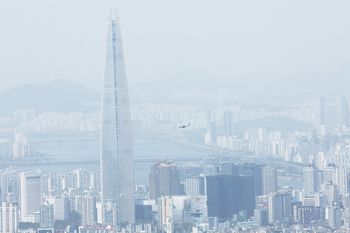
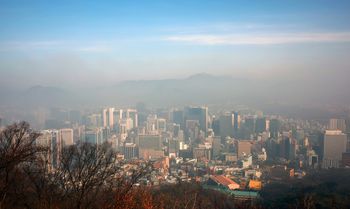
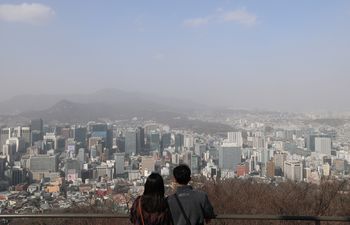
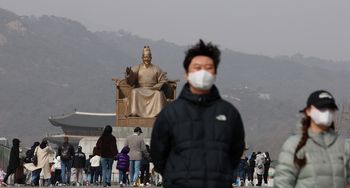
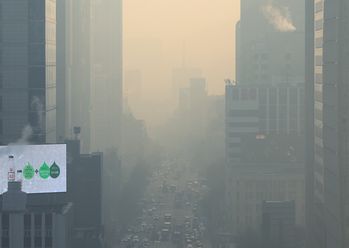
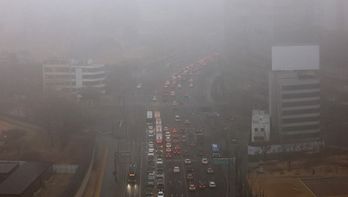
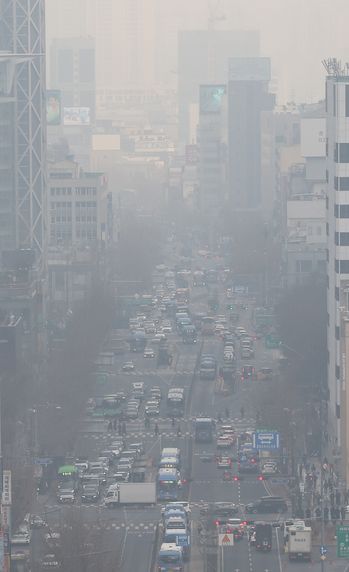
Seoul appears hazy from Namhansanseong, a historic mountain fortress, in Gwangju, Gyeonggi, on April 21, as the level of yellow dust leads to fine dust advisories being issued across much of the country.
After a weekend of unseasonable heat topping 30 degrees Celsius (86 degrees Fahrenheit), temperatures dropped sharply within a day, bringing rare cold wave advisories to parts of the country and high concentrations of yellow dust from China.
Although daytime temperatures will remain mild, the level of fine dust is forecast to worsen across much of the country on Monday.
Rain or snow is forecast to fall across most of Korea from Thursday night, while fine dust blowing in from China is expected to worsen air quality in Seoul and other western regions from Wednesday afternoon.
Yellow dust is expected to blanket much of the nation on Sunday as northwestern winds blow dust originating from the Gobi Desert and the Mongolian Plateau into the country.
Mild weather will continue through the Lunar New Year holiday, though thick fog and elevated fine dust levels may affect parts of Korea, the Korea Meteorological Administration (KMA) said Thursday.
A thick layer of fog and fine dust blanketed Korea on Friday, leading to a series of accidents across the country. Flight operations were also disrupted, with visibility falling below 1 kilometer (0.62 miles) in most regions.
Haze covers the city skyline in Jongro District, central Seoul, on Jan. 15.
Air quality is expected to deteriorate nationwide on Thursday and Friday due to the influx of fine dust and yellow dust from abroad, with some areas likely to see ultrafine dust concentrations reach “very bad” levels.
Korea will see a break from subzero temperatures this week, but residents of the greater Seoul area should brace for several days of hazy skies due to elevated fine dust levels, officials said on Monday.
Korea JoongAng Daily Sitemap