

Antitrust regulator designates Bom Kim as Coupang's 'controlling entity' in regulatory reversal
Published: 29 Apr. 2026, 19:13
Updated: 29 Apr. 2026, 19:34
-
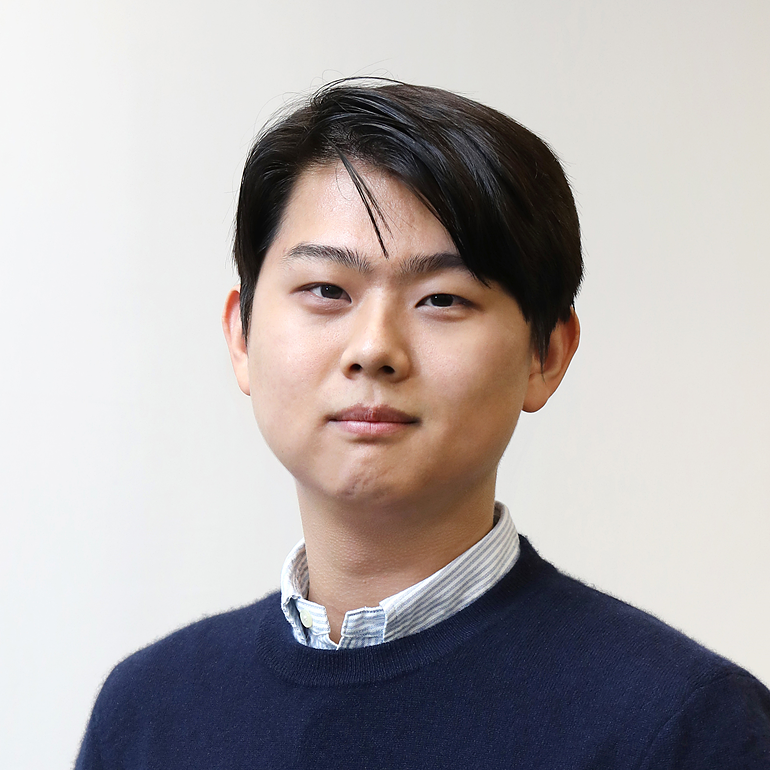
- CHO YONG-JUN
- [email protected]
![Kim Bom, founder of Coupang [COUPANG]](https://koreaseafood.online/data/photo/2026/04/29/28d7cea4-6f53-4493-b3a2-14468df8d63e.jpg)
Kim Bom, founder of Coupang [COUPANG]
Korea's antitrust regulator designated Coupang Inc. CEO Bom Kim as the local controlling entity of the beleaguered e-commerce platform Coupang on Wednesday, a move that could place the Korean American business owner in tighter regulatory shackles.
The decision was part of the Fair Trade Commission's 2026 designation of business groups subject to public disclosure, announced on Wednesday. Previously, Coupang's controlling entity was designated as the corporate entity itself, meaning Kim was not personally subject to business regulations.
The e-commerce giant swore to appeal to an administrative court in protest.
Once designated as a controlling entity — a legal term for the individual deemed to effectively control a conglomerate — the person is subject to a range of regulations, including a ban on tunneling and mandated reports on the activities of their relatives.
Overseas affiliates in which Bom Kim holds a stake of 20 percent or more will now be subject to business disclosures.
This marks the first time Coupang's founder and Coupang Inc. chief has been designated as the controlling entity since Coupang was first listed as a corporate group subject to disclosure in 2021.
Coupang Inc. is the Seattle-based parent company of Coupang, Korea's largest e-commerce platform.
"We have resolved the disconnect between authority and responsibility by aligning the controlling entity — the final party accountable for policy — with the person who effectively controls the group," the commission said.
![Fair Trade Commission Chairman Ju Biung-ghi speaks at a meeting of ministers related to managing market prices affecting people's livelihoods held at the government complex in Seoul on April 23. [NEWS1]](https://koreaseafood.online/data/photo/2026/04/29/8cba37bc-c66a-4f17-8f1a-3d8860878d93.jpg)
Fair Trade Commission Chairman Ju Biung-ghi speaks at a meeting of ministers related to managing market prices affecting people's livelihoods held at the government complex in Seoul on April 23. [NEWS1]
The FTC cited the business activities of Bom Kim's younger brother, Kim Yoo-seok, as the central basis for its decision. Kim is an executive vice president overseeing Coupang's delivery camp management division.
An investigation found that Kim Yoo-seok had chaired hundreds of meetings related to logistics and delivery policy and conducted weekly performance reviews with the CEO of Coupang Logistics Service, the delivery subsidiary.
The FTC called Kim Yoo-seok's business activities "management conduct that effectively influenced the specific direction of business execution." The antitrust watchdog also assessed the company's compensation for Kim Yoo-seok and deemed his company rank comparable to that of a CEO at major affiliates.
The Korean fair trade law allows a corporate body to be designated as the controlling entity if certain conditions are met, notably when the FTC deems there are no risks that family members will benefit from the business or participate in company management.
Initially, Bom Kim was not designated as the controlling entity because foreign nationals were ineligible for such designation. Even after the policy was amended in 2024 to allow foreign nationals to be designated, the FTC maintained its decision on the grounds that his family members did not operate businesses in Korea and that Kim Yoo-seok and his wife had pledged not to participate in the company's management.
![Coupang's headqarters in Songpa District, central Seoul, is seen on Dec. 9. [NEWS1]](https://koreaseafood.online/data/photo/2026/04/29/d50c9dfe-0ec4-4a98-9532-e52564a500cb.jpg)
Coupang's headqarters in Songpa District, central Seoul, is seen on Dec. 9. [NEWS1]
Despite allegations since 2024 that Kim Yoo-seok received high compensation and had been involved in management, the FTC maintained that he did not qualify as an executive. That is, until now.
The year-past reversal, therefore, comes as a rare decision by the FTC to go back on its own decision after such a prolonged period, leading to questions from onlookers about whether the decision was based on public anger toward Coupang that had built up after the company failed to protect the personal data of some 33 million customers.
However, the commission maintains that it had only confirmed his involvement in company management through an on-site investigation triggered by a formal complaint, and that the investigation also enabled a comparison of his compensation with that of executive directors.
"There were aspects that were difficult to verify previously, given the system in which we make determinations based on materials submitted by the company," Choi Jang-gwan, the director of the FTC's corporate group oversight bureau, said.
In relation to the latest decision, Bom Kim may also be facing a criminal referral.
Under the Fair Trade Act, failure to submit required materials or the submission of false materials in connection with the corporate group designation process may constitute grounds for criminal charges. Bom Kim had submitted written confirmation to the FTC stating that no relatives were involved in management. The commission said it is reviewing whether the submissions constitute false documentation.
Coupang strongly opposed the FTC decision and swore to take countermeasures through administrative litigation.
"Coupang's Korean entity has consistently met the exemption conditions, so [Bom Kim] is not eligible to be designated as the control entity," Coupang said in a statement on Wednesday.
"The executive's brother [Kim Yoo-seok] is not an executive under the Fair Trade Act and holds no stake in any Korean affiliate," the e-commerce firm said. The Fair Trace Act defines executives as chief executives, directors, auditors and managers.
![Coupang CEO Harold Rogers takes part in the e-commerce company's dawn delivery work from the evening of March 19 to the next morning, as part of his promise to take a closer look at the working conditions of the company's delivery workers. [COUPANG]](https://koreaseafood.online/data/photo/2026/04/29/ac215de1-b057-4607-809b-f4cd8acbcb9c.jpg)
Coupang CEO Harold Rogers takes part in the e-commerce company's dawn delivery work from the evening of March 19 to the next morning, as part of his promise to take a closer look at the working conditions of the company's delivery workers. [COUPANG]
The decision could also complicate Korea-U.S. trade relations. U.S. officials have signaled that without legal protections for Bom Kim, it would be difficult to activate senior bilateral channels to discuss security matters.
Coupang has argued that designating Bom Kim as the controlling entity would "amount to "treating the United States less favorably than third countries — a violation of the most-favored-nation obligation under the FTA between the United States and Korea."
"The United States would not take issue with the legitimate law enforcement done by the FTC," FTC's corporate group oversight bureau director Choi said.
Meanwhile, the number of business groups subject to public disclosure rose to 102 this year, up 10 from the previous year. Eleven groups were newly designated, including the Korean Teachers' Credit Union, Line, Woongjin, Toss and Kolmar Korea, while Youngone was removed after its total assets fell below 5 trillion won ($3 billion). In the ranking by total assets, Hanwha Group rose to fifth on the back of a boom in the defense industry, while Lotte Group, previously fifth, dropped to sixth.
Of the 102 groups, 47 with total assets of at least 12 trillion won — equivalent to 0.5 percent of Korea's nominal GDP — were designated as "mutual investment-restricted groups," which are subject to additional obligations including public disclosure requirements and prohibitions on mutual investment and circular equity investment. Kyobo Life Insurance and Daou Kiwoom Group were newly added to that list. Daou Kiwoom Group's inclusion was driven largely by a boom in the securities market, given its core brokerage business.
This article was originally written in Korean and translated by a bilingual reporter with the help of generative AI tools. It was then edited by a native English-speaking editor. All AI-assisted translations are reviewed and refined by our newsroom.
BY AHN HYO-SEONG [[email protected]]


with the Korea JoongAng Daily
To write comments, please log in to one of the accounts.
Standards Board Policy (0/250자)