

Samsung is making record profits. But why are employees leaving in droves for a key competitor?
-

- LEE JAE-LIM
- [email protected]
![More than 30,000 Samsung Electronics employees gather at the company's Pyeongtaek chip plant in Gyeonggi on April 23, demanding greater transparency in the company's compensation structure. [LEE JAE-LIM]](https://koreaseafood.online/data/photo/2026/04/26/4c21081f-03e5-4877-8ef1-78d2991743e9.jpg)
More than 30,000 Samsung Electronics employees gather at the company's Pyeongtaek chip plant in Gyeonggi on April 23, demanding greater transparency in the company's compensation structure. [LEE JAE-LIM]
[NEWS ANALYSIS]
PYEONGTAEK, Gyeonggi — Samsung Electronics is on course to print its fattest quarterly profit on record in the first quarter of this year — one so outsized it would eclipse every won the company earned across all of 2025 combined. The profits may be historic, but the internal mood is souring. Hundreds of chip engineers from a division for high bandwidth memory have quit the Korean electronics giant this year alone, while tens of thousands of existing employees are threatening a strike.
More than 30,000 employees — roughly one in four of Samsung's Korean work force — have spilled out onto the streets in protest on Thursday, a rare and striking display of collective discontent from a company not exactly known for public labor drama.
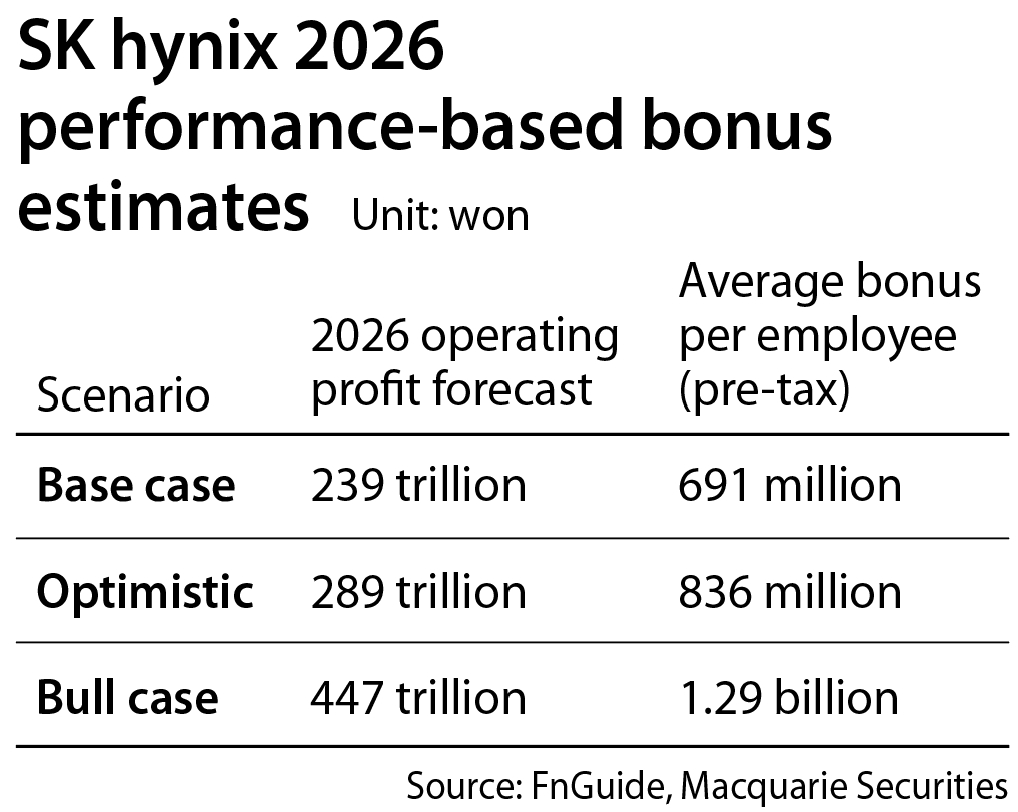
What lit the fuse? A combustible mix of two things. One is the spectacle of Samsung minting money hand over fist during what the Korean media has branded a chip "supercycle,” while workers feel their paychecks have not kept pace with the company’s fortunes. The other is word from across town that SK hynix employees are expected to take home bonuses of up to 1.2 billion won ($809,124) per person this year.
The National Samsung Electronics Union (NSEU) has declared an 18-day strike beginning May 21 and running through June 7, a stoppage it estimates would cost Samsung Electronics 18 trillion won in losses if no settlement is reached beforehand. Should it proceed, it would be the longest strike in the company's 57-year history.
In turn, Samsung filed for an injunction against the union on April 16 to prevent the strike.
The drain across town
Samsung has characterized the strike as unlawful, maintaining that it has negotiated in good faith and put industry-leading terms on the table — only to be met with rejection.
What it offered was not negligible. Samsung proposed allocating more than 10 percent of operating profit to a performance bonus pool, contingent on the semiconductor division posting the highest domestic revenue and profit figures, with memory division employees guaranteed payouts that would outpace those at rival firms.
The union, however, did not budge. It dismissed the offer as a one-time gesture dressed up as reform. With SK hynix's generous compensation structure looming large in the background, the bar for what counts as satisfactory has shifted considerably. So rather than waiting for a resolution, some engineers from Samsung's core semiconductor units are simply choosing to cross over to SK hynix, which has been on an aggressive hiring drive for both fresh graduates and seasoned engineers this year.
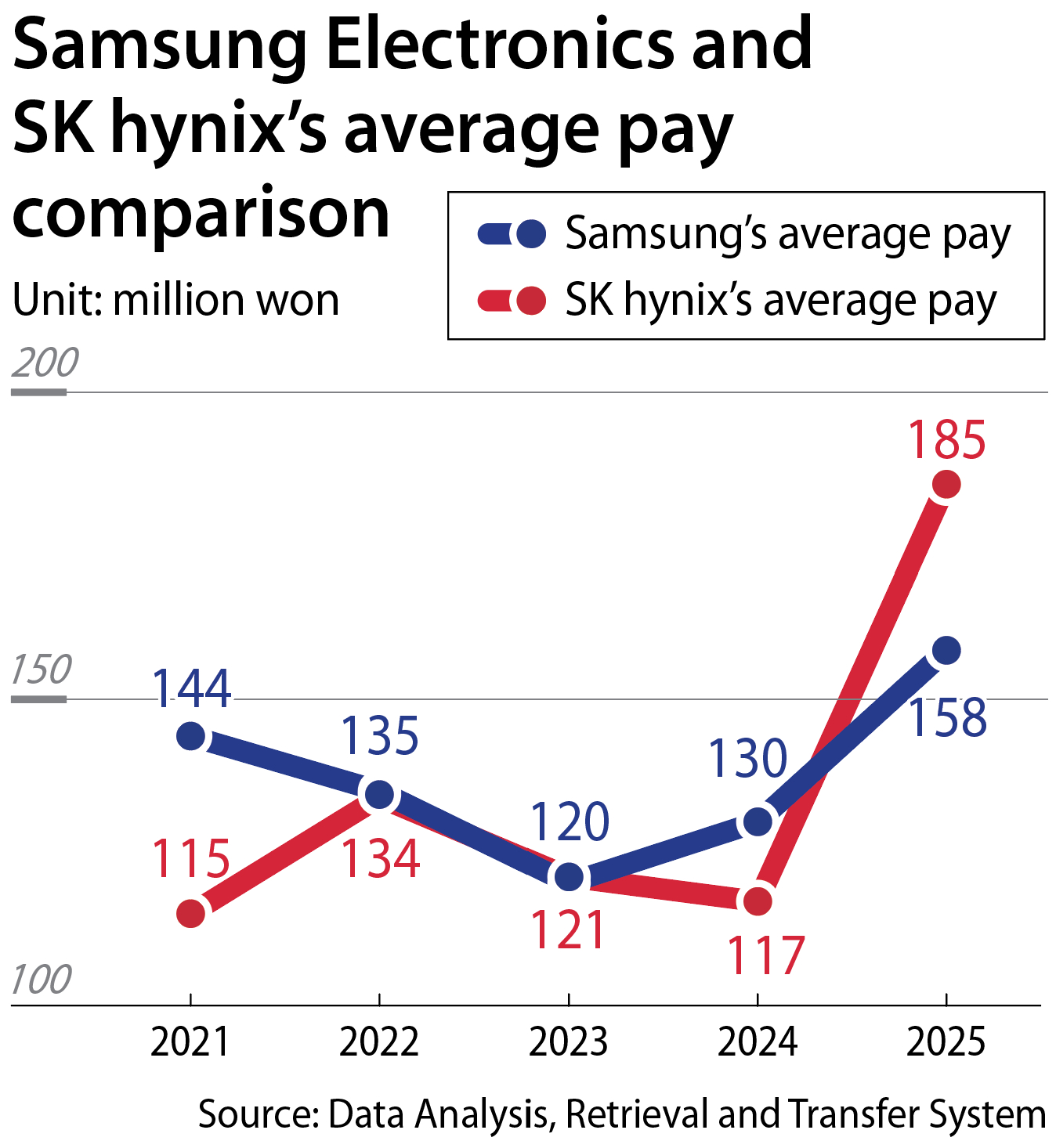
More than 200 Samsung employees have made the move between January and April alone, according to the union — a figure it suspects understates the true exodus, as departing workers often cite other reasons given the charged internal atmosphere.
One semiconductor engineer in her 30s, who moved from Samsung to SK hynix last year, told the Korea JoongAng Daily that compensation was the decisive factor — and that she has no regrets.
“Looking at last year alone, I was making roughly 3.5 times what my maximum take-home at Samsung had been,” she said. “Work-life balance is significantly better here, too, and there’s much more autonomy within my team. Factoring in that the compensation gap will likely grow wider this year, I expect the total difference to be around 10 times.”
![More than 30,000 Samsung Electronics employees gather at the company's Pyeongtaek chip plant in Gyeonggi on April 23, demanding greater transparency in the company's compensation structure. [LEE JAE-LIM]](https://koreaseafood.online/data/photo/2026/04/26/752e8e08-ce1d-406a-999a-fc4914fb7c54.jpg)
More than 30,000 Samsung Electronics employees gather at the company's Pyeongtaek chip plant in Gyeonggi on April 23, demanding greater transparency in the company's compensation structure. [LEE JAE-LIM]
When she arrived at SK hynix, more than 100 former Samsung employees were already there. The largest single group came from the high bandwidth memory packaging side, precisely the talent pool most critical to the AI chip boom now driving the two chipmakers’ record profits.
A protester in his 50s, who asked to be identified only by his surname Bae, said the shift is continuing. About 3 percent of the work force from his engineering department has left for SK hynix, and he feels that “quietly, others are preparing to do the same.”
“The reason is purely economic,” he said. “Watching colleagues leave has created a real sense of disillusionment among those who stayed, and that pressure feeds directly into the current demands.”
A 26-year-old protester surnamed Ahn, who works in the infrastructure unit responsible for chip fabrication and whom this reporter met on the street at Pyeongtaek, said he is already waiting to hear back after submitting applications to SK hynix.
"Nearly all of my colleagues want to leave for Hynix," Ahn said. "If the company doesn't move toward transparent compensation, most of them will — a large number have already filed their resumes."
Different views in-and-out
The protest on Thursday is the largest the company has ever seen, drawing some 34,000 participants, according to police estimates. The protest was at Samsung’s Pyeongtaek plant in Gyeonggi, the core manufacturing site for the high-performance memory chips that the world’s largest technology companies are lining up to secure.
![Samsung's Pyeongtaek chip cluster in Gyeonggi, site of the April 23 protest that became the largest in the company's history. The complex is currently undergoing rapid expansion to meet surging global demand for memory chips. [LEE JAE-LIM]](https://koreaseafood.online/data/photo/2026/04/26/32819bd7-5502-49d1-849f-3dba130aa6d3.jpg)
Samsung's Pyeongtaek chip cluster in Gyeonggi, site of the April 23 protest that became the largest in the company's history. The complex is currently undergoing rapid expansion to meet surging global demand for memory chips. [LEE JAE-LIM]
The union's demands are twofold. First, that 15 percent of Samsung's annual operating profit be set aside as performance bonuses — five percentage points above the 10 percent benchmark SK hynix offers its employees. Second, that the existing cap on bonus pay, currently pegged at 50 percent of each worker's annual base salary, be abolished entirely. Based on market consensus estimates, the first demand alone would translate to a bonus pool of 45.8 trillion won.
Beyond Samsung's gates, public sympathy is in short supply. The prevailing view outside is that Samsung workers are already well compensated, making their demands seem excessive to many observers.
NSEU leader Choi Seung-ho addressed that perception head-on at the protest.
“Outside observers frame our struggle this way: ‘They’re already well-paid, why ask for more?’ or ‘If you don’t like it, just leave,’” Choi said. “I reply: Korea’s brightest engineering talent is walking away from the most critical industry of our future and choosing other paths. If the people working in that industry are not fairly compensated, who will become responsible for that future?”
The union's reach within Samsung is considerable — more than 80 percent of the semiconductor division has signed on. But even within those ranks, fault lines exist. The bonus structure question is particularly charged in a division that straddles memory, foundry and chip design, each with a different relationship to the current upcycle.
"Workers outside of the memory unit are clearly the most frustrated, and the most willing to act," said a protester in his 30s from the semiconductor division, who spoke on condition of anonymity. "The market cycle is strong, SK hynix's settlement gave us momentum, and that's how scrapping the bonus cap became a new demand this round. Even so, outsiders look at us and say we're just money-grubbers chasing SK hynix's standards. That honestly hurts."
![A National Samsung Electronics Union (NSEU) banner calling for an overhaul of Samsung's compensation structure at the company's Pyeongtaek chip plant in Gyeonggi, April 23. [LEE JAE-LIM]](https://koreaseafood.online/data/photo/2026/04/26/af9a6fd5-d6c3-454e-8481-c648bce69c06.jpg)
A National Samsung Electronics Union (NSEU) banner calling for an overhaul of Samsung's compensation structure at the company's Pyeongtaek chip plant in Gyeonggi, April 23. [LEE JAE-LIM]
He added that the atmosphere inside has grown so tense it generates its own unspoken pressure — a quiet but palpable disapproval directed at colleagues who continue working while others put themselves on the line to speak out.
Bae traced the discontent back to a specific moment of what felt like a betrayal of the workers. When Samsung posted strong profits during the earlier upcycle between 2021 and 2022, management told employees the gains would be held in reserve and distributed later, during leaner times.
"Then, when the downturn came — when there were no profits and employees saw no wage increases — we learned that fewer than 100 executives had collectively taken home some 400 billion won from those reserves, while employees got nothing," Bae said. "That was the moment the anger ignited."
BY LEE JAE-LIM, SARAH CHEA [[email protected]]


with the Korea JoongAng Daily
To write comments, please log in to one of the accounts.
Standards Board Policy (0/250자)