

Artist Hong Seung-hye opens first solo exhibition in three years, traces inspiration from 'organic geometry'
Published: 24 Apr. 2026, 16:34
Updated: 24 Apr. 2026, 17:27
-
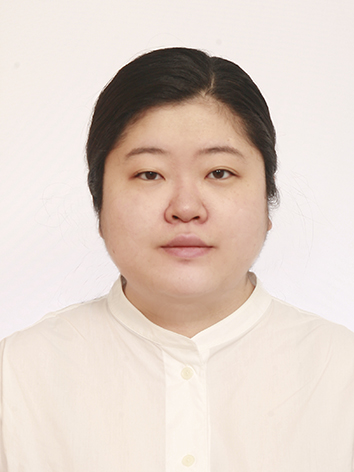
- LIM JEONG-WON
- [email protected]
![Artwork is displayed as part of the ″On the Move″ exhibition centered on Korean artist Hong Seung-hye at Kukje Gallery Busan in Busan on April 24. [LIM JEONG-WON]](https://koreajoongangdaily.joins.com/data/photo/2026/04/24/6518f4c7-76d2-4b17-946a-acf84d3294e1.jpg)
Artwork is displayed as part of the ″On the Move″ exhibition centered on Korean artist Hong Seung-hye at Kukje Gallery Busan in Busan on April 24. [LIM JEONG-WON]
BUSAN — Korean artist Hong Seung-hye’s decades-long preoccupation with movement began, strangely enough, with a keyboard shortcut. Sometime in 1997, while working on Photoshop, she pressed undo by mistake, and the action altered the art on her monitor — a minor accident that became the seed for “Organic Geometry,” a series of pixel-based works that have garnered international acclaim.
For Hong, what she saw almost three decades ago was more than a glitch; it was a possibility, one that has inspired her ever since.
“A fixed form is something that has already been decided, so [any exploration of] it ends there,” Hong said during a press conference for the opening of her new exhibition, “On the Move,” at the Kukje Gallery Busan on Friday. “But when something moves, you don’t know where it will go. That’s what makes it interesting.”
From that observation, Hong has built a practice across multiple mediums, both conventional and unconventional, ranging from sculptures to audio to furniture.
“On the Move,” the first solo exhibition of Hong’s in three years, traces her trajectory and brings together her most recent works.
Hong coined the phrase “organic geometry.” As she explains it, “geometry” is the rigid, dispassionate scaffolding of points, lines and mathematical planes, and “organic” refers to what happens when those elements stop behaving in the way that they’re supposed to. While witnessing the glitch on her computer screen in the late 1990s, Hong noticed that some pixels looked to be clinging to the grid while others seemed to be slipping away — a movement that seemed alive.
“It reminded me of a natural phenomenon, such as falling leaves or snow,” Hong said. “The irregular parts were doing something that the orderly ones could not.”
![Artist Hong Seung-hye speaks during a press tour for the ″On the Move″ exhibition at Kukje Gallery Busan in Busan on April 24. [LIM JEONG-WON]](https://koreajoongangdaily.joins.com/data/photo/2026/04/24/f0e3b115-be7d-46ad-8c0e-7c2c05fa5127.jpg)
Artist Hong Seung-hye speaks during a press tour for the ″On the Move″ exhibition at Kukje Gallery Busan in Busan on April 24. [LIM JEONG-WON]
Music is another factor in organic geometry. More specifically, Hong said, “tone, volume [and] rhythm” play a role, as “these are all concepts shared between music and visual art.”
For example, when she sets up a show, not only are the literal, physical spaces between works deliberately composed — as music is — but they also serve the same purposes as rests do on music sheets. Similarly, Hong insists on describing any piece involving video as choreography.
“Even when I grow old, as long as I have enough strength to move a computer mouse, I can keep dancing through my work,” she mused.
The Busan show orders her life’s works based on motion. “Snoopy in Space” (2019) reduces the iconic Peanuts character to a few black and white blocks and sends him adrift to the cosmos; “Light Upon” (2021) comprises a single yellow circle that constantly fluctuates between an oval and a circle, consequently altering the viewers’ perception of nearby static sculptures; and “MOVE” (2022) scatters the letters of its title across a digital screen as a form of ambulant typography. Her most recent work, the video “Emotical Practice” (2025), takes emoticons — a crude, digital shorthand for emotions — and translates them into geometric lines and shapes.
![A still from a video artwork by Hong Seung-hye, ″Emotical Practice″ (2025) [KUKJE GALLERY]](https://koreajoongangdaily.joins.com/data/photo/2026/04/24/b170072b-c786-4430-ad14-b7f82df17d49.jpg)
A still from a video artwork by Hong Seung-hye, ″Emotical Practice″ (2025) [KUKJE GALLERY]
Hong, however, is wary of one tool: artificial intelligence. She questions how much character can survive the inconsistency that seems to be innate in AI-generated works, given that her own are controlled by her, the artist, from start to finish.
“I create the shapes. I move them. I decide how they correspond to the music,” Hong said. “They are not left to the thoughtless randomness that comes with using technology such as AI.”
Near the end of the press conference, Hong recalled the words of French artist Robert Filliou — “Art is what makes life more interesting than art” — and described the sentence Mobius-like. Her show’s title operates on that same logic: To be on the move is not to rush forward, but to move forward while still looking back.
Hong, born in 1959 and educated in Korea and France, has held exhibitions at major institutions, including the National Museum of Modern and Contemporary Art, Korea and the Galleria d’Arte Moderna in Italy.
“On the Move” takes place at the Kukje Gallery Busan through June 14.
BY LIM JEONG-WON [[email protected]]


with the Korea JoongAng Daily
To write comments, please log in to one of the accounts.
Standards Board Policy (0/250자)