

[WHY] The reason Korean companies ask applicants for photos
-
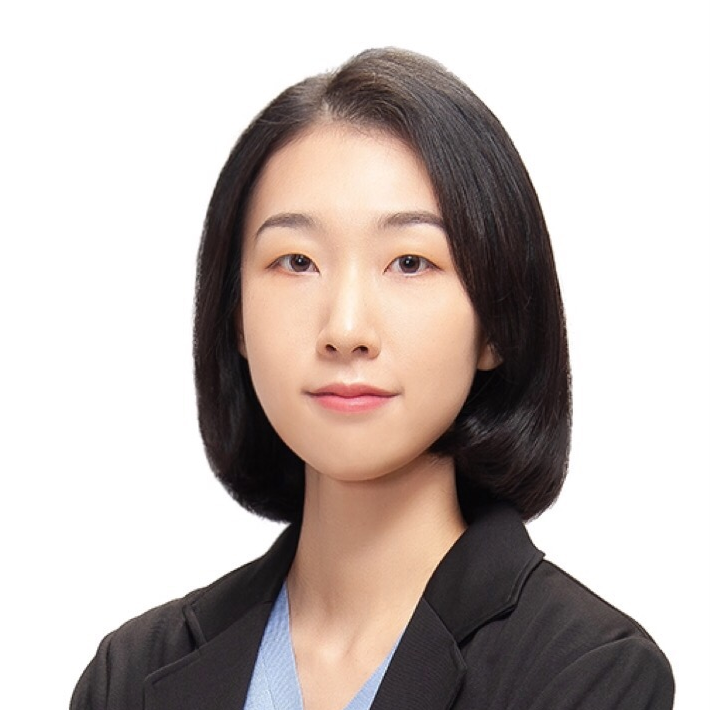
- LEE TAE-HEE
- [email protected]
![A job seeker holds up a resume, which includes a photo on the top left, at the 2025 Gangnam Job Fair at Coex in Gangnam District, southern Seoul, on June 5. [YONHAP]](https://koreaseafood.online/data/photo/2025/12/20/78210963-8aa3-4582-a195-6a82131f8aa5.jpg)
A job seeker holds up a resume, which includes a photo on the top left, at the 2025 Gangnam Job Fair at Coex in Gangnam District, southern Seoul, on June 5. [YONHAP]
When opening up a resume template to apply for a company in Korea, some might come across an unexpected requirement that would raise eyebrows elsewhere: a photo.
While it may come as a surprise to some, many private companies in Korea require applicants to submit a professional headshot photo with their resume — either by including a photo field on the company's career website or by providing resume templates that include space for one.
University students in their senior year and job seekers often visit photo studios as they prepare to go on their job searching journey, posing in front of the camera all dressed up in formal attire to take their resume photo.
While submitting a photo with a job application may seem like standard practice in Korea, things can be different in other countries. In the United States, the U.S. Equal Employment Opportunity Commission guidelines state that employers should not ask for a photograph of an applicant.
“In North America, submitting resume photos can be associated with discrimination, so it is generally considered best practice to exclude any personal information such as photos in your resume,” said Monica Jung, CEO of MH Career, a career consultation agency for international job seekers. “Because of this, many job seekers from North America feel less comfortable attaching a photo to their resume.”
“Practices vary by country in Europe, but including photos is comparably widespread in the culture. So European job seekers are less surprised about having to submit photos, but instead more taken aback by the standardized format of Korean-style resume photos.”
Of course, things can be different from place to place, but why in Korea do photos almost always get put on resumes?
Why companies require photos
One of the simplest reasons companies require photos on applicants' resumes is to check if the applicant at the interview is actually the same person from the resume.
“Resume photos were initially required to verify the applicant's identity, and some companies even required resume photos to have been taken within two months of the application date because of that,” said Yoon Ho-sang, a career consultant and head of the HR PR Research Center. “Also, in the past, resume photos were there because an applicant's image did matter. But even companies now know that focusing too much on the applicant's image no longer carries much meaning.”
Using the photo to see if the applicant’s image fits the role is one reason, and sometimes an important one for customer-facing roles. Hospitality, sales or flight attendants are some of the well-known examples.
However, whether the applicant's image matches the role doesn't necessarily mean the company is judging with strict beauty standards or looking for models.
“In the past, when practically every single company required applicants to include a photo in their job application, resume photos were used to check an applicant’s impression in advance,” said Lee Na-rae, a career consultant. “But the number of companies requiring photos has been gradually decreasing over the past five years, and now it's more of a way for companies to get a general sense of how applicants would present themselves in a professional setting.”
![A resume template is on display during the 2025 Hanam Job Fair at Hanam Stadium in Hanam, Gyeonggi, on June 11. [YONHAP]](https://koreaseafood.online/data/photo/2025/12/20/7f6e7416-a670-49ee-b787-3b8db23aee34.jpg)
A resume template is on display during the 2025 Hanam Job Fair at Hanam Stadium in Hanam, Gyeonggi, on June 11. [YONHAP]
As Lee says, many private companies do ask for photos, but some have been abandoning the practice.
Samsung and its affiliates are an example, with the Samsung Careers website's application page not even having a field for submitting applicant photos. The same also applies to CJ companies.
But resume photos are still asked for by many companies. Hyundai Motor has a photo field on its Talent Hyundai career website, as do Posco and Hyundai Department Group.
According to education civic group Bom Education, of the 169 companies that opened entry-level hirings through employment platform Job Korea between Feb. 2024 and May 2024, 67.3 percent required job seekers to submit their photos in the job application.
Job seekers may also find that more small- to mid-sized companies tend to ask applicants to include a photo on their resume — not because those companies are specifically looking for something through one's photo, but simply because they haven't been able to change their procedures.
“Many conglomerates and public institutions accept job applications through their own career websites, but small- to mid-sized companies tend to ask applicants to fill in a standard resume template and send it to them because creating or updating websites costs money,” said Yoon. “Some of those standard resume templates can be old, requiring photos and even having fields that ask for family background.”
“Rather than the companies having specific reasons they ask for that information, it's best to understand it as something that has been left there as it was customary in the past. Due to the nature of HR roles, HR often gets a lot of complaints when they make major changes within the company. So unless there’s specific criticism from outside, they generally avoid making significant changes.”
Does every company require a photo?
![Following the Ministry of Employment and Labor announcing guidelines for the so-called blind hiring, a photo of a standard resume, which does not have a field for applicants to submit a photo, is shown as an example during a press conference on July 5, 2017. [YONHAP]](https://koreaseafood.online/data/photo/2025/12/20/c62b8c5b-64f7-431f-963a-331c445d0b25.jpg)
Following the Ministry of Employment and Labor announcing guidelines for the so-called blind hiring, a photo of a standard resume, which does not have a field for applicants to submit a photo, is shown as an example during a press conference on July 5, 2017. [YONHAP]
While many firms still ask applicants to submit photos, it's not a requirement for every single company.
In fact, there are companies in which applicants should not submit photos, which tend to be public institutions and state-owned companies.
This trend follows the government's announcement of guidelines for the so-called blind hiring system in July 2017. The guidelines were introduced by then-President Moon Jae-in, aiming to have public institutions and state-owned companies hire employees without bias.
The guideline required public institutions to remove fields asking about applicants’ place of birth, family background and education from resume templates. Companies also had to remove fields regarding physical traits such as height, weight and appearance, which included the photo requirement. Photos could only be requested when hiring civil servants or diplomats as they take the civil service exam and photos are needed for applicant identification purposes.
Following the change, public institutions haven't required such personal information or photos from applicants.
For instance, when job seekers applied for the Korea Trade-Investment Promotion Agency’s administrative staff positions open in October, the only personal information requested was the applicant’s name, month and date of birth, email and phone number. A photo was not one of the requirements. Korea Trade Insurance Corporation's entry-level hiring in August and Kepco Engineering & Construction's in March also only asked for the applicant's name, phone number and email.
Additional measures were also implemented to promote fairness, with the Fair Hiring Procedure Act amended in July 2019.
Through the change, companies with 30 or more employees couldn't request information about applicants' appearance, height, weight, place of birth, marital status and background information of family members in the job application.
Although information about appearance is one of the things companies can't request, the act allows companies to request photos to use for personal identification purposes, which is one of the reasons private companies can ask for photos today.
Overseas companies with offices in Korea are another example of companies where applicants may not be required to submit photos.
“It can be different for each company, but for global companies, I tell clients that it's generally common for there to be no issues in the application process even if their resume doesn't include a photo,” said Jung. “I myself was hired by a multinational company using a resume without a photo in the past.”
But for companies that specifically ask for Korean resumes or explicitly state resume photos should be included, Jung advises applicants to attach photos.
“In those cases, preparing a resume photo fit to the traditional Korean standards is important,” said Jung. “There are cases in which photos that don't fit traditional standards are submitted, and this can give the impression that applicants are not fully familiar with Korean culture, regardless of their intent.”
What should a resume photo look like?
![A job seeker takes a resume photo during the 2025 Mid-to-Late Career Seoul Job Fair held at the Dongdaemun Design Plaza in Jung District, central Seoul, on July 1. [YONHAP]](https://koreaseafood.online/data/photo/2025/12/20/542a85ca-ae39-437d-9e70-6320be0f1c60.jpg)
A job seeker takes a resume photo during the 2025 Mid-to-Late Career Seoul Job Fair held at the Dongdaemun Design Plaza in Jung District, central Seoul, on July 1. [YONHAP]
The standard resume photo style that gets submitted to Korean companies is simple.
Applicants get dressed up in black business suits, with the photo studio usually using a white, blue or gray backdrop. There is a bit more freedom in hairstyles, with long hair either tied or cleanly parted down. Short hair for women can be neatly styled in a bob, with men either pushing their hair back or fringe styled down.
To help make the process easier, many photo studios allow customers to book through a separate resume photo option. Studios often allow customers to borrow business shirts or blazers from them, as well as some photoshopping them on.
Kim Kyu-min, a photographer who has been taking resume photos at Studio Namu in Noryangjin in western Seoul for over 12 years, also says he gets various Photoshop requests such as adding business suits, changing hair color or erasing beards.
While it may be tempting to edit photos, Kim says resume photos should allow interviewers to easily recognize who the candidate is.
“A few years ago, I had a client come to take a resume photo and ask whether he could actually have the photo not be photoshopped at all,” said Kim. “I've been asked if I can do a lot of Photoshop, but getting asked to do none was something new.”
“When I asked why, he said he'd been to a job interview that morning, and had the interview operations staff ask if he actually was the person on the resume because his photo looked different from how he looked. That made him feel nervous even before the actual interview, and thus wanted to take a new one.”
Many photo studios can also Photoshop on an entirely new hairstyle, with a range of options such as the classic updo for women and for men, hair put down and slightly parted in the middle.
Kim’s studio also helps job seekers by photographing them with different hairstyles. But instead of taking a generic stock image hairstyle and Photoshopping it onto photos, he styles clients in two options — hair down and an updo — and then digitally applies those hairstyles to the client’s best shot.
“When you are taking resume photos, there isn't a factor you can overlook whether it's facial expression, hairstyle, makeup, lighting or editing,” said Kim. “But if I had to choose what's most important, it would be the person's facial expression.”
“A person’s facial expression is what shapes their first impression and is a key element in creating approachability. Facial expressions carry an authenticity that can’t be created through Photoshop, which is why I aim to create a relaxed and conversational atmosphere during the shoot.”
While there is a traditional standard for resume photos, the photos can be different depending on the field or position job seekers are applying for.
![A job seeker gets his resume edited from the Sihyunhada photo studio through a career support program arranged by the Geumcheon District Office in 2024. [GEUMCHEON DISTRICT OFFICE]](https://koreaseafood.online/data/photo/2025/12/20/a9f88fb8-66c3-4da1-ba38-8521652797a3.jpg)
A job seeker gets his resume edited from the Sihyunhada photo studio through a career support program arranged by the Geumcheon District Office in 2024. [GEUMCHEON DISTRICT OFFICE]
Industries such as finance, manufacturing, construction, law and pharmaceuticals are generally considered conservative, making it safe for applicants to submit photos that follow the traditional business suit standard.
Game, IT, design or media are some of the less conservative fields, which are more open to having resume photos that give more freedom to applicants.
“For positions open at global companies, designers or marketers, there are candidates that often submit more colorful resume photos taken in the Sihyunhada style,” said Lee, referring to the color background ID photos popularized by Sihyunhada photo studio. “Applicants sometimes dress in clothes with more color, such as even orange or yellow, rather than the typical monotone colors.”
“But rather than understanding this as those companies preferring those styles of resume photos, you can see it as those companies being less concerned about their applicants meeting a certain style than in conservative sectors such as manufacturing.”
BY LEE TAE-HEE [[email protected]]


with the Korea JoongAng Daily
To write comments, please log in to one of the accounts.
Standards Board Policy (0/250자)