

The return of great-power politics: Crossing with strength and solidarity
Published: 19 Aug. 2025, 00:05
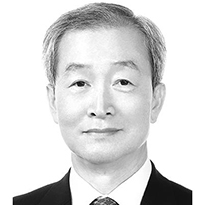
Ahn Ho-young
The author is a chair professor of North Korean studies at Kyungnam University and former ambassador to the United States.
I began my career as a diplomat in the 1970s, and during half a century in the field I have twice witnessed seismic shifts in world politics. The first came with the end of the Cold War in the 1990s, when a rules-based international order spread across the globe. Korea thrived in that environment, achieving great advances in security, economics and diplomacy.
But in recent years, we have watched the vivid return of great-power politics. Wars rage in Ukraine and the Middle East. Tensions and the use of force are rising in the Asia-Pacific. Disturbingly, major powers such as the United States and China treat the use of force as routine. Most troubling of all, the United States — once the foremost champion of a rules-based order — is neglecting its global role. For Koreans, who endured the loss of sovereignty under 35 years of Japanese colonial rule and the devastation of the Korean War in the crosscurrents of rivalry, this is cause for deep alarm. To face the new crisis, we must rely on two pillars: self-strengthening and solidarity.
![U.S. President Donald Trump, right, and Ukraine's President Volodymyr Zelensky attend a meeting on the sidelines of NATO summit in The Hague, Netherlands June 25. [REUTERS/YONHAP]](https://koreaseafood.online/data/photo/2025/08/19/44552b51-96cf-4abc-ae4d-70802516a2c1.jpg)
U.S. President Donald Trump, right, and Ukraine's President Volodymyr Zelensky attend a meeting on the sidelines of NATO summit in The Hague, Netherlands June 25. [REUTERS/YONHAP]
Self-reliance demands extraordinary effort to strengthen three capacities: technology, the economy and national defense. Since first surpassing a GDP per capita of $30,000 in 2014, Korea’s income has stagnated below $40,000. With a weak domestic economy, growth has fallen to around 1 percent amid the tariff wars triggered by Washington. International think tanks such as Harvard’s Belfer Center have issued warnings about Korea’s lagging technological competitiveness. Without stronger technology and economic fundamentals, military power has its limits.
In the 1960s, Korea founded the Korea Institute of Science and Technology by recruiting outstanding foreign scientists and engineers, linking economic growth with national defense. To overcome today’s simultaneous crises in security and the economy, we must return to that spirit. Companies alone cannot carry the burden; above all, politics must awaken and cooperate.
Alongside self-strengthening, Korea must deepen solidarity with nations that share our concerns. Some now argue that since the United States has retreated from its role as guardian of a rules-based order, Korea too should pursue a more transactional, interest-driven diplomacy. But such thinking is misguided.
First, the very essence of a rules-based order is the principle that international relations must rest not on the law of the jungle but on the rule of law. For a country like Korea, surrounded by great powers, the rule of law is not a luxury but the foundation of security and prosperity. Second, even as Washington retreats, it still defines adherence to a rules-based order as the standard of partnership. For Korea, which seeks to modernize and deepen its alliance with the United States, upholding this principle remains essential.
Fortunately, U.S. allies such as Japan, Australia and NATO members continue to embrace this view, and they want stronger cooperation with Korea. They know from experience that a rules-based order is indispensable for security and economics alike, and that solidarity is the only way to deal with great powers.
![U.S. President Donald Trump, right, shakes hand with Russian President Vladimir Putin, as they meet to negotiate for an end to the war in Ukraine, at Joint Base Elmendorf-Richardson in Anchorage, Alaska on Aug. 15. [REUTERS/YONHAP]](https://koreaseafood.online/data/photo/2025/08/19/64c43397-c624-472c-a9cb-1bbecabdab35.jpg)
U.S. President Donald Trump, right, shakes hand with Russian President Vladimir Putin, as they meet to negotiate for an end to the war in Ukraine, at Joint Base Elmendorf-Richardson in Anchorage, Alaska on Aug. 15. [REUTERS/YONHAP]
Some suggest Korea should maintain ambiguity, fearing that stronger alignment with rules-based allies will complicate ties with China, Russia or the Global South. But Korea, ranked among the world’s top 10 in technology, economics and military power, cannot hide behind ambiguity. On the contrary, vagueness will only breed mistrust. By making clear why we anchor our diplomacy in a rules-based order, we can build more sustainable relations, even with those who challenge it.
In five decades of diplomacy, I have never felt such a sense of crisis. Some liken Korea’s economy to a frog half-boiled in a pot — a metaphor that applies not only to our economy but to our national predicament. The danger grows steadily, and the window for escape is narrowing.
Korea must recognize the crisis for what it is and muster extraordinary effort — strengthening itself at home and building solidarity abroad. Only then can we survive the return of great-power politics.
This article was originally written in Korean and translated by a bilingual reporter with the help of generative AI tools. It was then edited by a native English-speaking editor. All AI-assisted translations are reviewed and refined by our newsroom.


with the Korea JoongAng Daily
To write comments, please log in to one of the accounts.
Standards Board Policy (0/250자)