Volunteers shape colorful songpyeon (half-moon-shaped rice cakes) in Incheon, on Sept. 21.YONHAP
As Korea’s summer heat gives way to crisp autumn air and students head back to school, families begin preparing for one of the surest signs that fall has arrived. It's that long-awaited time of the year in Korea: the annual autumn holiday of Chuseok.
Chuseok, which falls between mid-September and mid-October, falls on Friday this year, giving South Koreans a four-day holiday that spans Thursday to Sunday. This year, it coincides with the ongoing Asian Games as well as the South Korean national football team's first match under new leadership, so there's plenty to enjoy.
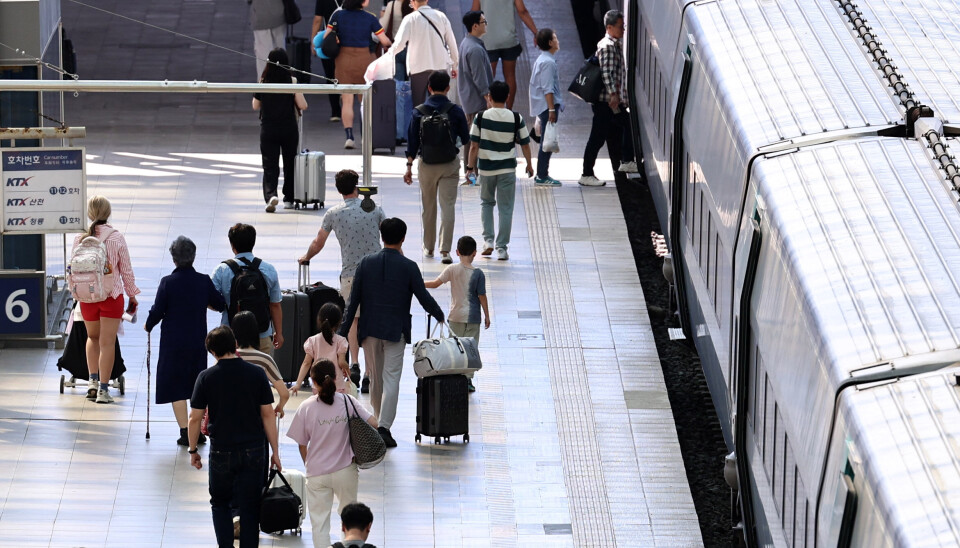
Tradition dictates that adult children visit their parents — or their in-laws for married couples — for a family gathering, which usually results in heavy traffic flowing out of Seoul and the Gyeonggi region into the rest of the country. Congestion can be up to three times higher than usual to and from the countryside, and trains, buses and even domestic flights reach maximum capacity, while supermarkets bustle with families shopping for a good traditional meal.
As traditions go in present-day South Korea, plenty has fallen by the wayside — but plenty still remains, too. From old meals to new tips for curious travelers, Chuseok has a lot to offer. And the more you know, the more you see.
What is Chuseok?
The word Chuseok comes from the Chinese characters for autumn, chu, and evening, seok. It is also called hangawi, an old Korean word for "the great middle of autumn." The holiday is celebrated annually on Aug. 15 of the lunar calendar, which is between mid-September and mid-October on the solar calendar.
A lunar year runs about 11 days shorter than a solar one, so an extra "leap month" is added roughly every three years to keep the seasons aligned. That’s why Chuseok moves on the Gregorian calendar, drifting anywhere from mid-September to early October depending on the year’s lunar calendar.
This year’s Chuseok holiday season runs from Thursday to Saturday.
Passengers board a train at Seoul Station in central Seoul, on Sept. 22.NEWS1
Why is there no extra day off this year?
The holiday itself lasts three days: the day of Chuseok, and one day before and after.
If one of those three days falls on a Sunday, the following business day becomes a substitute holiday. This year’s holiday runs from Thursday to Saturday, so there is no extra day off. Seollal, or Lunar New Year holiday, follows the same Sunday-only rule.
It worked out beautifully in 2025: Chuseok fell on Monday, Oct. 6, National Foundation Day landed on Friday, Oct. 3, and two substitute Chuseok holidays covered Oct. 7 and 8 — with Hangul Day capping things off on Thursday, Oct. 9. String it all together and South Koreans got a seven-day holiday. Some employees at conglomerates added on a vacation day to have Friday, Oct. 10 off too, stretching the break into 10 full days.
Other national holidays such as Buddha’s Birthday on April 8 of the lunar calendar, or Children's Day on May 5, or Christmas on Dec. 25 are also eligible for a substitute holiday if they fall on either Saturday or Sunday.
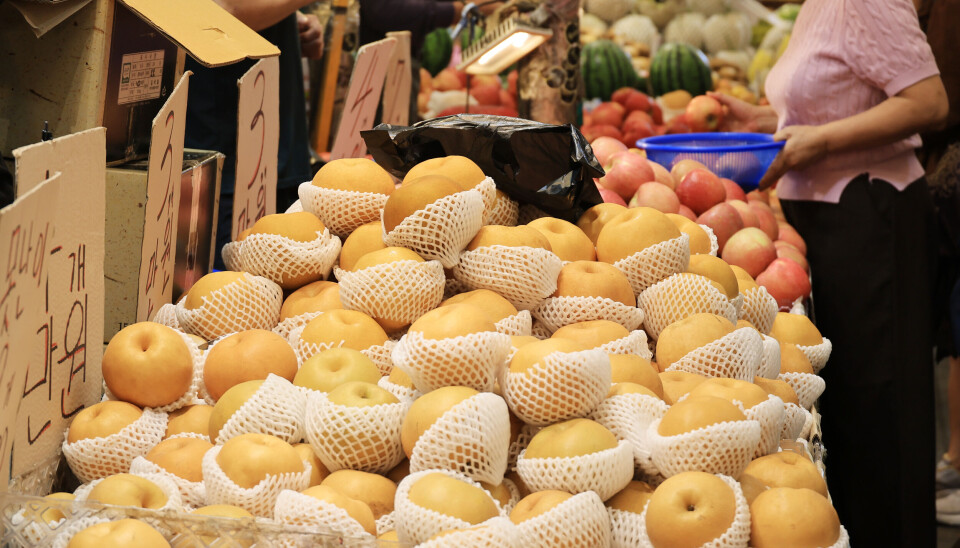
A shopper selects fruit for a traditional holiday offering at a market in Dongdaemun District, eastern Seoul, on Sept. 20.YONHAP
How is it different from Thanksgiving?
Chuseok is often mistranslated as "Korean Thanksgiving," and although both Thanksgiving and Chuseok are family feasts rooted in the harvest, their timing differs.
Thanksgiving in the United States falls on the fourth Thursday of November every year, after the harvest, and is a celebration of what the community secured after a season of hard work.
Contrastingly, Chuseok comes before the crops are fully harvested. The rice is golden, but it is still standing in the fields. The Korean holiday is an expression of gratitude for having survived the hard months leading up to the fall and a prayer that the upcoming harvest will be fruitful.
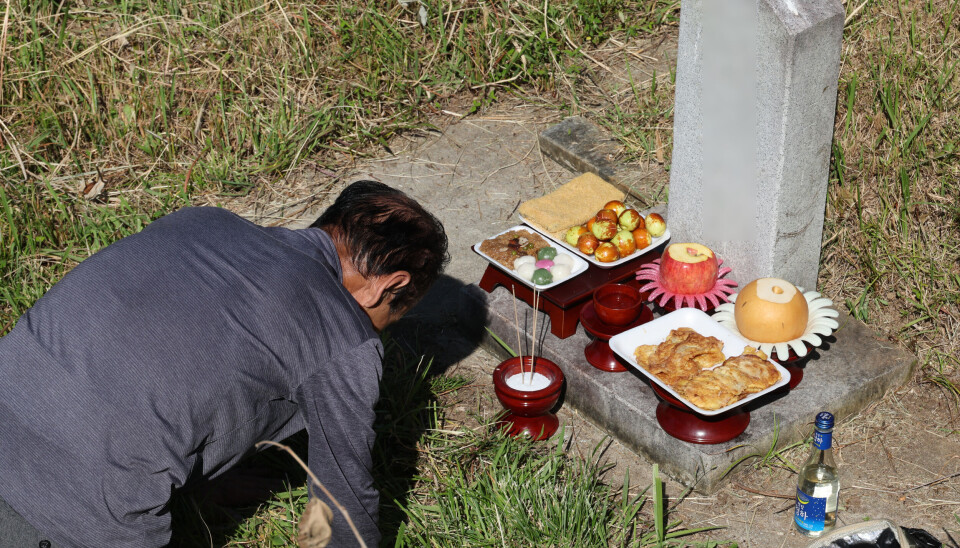
Another difference is that Chuseok also honors ancestors. Families perform charye, a memorial ritual in which they offer the year's first fruits to their ancestors. Families also visit their ancestors’ graves — often on grassy mountainsides — for beolcho, or to clear the weeds. Visiting families also prepare food and drinks to be offered at the graves.
A visitor performs a memorial ritual besides a grave in Jeonju, North Jeolla, on Sept. 20.YONHAP
What were the traditional foods that ancestors ate?
The star of the table is songpyeon, half-moon-shaped rice cakes filled with sesame, chestnut or sweet red beans and steamed over a bed of pine needles. The traditional belief is that if you can shape the songpyeon beautifully, you will have beautiful children.
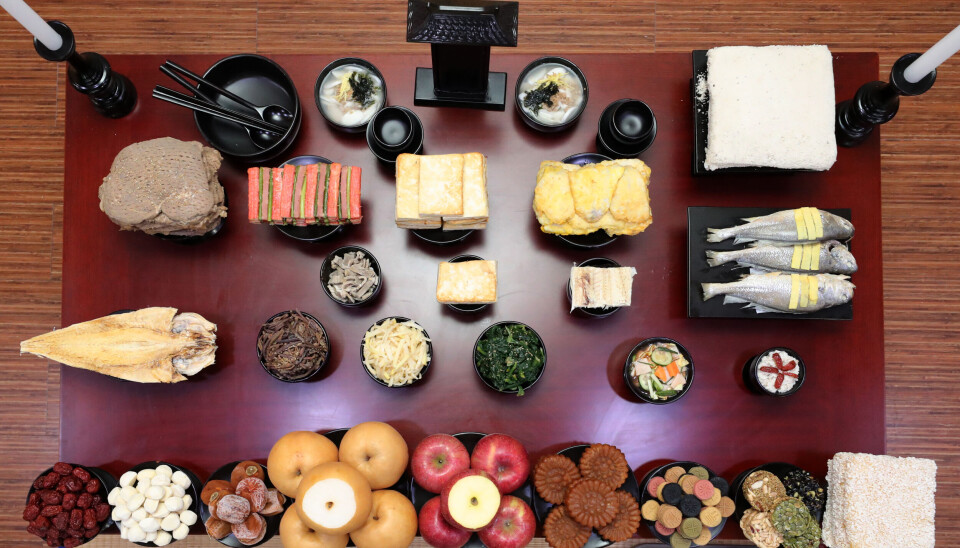
Jeon (savory panfried pancakes), vegetables, fish, dates and fresh fruit round out the spread — including the season's biggest, juiciest apples and Korean pears, all earning a place on the ritual table. The traditional table setting was strict and elaborate, with each dish having a designated place.
Different regions add their own touches. For example, the mountainous Gangwon region makes potato songpyeon because of the abundance of the vegetable in the area. Its songpyeon are more translucent and are shaped by pressing one's fingers on top of the dough.
A traditional charye (memorial ritual offering) table, set as part of an ancestral rite of preparing a meal for the ancestors, is displayed at the Institute of Traditional Korean Food on Feb. 2, 2018.NEWS1
The central Chungcheong region fills their songpyeon with pumpkin and squash, while the southeastern Gyeongsang region puts seafood such as octopus on their charye table. The southwestern Jeolla region adds hongeo, a delicacy made from fermented skate.
How is it celebrated these days?
As times change, the way people celebrate the holiday has also shifted. Rituals are getting simpler, with fewer dishes, to reduce the work burden on families, particularly on women, who were traditionally tasked with preparing the sacrificial dishes. More families meet at restaurants instead of at home. Some families skip charye, especially Christians, who reject the Confucian ancestral memorial rite on religious grounds. A growing number of people also use the break to travel abroad.
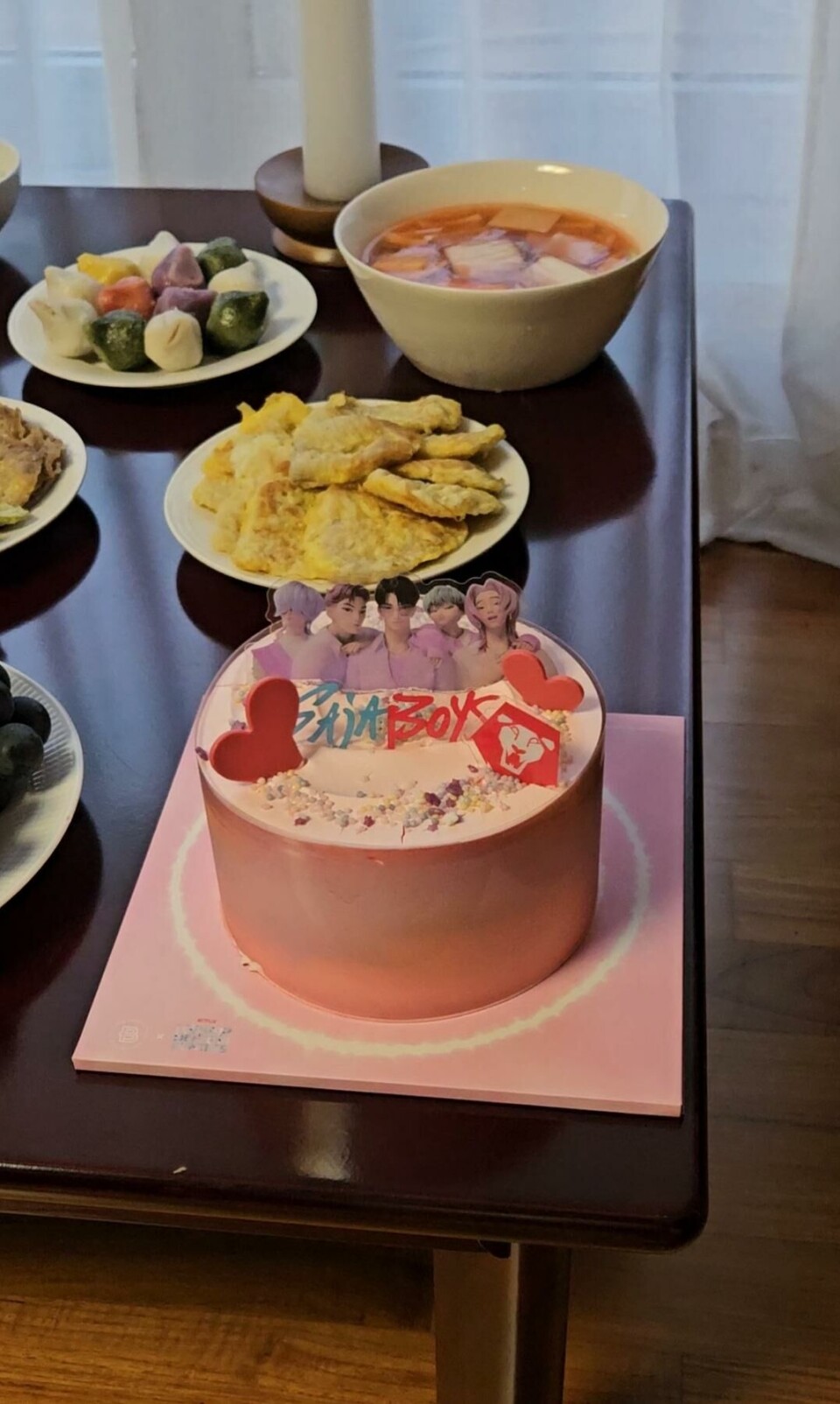
A cake featuring Saja Boys characters from the Netflix animated film "KPop Demon Hunters" (2025) on a traditional Chuseok ancestral rite table on Oct. 6, 2025.LEE JI-WON
Still, tradition endures in the curated Chuseok gift sets and selections of ready-to-eat premade songpyeon at grocery stores.
Younger people put their own spin on the ritual table, with macarons shaped like sanjeok (meat and vegetable skewers) and jeon. Cookies shaped like yakgwa (traditional Korean sweets) and apples also appear on social media this time of year.
This reporter's family put the trendiest item of the season on the charye table last year — a chocolate cake inspired by the Netflix animated film "KPop Demon Hunters" (2025) that featured Saja Boys.
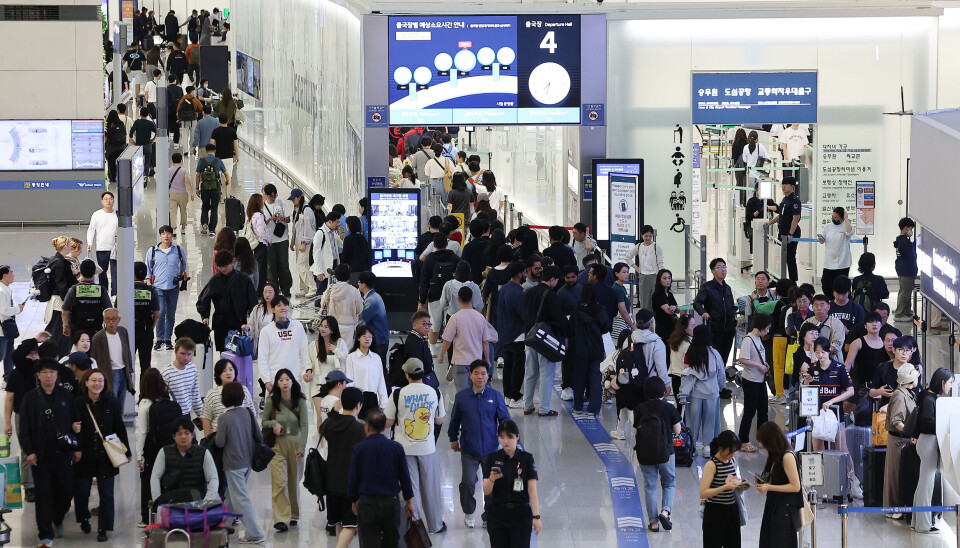
Travelers fill the departure hall at Incheon International Airport’s Terminal 1 during the Chuseok holiday on Oct. 6, 2025.NEWS1
Is it also celebrated in North Korea?
North Korea also shares the tradition and celebrates it on the same day of the lunar calendar.
The North discouraged the celebration since its founding in 1948, ultimately banning Chuseok celebrations in 1967 as antisocialist. However, in 1988, then-North Korean leader Kim Jong-il — the father of current leader Kim Jong-un — restored Chuseok as a state-recognized holiday to emphasize Korean ethnic identity.
North Korean residents also make songpyeon, with their own twist. In North Hamgyong Province, residents make unique savory songpyeon filled with vegetables, pork and tofu.
Nevertheless, unlike in South Korea, where the traditional Chuseok and Seollal remain the biggest holidays, North Korea's most important celebrations are those connected to the ruling regime, particularly the birthdays of the state's founder, Kim Il Sung, and his son, Kim Jong-il.
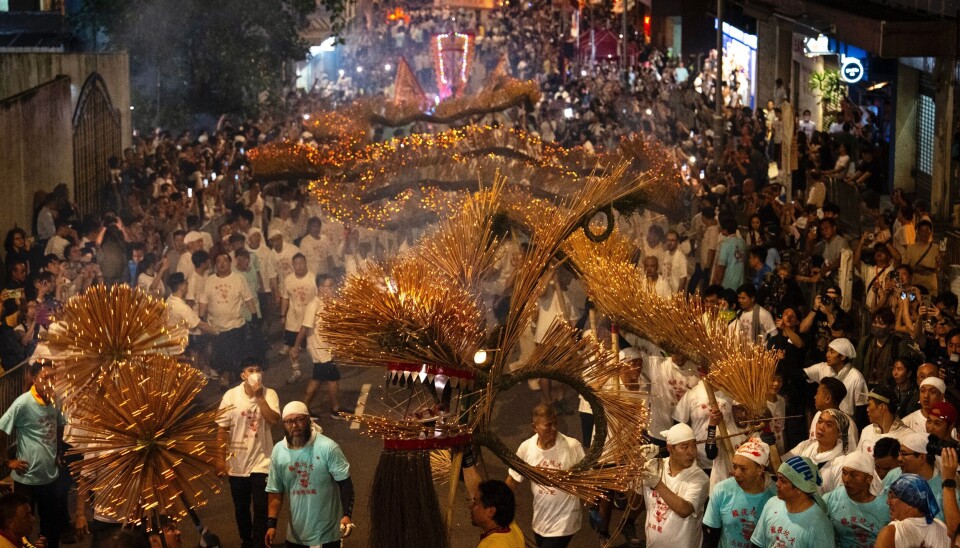
A fire dragon made of straw studded with incense sticks is paraded during the Tai Hang Fire Dragon Dance performance to celebrate the Mid-Autumn Festival in Hong Kong on Oct. 5, 2025.AP/YONHAP
What about other Asian countries?
China celebrates the Mid-Autumn Festival on the same day of the lunar calendar as Chuseok with mooncakes and family reunions. Vietnam’s Tết Trung Thu is also held on the same day of the lunar calendar. The celebration is also called the Children's Festival or moon-viewing festival, with children carrying colorful lanterns, watching lion dances and eating mooncakes.
Japan holds Tsukimi, the moon-viewing festival, with rice dumplings and pampas grass. People celebrate the ancient tradition by viewing the full moon's reflection on water or glasses filled with sake.
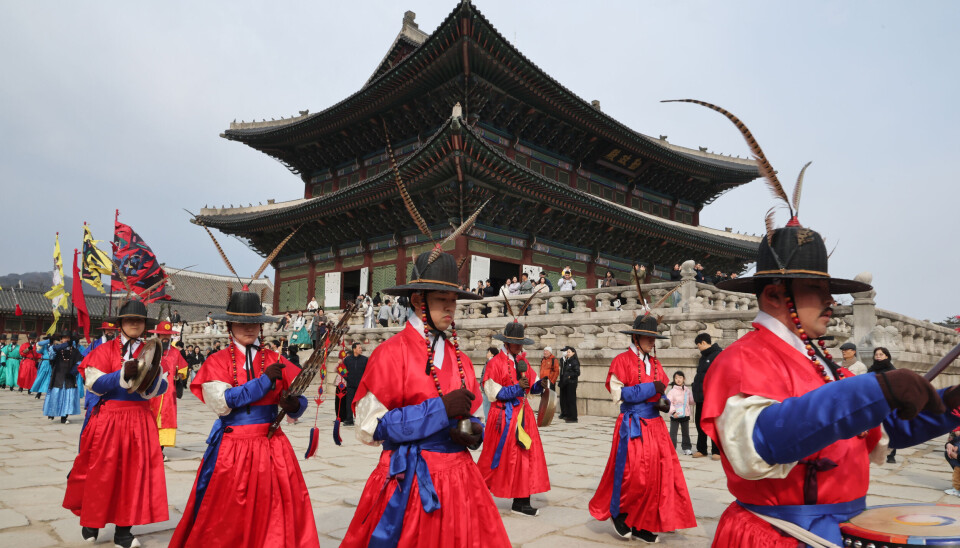
A royal guard reenacting a Joseon Dynasty (1392–1910) patrol ceremony by palace guards is held at Gyeongbok Palace in Jongno District, central Seoul, on March 1.NEWS1
Tips for tourists traveling in South Korea during the holidays
Travelers can enjoy waived admission fees to the four major palaces in central Seoul, such as Gyeongbok Palace and Changdeok Palace, as well as Jongmyo Shrine during the season.
Jongmyo Shrine, which usually requires advance booking, will allow free walk-in admission during the period.
Visitors can also enjoy the changing of the guard ceremony in Gyeongbok Palace without advance reservation during the holiday period.
The National Museum of Modern and Contemporary Art, Korea, in the Jongno District of central Seoul, will also waive admission fees during the holidays and accept free walk-ins.