Seoul eyes Middle East reconstruction but says formal involvement still at early stage
South Korea has formed a task force for postwar opportunities in the Middle East, but Foreign Ministry says no formal request has been made to join reconstruction financing.
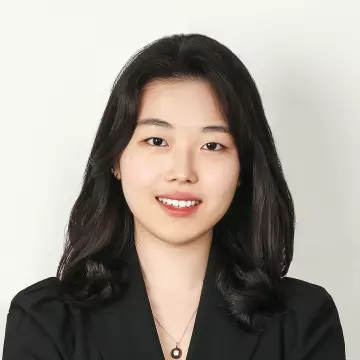
Foreign Miniser Cho Hyun speaks during a press briefing in Seoul on June 22.
NEWS1
South Korea is eyeing a role in Middle East reconstruction but has yet to receive any formal request to join financial rebuilding efforts, the Foreign Ministry said Monday, revealing that it set up a task force weeks ago to position Korean firms for opportunities once the conflict ends.
"The ministry established a Korea-Middle East comprehensive economic cooperation task force to facilitate South Korean companies' participation in post-war recovery efforts and to develop a broader economic cooperation framework with the region," Foreign Minister Cho Hyun said at a press briefing in Seoul.
He added that overseas missions had been tasked with identifying tailored opportunities for cooperation with individual Middle Eastern countries.
Cho said South Korea had worked throughout the conflict to cement its image as a "reliable partner that stands by Middle Eastern countries even in difficult times" — framing the task force as an extension of that posture rather than a response to the deal.
The briefing came days after Washington and Tehran signed a memorandum of understanding last Wednesday to end their monthslong war, which began when U.S. and Israeli forces struck Iran on Feb. 28, with Iran shutting the Strait of Hormuz to commercial shipping in response. The deal outlines a $300 billion private investment fund — dubbed the Reconstruction and Development Fund — to support Iran's economic recovery, with Reuters reporting that companies from South Korea are among those that have already made commitments.
While the U.S.-Iran deal outlines a massive framework for Iran's recovery, Seoul officials clarified that South Korea’s new task force is not deeply tied to the immediate "Iran reconstruction fund."
Instead, the ministry's initiative is primarily geared toward Gulf Cooperation Council (GCC) member states and Iraq, focusing on broader post-war economic shifts such as energy diversification and industrial transformation.
"The issue of participating in a reconstruction fund is still at a very embryonic stage, and we have not received any official request," a senior ministry official told reporters. Another official added that any future economic cooperation with Tehran directly remains subject to review, depending on how the diplomatic landscape unfolds.
Safe passage through the vital waterway remains Seoul's immediate priority.
As of Monday, 22 Korean vessels remain stranded in the Strait of Hormuz, Cho said, after two ships transited the waterway earlier in the day, becoming the first South Korean-linked ships to do so since the agreement was signed.
Cho said Seoul is coordinating a call with Iranian Foreign Minister Abbas Araghchi and will continue working with relevant countries to ensure free and safe navigation. The ministry separately said South Korea has never paid tolls to use the strait and will not do so, regardless of who imposes them — pushing back on reports that Iran may seek to charge fees for passage through the waterway.
Turning to European diplomacy, Cho confirmed that Ukrainian Foreign Minister Andrii Sybiha will visit Seoul on June 30 for bilateral talks.
The visit is expected to advance discussions on the fate of two North Korean soldiers captured while fighting alongside Russian forces in Ukraine — a sensitive issue that has put Seoul in the unusual position of negotiating with Kyiv over the repatriation of North Korean personnel who were deployed abroad as part of Pyongyang's military support for Moscow. North Koreans legally fall under South Korea's constitutional sovereignty.
A senior ministry official said Seoul and Kyiv have "already reached a basic agreement" in principle on the repatriation of two North Korean prisoners of war held in Ukraine, and expressed hope that the visit could bring "some progress," though stopped short of confirming a formal announcement.
On the sidelines of last week's G7 summit in Évian, France, President Lee Jae Myung sat next to U.S. President Donald Trump for roughly two hours at an official dinner, using the time to exchange views on North Korea, the Korea-U.S. alliance and the situation in the Middle East, Cho said.
He added that Seoul expects to make full use of the trust built between the two leaders to deliver tangible results.
BY SEO JI-EUN [[email protected]]