An AI-generated image of a stay-at-home father cooking while caring for a young childCHATGPT
The number of stay-at-home fathers caring for children or taking on household responsibilities reached a record high in the first quarter, reflecting changing gender roles and shifting family dynamics in Korea.
A total of 274,000 men were classified as economically inactive because of child care or housework in the January to March period, up 16.6 percent from a year earlier, according to data released Monday by the Ministry of Data and Statistics. It was the highest first-quarter figure since the current classification system for the economically inactive population was introduced in 2004.
The increase was also the fastest since 2021, when the figure rose 28.3 percent on year.
The ministry classifies people who stay home to care for preschool-age children as engaged in child care. The category includes those caring for grandchildren as well as their own children. Those who stay home primarily to manage household duties are classified under housework.
Men engaged in housework accounted for the vast majority of the total at 261,000, up 16.5 percent fromthe first quarter a year earlier. The number of men classified as economically inactive because of childcare rose 18.2 percent to 13,000.
The number of men who were economically inactive because of child care or housework has steadily increased from 145,000 in the first quarter of 2004. It exceeded 200,000 for the first time in the first quarter of 2022, when numbers reached 206,000, and has since risen by another 70,000. The latest figure was nearly double the 151,000 recorded in the first quarter of 2006.
The number of women, by contrast, classified as economically inactive because of child care or housework fell 1.9 percent from a year earlier to 6.5million.
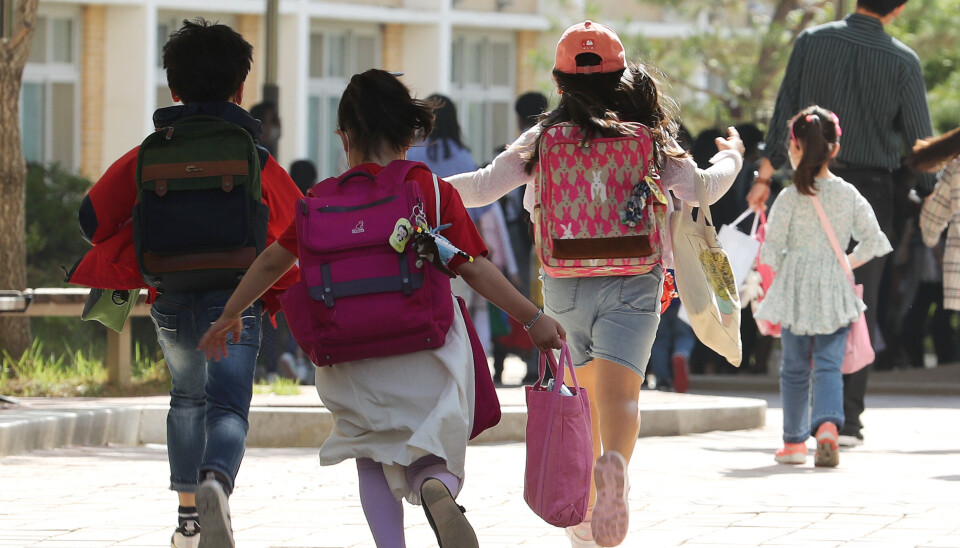
Elementary school students in Sejong head to school on May 27, 2020.YONHAP
The figure had climbed from 6.7million in the first quarter of 2004 to a peak of 7.7million in the first quarter of 2013 before gradually declining to its lowest level for this year'sJanuary to March period since then.
The growing number of men taking on child care and household responsibilities, alongside the decline among women, appears to reflect changing gender roles and evolving social attitudes that have made it more acceptable for men to stay home. The trend may also be linked to the growing number of women in professional occupations, as more women are now earning higher incomes than their male partners.
Women aged 25 to 34 witha four-year university degree or higherhave nearly caught up with men in labor force participation last year, according to a report released in April by the Bank of Korea's employment research team.
The ratio of economically active women to men in that age group and educational background rose from 51.5 percent in 2002 to 95.5 percent last year, meaning that there are now almost as many economically active women as men.
Among young professionals, the number of employed women was nearly equal to that of men last year. In office jobs, women actually outnumbered men, with the number of female employees reaching 113.8 percent of the male total.
"The figures reflect the broader trend of men taking on a greater share of childcare and household responsibilities," an official from the Data Ministry said.
This article was originally written in Korean and translated by a bilingual reporter with the help of generative AI tools. It was then edited by a native English-speaking editor. All AI-assisted translations are reviewed and refined by our newsroom.